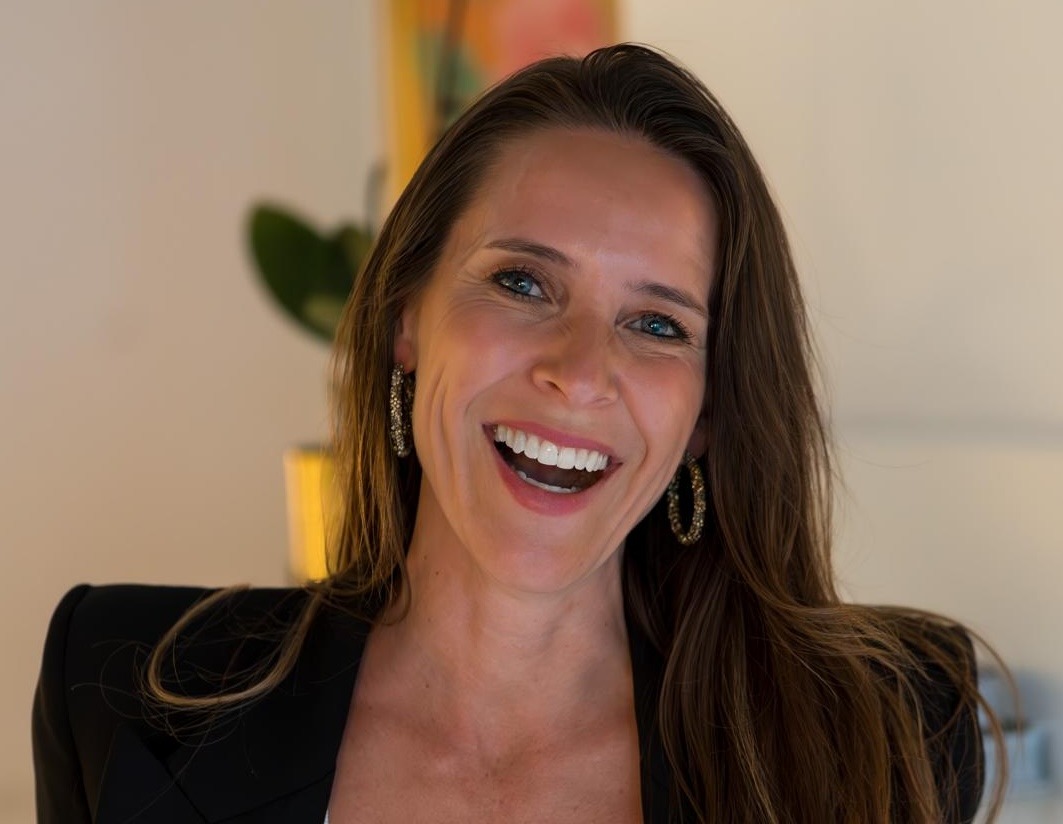
Anna West: Sleep in football – myths and truths
Written by
Simon Austin
August 1, 2026
As a sleep scientist, Anna West takes an evidence-based approach to her work.
For more than a decade, the Dane has been working with players and teams in the major European leagues, including the Premier League. On the latest Episode of the TGG Podcast, in association with Teamworks, West debunked some of the common myths about sleep in football – and outlined nine common truths.
Myths
1. Mouth taping = better sleep
Mouth taping is the practice of placing a small piece of adhesive tape across your lips to force them together and prevent mouth breathing.
A number of athletes and celebrities have promoted the practice, including Erling Haaland, but West argues it could actually be detrimental.
“I’m utterly against initiatives or interventions where there’s no real evidence behind them, or where we know they can have a negative effect on you,” she told the TGG Pod. “I’m yet to see real data that proves that taping your mouth is a really good idea during the night.
“What I see and what I’ve tested – I have enough data to draw my own internal conclusions – is that people are having a lot more involuntary movement when they’re mouth taping.
“The reason they start to move is because they gasp for air and that feels uncomfortable. They start to toss and turn and in return break their own sleep cycle. So the quality they want to optimise actually gets compromised.”
Manchester City star Haaland revealed he taped his mouth at night when he appeared on the Impaulsive Podcast with KSI and Logan Paul in August 2023.
West said: “As a predominant figure in a sport, whatever you do, you hold a quite big responsibility when you start to preach any type of intervention, whether it has evidence behind it or not.
“He went on a podcast and said something along the lines of, ‘Hey, if anybody wants to reach my level in football, they should mouth tape.’ And my email and WhatsApp exploded, to be honest. ‘Should I mouth tape as well?’ And I go, ‘Absolutely not.'”
2. Everyone needs the magic eight hours
For years, eight hours a night has been regarded as sleep utopia. However, West says it’s quality not quantity that matters.
“Higher number of hours does not equal better sleep,” she said. “You can sleep 10 hours but it’s crappy hours and doesn’t mean quality. In a system (football) where we quite often know that the hours will be compromised, it’s much more important that we preach sleep quality into the hours that we can get.
“I’m not against wellness questionnaires, because they are a little gateway into getting some level of feedback.
“There are a lot of qualitative questions you can ask that are a lot smarter than, ‘How many hours of sleep did you get last night?’ The much better question is, ‘So, how was your energy this morning?'”
3. Your tracker has all the answers
Wearable sleep trackers, be they smartwatches, rings or bands, have become ubiquitous in the last decade or more. As ever, context is king though.
“I usually say that technology can be a support, but in itself it’s not a solution,” West explained, “because you really need to understand the data in a context.
“The Whoop or Oura Ring that sits on your hand doesn’t necessarily know you’re a Premier League football player that also has to play Champions League.
“It’s very important that if we are using technology, it is brought into systems where the translation of the data is done in a thoughtful but also caring way.”
4. Blue light is the enemy of sleep
Looking at your smartphone before bed can damage the quality of your sleep – but perhaps not for the reason you think.
“For years, anyone who opened any social media channel or a podcast like this, heard that being on the phone before bed is really bad for you – mainly because the blue light coming out of the device,” West said.
“Today, we know that’s actually not true. It’s more about the time spent on your device and what that time is doing to your arousal level.
“There were studies that came out during Covid that actually showed that when people were on their devices prior to going to bed and connected with loved ones, they fell asleep easier.
“If you’re doing something smart before you go to bed that can actually connect you, calm you down, maybe it’s not so bad. But if it’s just dumb scrolling for one and a half hours, it’s not even the light, it’s the time spent on your device and what that time spent on your device can do to your emotional system.”
Reading abuse directed at you on social media – which is all too common for footballers – can be particularly bad.
“When it hits you at an emotional level, your body will react with hormones – adrenaline, cortisol and also sadness. No-one speaks about sadness, but it is sad when someone attacks you, whether you like it or not.”
5. A nightcap helps you drift off
“Alcohol and sleep, they’re not friends,” West said matter-of-factly.
“It’s kind of weird for people to understand, because most will feel sleepy when they’ve had alcohol. It’s a little bit like you’re being put to sleep.
“But if I then put you into a brain scanner and look at how your brain was functioning, we would see that the sleep you get is very different than when you’re not drinking alcohol.
“It’s a sedative, like when you go to the hospital and have an operation. You’re out of this normal world, but it’s not natural sleep. I usually say alcohol is the most misunderstood sleeping drug on the market, because it doesn’t create the type of sleep you’re seeking, it puts you to sleep.
“You will definitely see two things – an elevated resting heart rate, and alcohol contains a lot of calories. You’re actually switched on, despite the fact your brain is in a different mode. So your body is still working.”
If you are going to drink alcohol, do it earlier in the day.
“I always try to make myself a bit popular by saying, ‘If you are drinking, day drinking is just so much better.’
“Because then at least you have it diffused out of your system before you go to bed.”
6. Sleeping tablets are a safe fix
Sleeping pills are easily obtainable for footballers, which can make them an appealing quick fix.
“You can prescribe sleepers to anyone who has suffered from poor sleep three days in a week for three months – that’s basically any Premier League football player if I’m honest,” said West.
“Basically any player can get sleeping tablets with more or less no question, because the legal side allows it.”
However, this is not a long-term solution to better sleep – in fact the opposite.
The teams that see quick-fix solutions will probably have bigger problems.
Anna West
“Sleeping tablets will very often bring them to a state of sleep, but there’s a big level of aftermath that no-one really speaks about. Sleepers were not developed for congested scheduling, they were developed for sleeping disorders, like a true illness.
“The aftermath is that you have a lot of sleep inertia in your system, which can have the same result as actually sleeping quite poorly – lowered reaction times, a blurred brain and even potentially depression.
“And then, not least, they’re addictive, so you need more and more to actually get the effect from them. There can also be a correlation between a high intake of sleeping tablet and a higher risk of a muscle injury as well.
“The teams that see quick-fix solutions – the teams that really need to sleep and start to hand out sleeping tablets – will probably have bigger problems.”
Truths
1. Footballers won’t always sleep well – and that’s okay
As West said, the paradox in football is this: “We don’t have a lot of players with actual sleeping disorders, but we have a lot of poor sleep.”
The population is generally “young healthy adults”, but the structure of football, such as late matches and shifting kick-off times, leads to sleep problems.
“Everything we do in the stadium is compromising sleep,” West explained. “We have adrenaline, light exposure, there are a lot of emotions at play. Some players might take caffeine before they go on pitch, they have energy drinks.
“Everything we do at the point of time in the day when the body should slow down, we beam up. So we should almost expect that we can’t sleep.”
The key is acceptance – not stigmatising a poor night’s sleep or getting anxious about it – and then trying to optimise sleep “in the windows they have available.”
2. Sleep isn’t a stand-alone fix
Whenever West goes into a club, she works as part of the multi-disciplinary team, which includes the manager, coaches, nutritionists, Head of Performance, psychologists and more.
“I think it’s important to say sleep is not a stand-alone product,” West said. “Sleep is a result of many different things. I’ve worked with some brilliant sport psychologists and also clinical psychologists in sport.
“It’s very important that we all understand we play a role in sleep. And that’s also why it’s never a one-man job to get someone to sleep. It’s a multi-disciplinary job.”
She and her team also try to optimise the sleep of not only players, but staff as well.
“They’re performing at the same level and sometimes even more (than the players); the staff would have an even more extreme structure at times.
“When the players go to bed, usually staff still have to finish off. It’s very important that there is an aligned structure between staff and players for us to create an understanding of the constellation of the team.”
3. Good sleep starts in the morning
Contrary to what most people think, “A good night’s sleep does not start with sleep hygiene before we go to bed at night – it starts in the morning.”
West explained: “How we set biology up from when we wake determines how we can then ultimately fall asleep. It is important to get morning light. We also have to remember that when we’ve been sleeping, we wake up quite dehydrated.
“If we don’t foster habits where players learn to hydrate straight from the morning when they wake up, we can lead them into a situation where they’re slightly dehydrated when they go to bed.
“If you’re dehydrated when you go to bed, it knocks into how your hormones are working, because you then produce less melatonin, which is your sleep hormone.”
4. A cooler, darker room helps you sleep better
Again this links into basic biology.
“If you scrape it down, we were born to wake when the sun came up, when the temperatures outside would come up, when the daylight came.
“And when the light disappeared, when the sun went down and the temperature went down, that’s when we would go to bed again. We fall asleep easier when it’s dark. So, if you don’t have blackout curtains, bring a night mask.
“And the body sleeps better when it’s a cooler room, end of story. When we have to fall asleep, the body needs to get rid of heat, so the core temperature can drop.
“A lot of people sweat a lot during the night without realising it. They’re then quite knackered when they wake up, because they’ve been tossing and turning, as the body finds it difficult to regulate the temperature during the night.”
This is why investment in the right sleepwear can be a relatively cheap but effective measure.
“There are some really good products on the market that can help you regulate temperature during the night,” West said. “As I’m working in a marginal sport, where we want to avoid unnecessary awakenings, sleeping in nightwear that can regulate temperature can be a pretty big dealbreaker.”
As usual, there needs to be some football context and understanding here though.
“Let’s say you grew up in South America and your average temperature was always 25 degrees. If I say, ‘It needs to be between 17 to 19 degrees, that’s the optimal temperature for sleep,’ that person will feel I’m recommending them to sleep in a freezer.
“It’s being able to adjust what we know works on the majority, because there will be some outliers.”
5. Poor sleep is linked to higher injury risk – but be sensitive in the messaging
There is “definitely evidence” that links poor sleep with higher injury risk.
“Sleep is when we produce all the hormones that support muscles to rebuild,” West said. “So injury mitigation is a part of sleep, or vice versa. When we sleep better, we also prevent injuries.”
The Dane insisted she would never go into a club and preach this message right away though.
“It’s incredibly important that when someone like me enters an environment, sleep doesn’t become associated with the risk of an injury, so they think, ‘If I can’t sleep well, I’m getting injured tomorrow.
“If I was in an environment preaching the fact they all need eight to 10 hours sleep per night, otherwise there’s a higher risk of an injury, I’m not selling the concept in the right way.”
6. Eating and drinking close to bedtime disrupts sleep
“If you want to turn off a fire, you don’t put fuel on it,” West said. “Your metabolism is the same. When the metabolism starts to work, the core temperature rises, which means elevated blood pressure, elevated pulse.
“When we have to go to sleep, the very opposite thing should actually happen. Most people would sleep better if they don’t eat close to bedtime. Most people would sleep better if they don’t have heavy, spicy food before they go to bed.
So we should avoid eating and drinking close to bedtime. As ever, there is nuance in this messaging though, because of the fairly unique demands of football.
“Say your coach decides to have evening training and meal is delayed. It’s best not to eat close to bed time but it’s also quite important that we load calories into players in the right way.
“Sometimes in sport when we talk about sleep, it’s the chicken and the egg – we need to merge it so we land somewhere in the middle, where we’re still getting calories but can sleep.”
7. Naps work best under 25 minutes, or as a full 90-minute cycle
“There’s a lot of good science about the benefits of a nap, but there’s also a lot of good science that shows if we nap too long at the wrong time, we are compromising the opportunity to sleep really well at night,” West explained.
So duration of the nap is key.
“The majority of times where the nap is effective, especially in sports, is if we do below 25 minutes. Or if we’re sleep deprived and trying to catch up on sleep but still want to set ourselves up for a good night’s sleep, completing a full sleep cycle, which is around 90 minutes.”
8. Sleep architecture changes with age
We usually sleep in cycles, with the body descending into different phases during those cycles. However, “the architecture of your sleep will change with age.”
“That’s why we see children sleeping longer and deeper,” West said. “And elderly people sleep shorter duration and less deep sleep.”
“That’s quite important still to have in the back of our minds when we have 15-year-old players who are then presented in the Premier League or wherever, because they’re still kids, they’re still growing – and during deep sleep, that’s where you produce growth hormone and testosterone.”
Follow Us
For latest updates, follow us on X at @ground_guru