80
Anna West
Waking football to the power of sleep
July 27, 2026
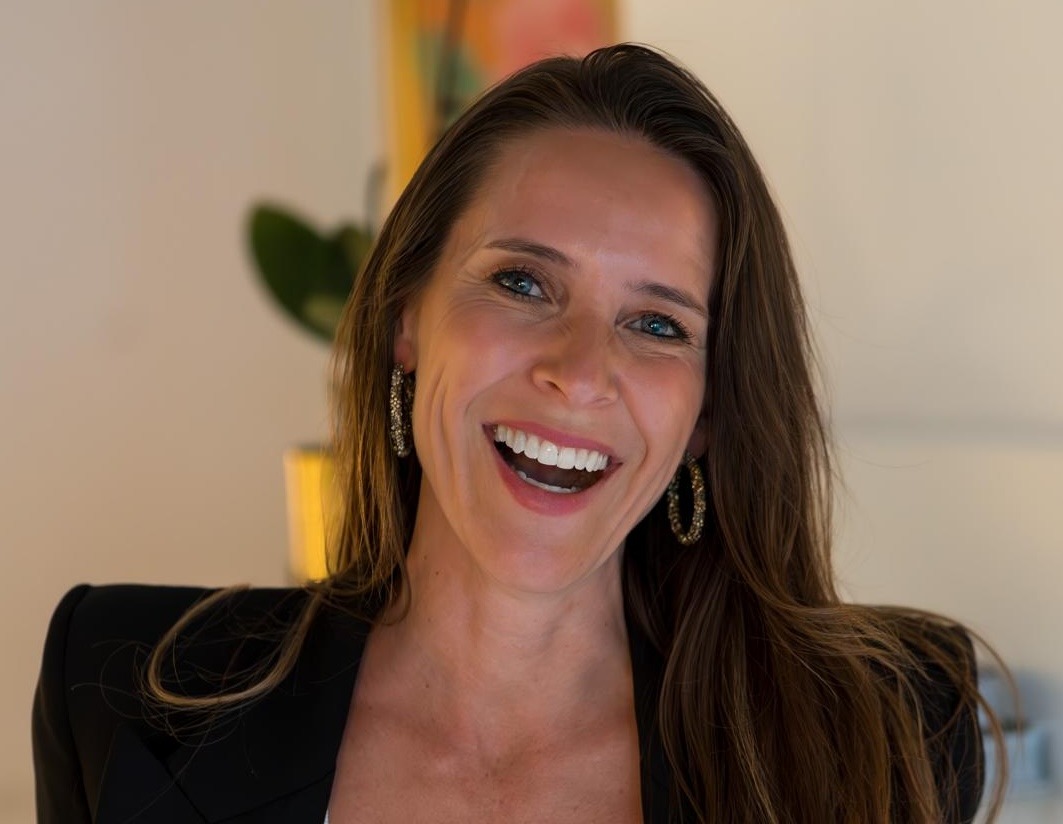
Our guest on Episode #80 of the TGG Podcast, in association with Teamworks, is Anna West.
Anna is a world-renowned sleep expert who works with teams in the Premier League, Champions League and at the World Cup. Her methods have helped change the way that football thinks about sleep about recovery.
In this interview, Anna tells us how she came to work in football, about the work she does with clubs and players, and also debunked some of the common myths about sleep.
How did you become a sleep scientist?
Anna West: I was studying Sport Science at Copenhagen University and then later on proceeded into medical nursing. Straight out of University I was lucky to be hired into a medical technical company that specialised in sleep and recovery.
During my studies I was utterly fascinated by the concept of sleep and how little emphasis we actually put on that as a part of performance enhancement. Also, on a personal level, I probably really neglected it, because I thought I could survive without it. But I literally couldn’t.
I had a quite forward-thinking Professor at the University as well, who realised that was probably one area where I did nail it. One day he asked me to really look into this topic and I got utterly fascinated by it.
I got into a role in this medical technical company that specialised in sleep, but didn’t really have the bridge into performance. I was incredibly fascinated by all the research we do in sleep but quite annoyed about never doing the real translation into strategies that could actually be applied in the environment.
Then I was lucky to be tasked with building up projects in sports. We built up research projects in various constellations with federations, also with clubs to a smaller degree. I was quite lucky, because I was able to work with different sports and not with this one-dimensional view into one sport. That’s quite a big advantage as well.
Later on proceeded into founding my own consultancy. And I would say sleep matters just as much in football today as it did 10 years back or even 20 years back. In fact, as we proceed into the future with football, it’s going to matter even more.
Because we will play more and more games and have less and less time to actually recover in between the games.
The body wasn’t really built to sleep the way that football allows us to do. So we need to think quite smart when we are creating sleep structures in a sport like football.
Every environment works with sleep at some degree, to be honest. I think a lot of environments think they work with sleep, because they do a workshop or they educate a little bit around it and then they leave it up to the players.
I was lucky to get into an environment that saw it as a very basic need to evolve other areas of performance. It quickly became a part of the performance enhancement and not an isolated thing that the player had to do.
How important is sleep for athletes?
The easy argument is that we can’t enhance performance over time if we don’t sleep well, because the most important recovery modality, the most legal one available, is actually sleep.
This is where we produce all the hormones that support the muscles to rebuild themselves. So injury mitigation is a part of sleep or vice versa. Right? When we sleep better we also prevent injuries. This is where we heal. This is where we produce the hormones. This is also where we have a lot of our emotional stability created.
This is where we move learning from short-term memory to long-term memory. So basically everything that we do during the day is consolidated during sleep and allows us to advance the day after. That’s the simple way to put it. Sleep doesn’t really need a lot of arguments once people start to understand what sleep actually does to the body.
The thing is that people might be a little bit stuck in previous perception of sleep -is we go into bed and we go half dead, then we wake up and then we do something else.
Whereas if you look at brain activity as an example, we are like incredibly active in the brain during the day, but we’re just as active during the night. It’s just a very different type of activity. So what we do during the night is almost like a pre-condition for what for what happens during the day.
Let’s say you’re on the pitch and you’re sleep deprived, your reaction time is slower and that can mean the different like the difference between winning and losing. So there is definitely an element of sleep being a needed basic for us to advance our performance, but it also comes with a funny challenge, because we have late kick-off times, we travel, we have congested schedule, we play more and more games.
So what we need to be able to perform better is often compromised more and more by the structures that we have.
Sleep quality, not just quantity
There’s definitely evidence that that points towards it (injury risk increasing with poor sleep), but I think it’s incredibly important that when someone like me enters an environment, that sleep doesn’t become associated with the risk of an injury.
So, if I can’t sleep well, then I’m getting injured tomorrow. There’s a lot of different ways of communicating sleep. Before I came on this podcast, I saw one club had done a video on Instagram on the importance of sleep.
They’re talking about the importance of players sleeping eight to 10 hours every night, otherwise there’s a higher risk of an injury. Higher number of hours does not equal better sleep. You can sleep 10 hours and it’s crappy hours and it doesn’t mean quality.
So in a system where we quite often know that the hours will be compromised because of the system, it’s much more important that we preach sleep quality into the hours that we can get.
A good example would be let’s say you have a late kick-off time. Everything we do in the stadium is compromising sleep, right? We have adrenaline, light exposure, we win, we lose. There are a lot of emotions at play. Some players might take caffeine before they go on pitch. They have energy drinks.
Everything we do at the point of time in the day where the body should actually slow down, we beam it up. So we should almost expect that we can’t sleep. So, it’s absolutely fine after a late night match if the hours and the quality is compromised that the trigger point is actually getting them to sleep well on match day plus one.
And if I was in an environment preaching the fact that they all need eight to 10 hours sleep per night, otherwise there’s a higher risk of an injury, I’m also not really selling the concept in the right way. It’s about getting them to sleep well in the windows they have available. That’s quite important if I’m honest.
Monitoring and sleep anxiety
It’s a quite important topic to touch upon as well in football. Because look, everyone today, especially in high-level football, will have tried to measure sleep at some level or to some degree.
I usually say that technology can be a support, but in itself it’s not a solution. Because you really need to understand the data in context. You can compare it very much to nutrition. We want them to have the right nutrition, but we don’t want it to turn into an eating disorder that’s actually working against them.
So it needs to be built on smart behaviour, smart translation, but with care. Because also there’s a high discussion point about the accuracy of the data. The Whoop or the Oura Ring that sits on your hand doesn’t necessarily know that you’re a Premier League football player that also has to play Champions League.
That’s very important that if we are using technology. I’m not saying technology is bad, I’m just saying in itself it’s not a solution, it needs to be brought into systems where the translation of the data is done in a thoughtful but also a caring way.
We can all survive a red set of data. So it’s not so much the red data, it’s also figuring out where does the red data stem from. There’s a lot of technology and there’s definitely a massive hype around it, but it’s also important that people approach it with a critical mindset.
Challenge of night-time kick-offs
The challenge is the shift if I’m honest, that we have shifting kick-off times, not purely that we have late kick-off times. If we did the same every night, we would start to create a rhythm that would be adjusted to that.
But then you have a noon kick-off time, you have an afternoon kick-off time, and then you have an evening kick-off time. If you scrape it down to a rule, basic biology, we were born to wake up when the sun came up, when the temperatures outside would come up, when the daylight came. And when the light disappeared, the sun went down and the temperature outside went down, that’s when we would go to bed again, right?
And when we have different kick-off times, we don’t really favour the biology we came with. So we are creating systems around an existing biology. And when we do that, we also sometimes need to accept that it is more difficult for the body to figure out what to do when. But if we did the same at the same time every day, it wouldn’t be so difficult.
The 'magic' eight hours
If we go 100 years back in time, we do have research, but we have subjective data. This was what people reported back. There’s an element of the research believing we were sleeping more solidly, because we had more consistency in our habits around how we lived.
We were not switched on consistently all the time. It’s not just the electric light, it’s also our habits around things that have developed – a phone as an example. A phone in itself is not bad, but it’s usually the habits around how we navigate with that phone that can be either very productive for us or bad for us.
As an example, if I work with a club and go in and need to make an evaluation of the sleep status, it’s not just looking at how the players sleep, it’s also the whole system around how we set them up to a good night’s sleep.
That has probably changed a lot, because in the past, let’s say you were football player, it would be completely your responsibility – you left the training ground and then it was expected that you figured that one out yourself and came back and rested the next morning.
I think what has changed at least over my time in football is that we are realising and taking more responsibility in regards to how we set the players up to a better night’s sleep.
A good night’s sleep does not start with sleep hygiene before we go to bed at night. It starts in the morning and everything we add.
Because we also have to remember in football we have trained young healthy adults. We don’t have a lot of players with actual sleeping disorders, but we have a lot of poor sleep, which is induced by habits that do not link into biology.
We would never go in and just look at the player’s sleep in an isolated way. We go in and make an analysis of the environment to figure out where are the opportunities, where do we compromise. And it can stem from a lot of different angles.
Travel management, so how do we even decide to travel? When do we decide to travel? Does it fit the kick-off time the next day? If we preach napping time in a club, do we even offer them a place to do the nap?
You don’t see a club today that would preach nutrition without serving the right food in the canteen as well. That has definitely advanced in my time in football.
How do you work with a club?
When we go into a club, the first step we would do is a full-blown analysis of all the players, but actually also the staff surrounding the players.
And then, based on the data that we collect, we start to do some educational sessions as well. What we have also developed over the last year is what we call a club recovery scorecard, where we look at 11 different areas in a club that all link into how we create the sleep opportunity that I described before.
A good example would be looking at the travel structures of a club. Today, when they travel, it’s not just going on a bus going from A to B. Depending on the kick-off time, they will travel at different times.
Let’s say you do travel at 3pm after a training session. What happens during these three hours also determines how you set them up to sleep on a match day minus one.
If you have players that board a bus and have to drive for three hours and they’re sleeping throughout that period of time, what happens is involuntarily we are setting them back.
We are not actually helping them fall asleep match day minus one, because they’re removing too much sleep pressure in their system.
When you’re creating a good system, you say, ‘Hey, we can’t negotiate it. We have to drive at 3pm, but maybe it’s a really smart idea that we put in a service stop, at 4:30pm, so we get all of them out of the bus, so we can break the sleep pattern and keep them awake until arrival.’
That way, we actually set them up for a good night’s sleep in the hotel.
That’s an example of a very small potentially no-brainer structure we look at. But everything surrounding the player which also stems from structures in the club will then ultimately lead into sleep opportunity.
We work very multi-disiplinary and then usually when we start in a club we work selectedly with players on an individual basis.
We do it always with the whole squad and also suggest to do it on staff when we come in, because they’re performing at the same level and sometimes even more. The staff would have an even more extreme structure at times.
When the players go to bed, usually staff still have to finish off. It’s very important that there is an aligned structure between staff and players for us to create an understanding of the constellation of the team.
What we ultimately do when we have the data – and we’ve created a screening tool which is merged by 15 validated questionnaires, which were both created for the normal population but also for the athletic population – we divide them into groups and the classic idea from a club would be that we should work with all the players that have challenges.
I usually then try to challenge it a little bit and say, ‘Look, it’s not just about using sleep as something that we should fix. It’s also using sleep as performance enhancement.’
Let’s say Simon you’re a football player but you actually sleep quite good, can we still chain small bits and pieces around you so that you start to optimise the good foundation that you already have?
I’m a big fan of wearable technology being something that you can select if you wish to try it. I’m also a big fan of the player knowing what is the journey of their data, who actually sees the data.
This is 24-hour data. I’m also a very big fan of having enough data, so that rather than looking at the data on a day-to-day basis, we look at the trend development of the data rather than looking at one day.
I’m not against the wellness questionnaires, because they are a little gateway into getting some level of feedback. But where you need to be very mindful is what questions do you actually ask about sleep?
Go into any squad and ask them how many hours do you think we should sleep? They would like raise their hand and be like, ‘Eight hours. We know eight hours because everybody knows.’
But the much better question to ask is, ‘So, how was your energy this morning?’ Because if they woke up completely knackered, it tells me quite a lot about the quality of the sleep they have. And there are a lot of qualitative questions that you can actually ask that are a lot smarter than how many hours of sleep did you get last night.
That will then link into a lot more information about what that sleep actually was.
If you do smart wellness questionnaires, you get productive answers. But if you do very unsmart questionnaires, you can’t really use the data other than seeing if there’s something that changes in a trend.
If a player is always replying eight hours and he all of a sudden starts to report six, there’s something you need to dig into. But you still don’t have enough evidence to figure out what is actually going on.
Sleep needs to be implemented with a lot of care and a lot of understanding towards why they can’t sleep. It can be something which is linked to football or it can be something which is linked to something very private.
So rather than just judging why they can’t sleep or if they’re not sleeping enough, it needs to be done with care, so you can get to the root cause of why. At the end of the day, football players are human beings, right? There are a lot of different causes to why we can’t sleep.
Stress, small kids, worry, stupid habits, you you name it. There are a lot of different things.
I’m not a big fan of the word sleep. Because sleep is a result. And nine out of 10 times, if I asked you and you said, ‘Oh, Jesus, I’m tired.’ Then you would go, ‘Oh, it’s probably because I need more sleep.’ But maybe it’s because you need something else that can foster better sleep.
So when we work with players in the environment, we usually work around seven different types of rest that all link into sleep somehow. It can be, ‘Hey I’m exhausted because I miss social context,’ but not necessarily in the club but with family and it drains me that I’m with the club all the time.
Change of context can sometimes give you energy, which is not just because you’re physically tired, but because you need to have something completely different. When you map out with players where this tiredness stems from, it’s not always just lack of sleep, it can be a lack of a lot of different things.
That’s quite important when you talk about sleep, because again there can be a million reasons as to why we are not sleeping well or why we find it difficult to fall asleep.
Good sleep starts in the morning, not when you go to bed
How we built biology or how we set biology up in the smartest way from we wake up determines how we can then ultimately fall asleep.
It is important to get morning light. It is important to remember that we were not born with a fridge and a water tap and so forth. We were born to actually move in the morning. We also have to remember that when we’ve been sleeping, we wake up quite dehydrated.
So if we don’t foster habits where players actually learn to hydrate straight from the morning when they wake up, we can then lead them into a situation where they’re slightly dehydrated when they have to go to bed.
And if they’re dehydrated when they have to go to bed, it knocks into how your hormones are working, because you then produce less melatonin, which is your sleep hormone. So all these small habits in conjunction can create that connection to better sleep. And that’s why a good night’s sleep starts in the morning.
Debunking sleep myths: Mouth taping
I’m utterly against initiatives or interventions where there’s no real evidence behind it, or where we actually know it can have a negative effect on you.
There will definitely be a level of placebo and I have definitely had my share of players who have heard about it or trialled it, because they heard someone else. Te thing is, if you have an underlying condition, as an example sleep apnoea, then taping your mouth is not very smart.
I’m yet to see real data that proves that taping your mouth is a really good idea during the night. There is some evidence that nasal breathing during exercise can be quite productive for the outcome of your training session, because of the exchange of oxygen.
What I see – and what I’ve tested and data that I can’t publish, but I have enough data to draw my own internal conclusions – is that we actually see people having a lot more involuntary movement when they’re mouth taping.
The reason they start to move is because they gasp for air and that feels uncomfortable. They start to toss and turn and what they then do in return is break their own sleep cycle. So the quality they want to optimise actually gets compromised.
(Erling Haaland promoting mouth taping) As a predominant figure in a sport, whatever you do, you hold a quite big responsibility when you start to preach any type of intervention, whether it has or has no evidence behind it.
He went on a podcast and basically said something in the line of, ‘Hey, if anybody wants to reach my level in football, they should mouth tape.’ And my email exploded to be honest. My WhatsApp was like, ‘Should I mouth tape as well?’ And I go, ‘Absolutely not.’
There are a lot of sexy quick fixes around sleep. There are a lot of mattress companies that will claim that if you sleep on my mattress, you’re definitely going to sleep better.
And I usually say, look, you can sleep on the most advanced mattress, but if you don’t know how to shut down your brain and actually fall asleep, you don’t really get the return on your investment. And you can also buy a really expensive mattress, but if you’re a football player who needs to sleep 200 days in different hotels, maybe it’s very important that we don’t rely on a specific mattress, but we have a backpack of tools that we can travel around with.
Not saying that a mattress is not good, because a mattress is a quite important key to a good night’s sleep. And you wouldn’t believe how many shitty mattress solutions I’ve seen as well out there.
But I think it’s just important and this is where sleep needs to be put into context. You and I probably sleep more days at home than a Premier League, Champions League football player, right? So the interventions that we can apply around us might be slightly different than the ones that have to sleep 200 days on the road.
And hence why it’s also going back to the club recovery scorecard. No club is the same. And that’s also why it’s quite important to go and look specifically at the structures that are in that specific club to see what do they actually do.
What do they travel with? Small things like do they even encourage the players to travel with their own pillow? Imagine you go 200 days into different hotels with different pillows and one pillow is high, the other is low and it pulls your neck.
A good idea potentially, is to get the players to travel with their own pillows. The intervention starts by figuring out what pillow they favour, what they like, how can we get them to bring stuff along which is super easy, a little bit of a no-brainer.
I usually call it like a toothbrush, right? Nobody really wants to travel without a toothbrush, because it’s not very nice, and if we forgot it, we go to the reception and we get an extra one.
Having these small like toothbrushe we can bring along are quite smart, because going back to cognition, pattern recognition, when we bring things with us that we can relate to it makes it a little bit easier for the brain to fall asleep in these destinations that we are um going to or at these destinations that we are going to.
We definitely look at the trends across the squad an it can be quite different. There are also a lot of cultural aspects that need to be taken into consideration. If you head down south in Europe they will have late meal times, because it’s a part of the culture. It is a big part of the culture that siesta has been a way that you grew up etc etc.
So it’s very important that you that you look at these individualities when you’re then creating the overall new interventions as well. But then what we also do is together with the club performance medical staff, we would pick out profiles that would benefit from from working with us one-on-one.
And it can be the ones that sleep really poorly, but it can also be the ones that actually sleep quite well where we can still notch them in a direction.
Working individually with players
Look, the philosophy for me would always be that it’s something that they can select. Very very rarely do I meet someone once we’ve been sitting down and they understand what it can give them who would say, ‘No.’
With any intervention, it’s always smarter when it’s something that is being chosen. When we come to the club and we’ve done the analysis all the players they also get the opportunity to get feedback as well on their um screening.
(Emi Marcondes)
He’s a good example and the story is still out there. The reason why I highlighted is because what worked on him was going back to when I talked before about these seven types of rest that can actually lead into you sleeping better, I remember you writing about him and the fact that he started drawing as a big part of his sleep intervention, because he realised this brought his nervous system down, so that eventually he would feel calm enough to fall asleep.
I’m not saying that every football player from now on should start drawing. I’ve seen a lot of different ways to create that sensory stimulus in the right way. But what works for you might not work for me. And that’s also why it needs to be sometimes almost like a buffet of options.
And this is a little bit like if you compare it to nutrition. If you want a football player to change his nutritional habits, it’s also very important to figure out what type of food does he actually like.
How can you get him to eat more protein, but still respecting what he likes to eat? Today, you would never see a nutritionist in any club that doesn’t really take into consideration the taste as an example and the culture, like where do they come from?
Because it matters. And with sleep, which is really linked into nutrition, it needs to be applied with that degree of care. So you really understand not only how do they sleep today, but is there anything in their sleep history which is also contributing to the fact that they can’t sleep today?
If you as a kid grew up with an inability to fall asleep because there was a lot of fear in your home, that can still be stuck in your system to this day. So if we see someone who’s unable to fall asleep sometimes the root cause can be somewhere completely else, but it needs to be done respectfully and not with a lot of judgement.
I think it’s important to say sleep is not a standalone product. Sleep is a result of many different things. I’ve worked with some brilliant sport psychologists and alsoclinical psychologists in sport.
It’s very important that we all understand we play a role in sleep. And that’s also why it’s never a one-man job to get someone to sleep. It’s a multi-disiplinary job.
Universal truths
You touched upon some of the myths – some of the ‘myths’ are true, right? The body sleeps better when it’s a cooler room, as an example.
But I just had this discussion on a very scientific level when we recommending players a certain temperature in a room. Let’s say you grew up in South America and your average temperature was always 25°. If I didn’t like stand by science and I say, “Oh, it needs to be between like 17 to 19°. That’s the optimal like temperature for sleep.”
That person will feel that I’m recommending him to sleep in a freezer. So, it’s also a little bit like being able to adjust what we know works on the majority and then know that there will be some outliers.
But yes, the body wants to sleep in a cool environment. End of story. That’s it. It’s much easier because when we have to fall asleep, the body needs to get rid of heat so that the core temperature can drop down.
There is definitely an element of truth to the fact that we fall asleep easier when it’s dark. So, if you don’t have blackout curtains, bring a night mask as an example.
If you sleep in a room where it’s difficult to get the temperature down, air the room, take a warm shower before you go to bed.
And the classic question I always ask people is, ‘How much do you invest in your nightwear?’ Disclaimer, I’m not attached to any company, but it’s interesting how much money we use on optimising our performance wear, but we use very few resources on optimising our sleepwear.
A lot of people sweat a lot during the night without realising it. They’re just quite knackered when they when they wake up, because they’ve been tossing and turning, because the body finds it difficult to regulate the temperature during the night.
And there are some really good products on the market that can help you kind of like regulate that temperature during the night as well.
As I’m working in a marginal sport here where we where we want to avoid like unnecessary awakenings, actually sleeping in nightwear that can regulate the temperature can be a pretty big dealbreaker for quite a lot of players as well.
There there are different like types on the market.
Yes, pyjamas. There are different and there are different um textiles used to create this function in the nightwear.
(Brian Johnson/ not eating or drinking before bed)
You can compare it to a quite simple picture. If you want to turn off a fire, don’t put fuel on it, right? Because then it blows up. And your metabolism is the same? If we eat something, we need to burn something in the system, which means your metabolism starts to work.
And when the metabolism starts to work, the core temperature rises, which means elevated blood pressure, elevated pulse. And when we have to go to sleep, the very opposite thing should actually happen.
So he’s right. But then if your coach decides to have an evening training and meal is delayed into later in the evening, basically the training comes before the eatinge. The good question is, okay, if that is then the case, what do you then do?
I would claim that most people would sleep better if they don’t eat close to bedtime. I would also claim that most people would sleep better if they don’t have heavy spicy food before they go to bed.
But I would also say that we and this is why it becomes multi-disiplinary. It’s quite important also that we load calories in the right way into players. As an example, match day minus one. So sometimes in sport when we talk about sleep, it’s the hen and the egg, because we have one thing we want to do over here and one thing we want to do over here and then we need to merge it so that we land somewhere in the middle where we’re still low calories but we can still sleep.
So if we have to eat later, what we then have to do is be mindful about what we eat.
(Carbs before bed to help you sleep).
Yeah. And then you have research pointing a little bit in all directions on that one. So there’s also an element of personal reaction.
Some people can fall asleep and a bomb can go off next to them. They’re probably not very sound sensitive, but then you can have people in the squad who are incredibly sound sensitive. So, always traveling with earplugs can be a super good idea, as an example.
And sometimes you have very sensitive players and then the travel management couldn’t book a hotel other than, you know, in the high street where there’s a nightclub next to, as an example.
Half of them might not, you know, respond to it, but half of them might. So, having these helping hands within reach when it’s needed is also a good thing to have available.
(Napping)
Because we’re scientifically based, there’s a lot of good science about the effect of a nap, but there’s also a lot of good science that shows that if we nap too long at the wrong time, we are then compromising the opportunity to sleep really well at night.
So the majority of times where the nap is effective, especially in sports, is if we do like a nap below 25 minutes, or if we’re sleep deprived and we’re like trying to catch up on sleep, which we can’t, but set oursselves up to night’s sleep, which is good, is then completing like a full sleep cycle, which is around 90 minutes.
A player would never go in and take a nap with the intention of harming himself. That’s key like observation number one, right? They sleep because they feel tired and they want to do something.
But the same with food, you eat because you’re hungry. But if we are then smart in sport, we say, “Oh, you’re hungry because you need calories.” And if we’re smart around how we give you those calories, we can get your body to function even better.
With a nap, it’s a little bit the same. If we are napping, let’s be smart around how we educate them to nap at the right time and at the right duration, so that they get the most out of their nap, rather than just whatever taking a nap which is then hindering them from falling asleep at night.
A lot of them they know that a nap can give them something but they don’t have the strategic thinking about when to nap and how to nap. And more importantly what to do when you wake up from the nap.
And that’s the same with sleep. It’s not just about how we sleep. It’s also what do I do if I had a crappy night’s sleep to set myself up to actually still be able to perform? That’s also a sleep strategy to be honest.
You you’ve touched upon daylight before. One of the most important things is that you actually get up and get outside and get some of that daylight exposure. I would also say like it’s really important that you hydrate well in the morning.
I would also say that this is where caffeine becomes your friend, if your caffeine intake is done smart. So I would never recommend caffeine before food, because then you just see a massive elevation on cortisol adrenaline.
But if you have some food and then you have some caffeine that can actually really boost your energy in a smart way. And this is where again people think I’m a sleep specialist who’s against coffee or caffeine for that matter, which I’m absolutely not, because I believe that induced and used in a smart way we can make it work in the system where we want to optimise many things at the same time.
So a good idea would be let’s say a club would have a late kick-off time and they don’t have a lot of time to the next match. allowing the players to sleep in very long is not a very good idea, because that’s almost like a fake jet lag.
We didn’t travel somewhere far away, but we set the body up to jetlag because we let them sleep in a lot longer than normal. If I was strategically involved, I would say it’s okay to let them sleep in a little bit longer, but not very much longer.
We get them up, we boost energy into them so that we set them up to match day plus one sleep in a smart way. Otherwise, what you will have is negative poor sleep match day and then potentially also bad sleep match day plus one.
And that’s two nights in a row with bad sleep. And having like these smart morning interventions, which can be a coffee truck outside the training ground, they don’t even see it, but they just have the coffee without knowing it outside in natural daylight.
If the club is even smarter, they place a coffee truck 100 meters down the road so that they actually have to walk down and and get the coffee. So there are a lot of smart ways to actually induce smart behavior without them even knowing it.
Mechanics of a night’s sleep
There’s actually not like complete consensus in research about the 90 minutes, but usually we would sleep in a sleep cycle and during that sleep cycle what happens is that the body will then descend into different phases of sleep.
Usually I always get the assumption that deep sleep is the most important part of your sleep, because that’s what people have heard. Just as they have heard that eight hours of sleep is you know the most important like duration that you can hit.
Each sleep phase is important for your system because the each phase will do something different to your system. And what is also important to understand is that the architecture of your sleep will change with age.
That’s why we see children sleeping longer and deeper sleep. And elderly people they sleep shorter duration and less deep sleep. And the reason why we need more deep sleep as we are growing – and that’s quite important still to have in the back of our minds when we have you know 15-year-old players who are then presented in Premier League or wherever we see them, because they’re still kids, they’re still growing – and during deep sleep that’s where you produce growth hormone and testosterone as an example.
That’s why you’ve heard about injury statistics being linked to sleep. When we start to compromise our ability to produce testosterone and also growth hormone. What happens is also that we real like we real rebuild the muscle tissue slower.
What also happens is when we start to see players sleep with less deep sleep and they produce less testosterone, they age quicker as well. So there’s an element of longevity in high quality sleep.
And that’s why I’m not a fan of just like preaching hours but also quality, meaning that we allow the body to descend into the phases of sleep that will give you the right hormones at the right time.
And the good question is so why is that important and what does that have to do with strategy? So, if as an example, you go to bed with too much stress in your system, you then also produce less melatonin and then people start to have these weird awakenings at 3:00 in the morning, 4:00, and they don’t really know why.
And that’s because your stress hormone has been blocking your ability to produce sufficient melatonin for you to stay asleep. But as a football player, that can actually mean that you also have less of the deep sleep over time, which means that you age quicker and your muscle tissue then is not repaired in the same way.
And and that’s why these things that can help you descend into the deep sleep faster by falling asleep faster, by taking the shower, sleeping in a cold room, etc, they actually matter in the longevity of the production of the structure of your sleep.
Having a shower before you go to bed means that you actually force the body to start to sweat, so the core temperature drops down and you get sleepy. That makes it easier for you to fall asleep. And when it’s easier for you to fall asleep, you start to descend more naturally into the deep sleep phase.
Looking at your phone/ social media before bed
For years, anyone who opened any social media channel or podcast like this, we heard that being on the phone before bed is really bad for you.
Mainly because of the blue light coming out of the device. Today, we know that’s actually not true, that it’s more the time spent on your device and what that time is doing to your arousal level.
There were studies that came out during covid that actually showed the very opposite, that when people were on their devices prior to going to bed and connected with loved ones, they fell asleep easier.
And that’s a pretty good story to keep in the back of your mind when you’re trying to evaluate your behaviour on a phone. If you’re doing something smart before you go to bed that can actually connect you, calm you down, maybe it’s not so bad.
But if it’s just dumb scrolling for one and a half hours, it’s not the light, it’s what the time spent on your device does to your emotional system.
After a match anywhere, there’s a high risk of abuse at some level on social media channels. Nor you or I would probably be very good at putting up a guard around that, because it does hit us on an emotional level.
And when it does hit us at an emotional level, your body will react with hormones – adrenaline, cortisol and also the sadness. No-one speaks about sadness, but it is sad when someone attacks you, whether you like it or not.
At the same time, no-one really speaks about loneliness in football. It can be quite lonely, being a foreign player that comes to whatever English city. Your whole family is somewhere else, you’re quite new to everything, you might have a language barrier and you keep up appearances during the day but then have to go to sleep and that’s where it hits you.
Even though you’re a mega star somewhere, it can be quite lonely. And the place where we tend to allow ourselves to feel it can often be in the bedroom when we have to go to sleep.
Effect of alcohol
Alcohol and sleep, they’re not friends. It’s kind of weird for people to understand, because most people will feel sleepy when they’ve had alcohol.
So basically it’s a little bit like you’re being put to sleep. But if I then put you into a brain scanner and scan how your brain was functioning, the sleep that you get from alcohol is very different than when you’re not drinking alcohol.
That’s also why, if you drink alcohol and feel you fell asleep quickly, the good question to ask the next day is, ‘How do you feel this morning?’ Because my assumption would be you feel like crap.
It’s a sedative, like when you go to the hospital and have an operation, they put something into your system so you fall asleep. You’re out of this normal world, but it’s not natural sleep. I usually say that alcohol is the most misunderstood sleeping drug on the market, because it doesn’t create the type of sleep that you’re seeking, it puts you to sleep.
That’s sometimes where the technology can be fun. You will see an elevated resting heart rate and alcohol contains a lot of calories.
You have to burn all that alcohol, which means that your blood pressure is higher and your resting heart rate is higher, which means you’re actually switched on, despite the fact that your brain is in a different mode. So your body is still working.
I always try to make myself a bit popular by saying, ‘If you are drinking, day drinking is just so much better.’
Because then at least you have it diffused out of your system before you go to bed.
Caffeine
I always meet that one person who has an Italian grandfather who could fall asleep on four espressos and I go, ‘Yeah, okay, that might be an outlier.’
Most people can actually still fall asleep on caffeine, especially if we’ve built a pretty high tolerance towards it, but if we then measure the quality of the sleep, it’s going to be lower than if you were not drinking caffeine.
So being smart around when we cut off caffeine can also be a tactical thing to consider. I think my best tip is never to be fanatic, but to test one thing. Try to cut off caffeine no later than let’s say 3pm in the afternoon. And then do not measure only how you sleep, but your energy the day after.
Because when we start to manipulate our quality of sleep in a positive direction, what we have is not just that we sleep better. It’s actually that our daytime energy is going to be higher.
And that’s how it is with sleep interventions. Very often we do not just measure it in sleep, like how many hours or the quality, we should measure it in different variables.
Do you feel more motivated on the pitch? Do you feel you can sustain? When we when we sleep, this is also where we store glycogen in our muscles, that’s our energy reserve.
So when we start to have a higher quality of sleep, we can also push more on the pitch. So the question for someone like me is not just how many hours of sleep did you get, how did you feel when you woke up, it’s also how’s the energy on the pitch?
How was it for you getting the body going this morning? Because a lot of it will be a result of better sleep.
Working at the World Cup
Yes, I do consult with one of the teams in the World Cup.
Look, there’s a lot of attention on the structure of the World Cup. And it’s not sleep alone. It’s the conjunction of everything that we are putting them through in the constellation of the World Cup.
It’s also the difference in heights, it’s the humidity, it’s the temperatures – it’s the everything. So if you, as an example, have played in very high temperatures, the hydration really matters, because if you’re dehydrated, you produce less melatonin, which means you will sleep poorly.
Sleep isolated is not the dealbreaker, but sleep as a part of the challenges that we see at the World Cup is definitely an important component. And I think that the teams that work around it in a smart way will have smart opportunities.
I think the teams that see quick-fix solutions – they really need to sleep and start to hand out sleeping tablets as an example – will probably have bigger problems,. The sleep tablets will very often bring them to a state of sleep, but there’s a big level of aftermath that no-one really speaks about.
And sleepers were not developed for congested scheduling. They were developed for sleeping disorders like a true illness. And I think the teams that have created some level of tolerance towards the fact that we need to do interventions to get them to sleep better here, will have a more sustainable strategy throughout the World Cup.
Sleeping tablets
I’m actually starting to see a positive shift, a recognition, towards the fact that it’s not a solution, it’s a quick fix. I’ve been blessed by working in environments where I’ve really had some incredible wingmen and women from the medical point of view who were very much in alignment with the structures that I tried to put in place, thereby not creating a different pathway if a player couldn’t sleep.
I saw it a lot more in the past, where the sleeping tablet became the solution to poor sleep rather than figuring out what the root cause was. I also think that in the past we saw a lot more prescription of heavy sleeping drugs, benzodiazepines, and they’re quite addictive. This has definitely shifted.
But I do want to say one thing: I always feel I want to protect the medical side a little bit, because when you don’t have other solutions in hand, and you are in a situation with a player that really struggles, you need to seek a way out and it’s not illegal for them to prescribe.
And I think that the biggest problem about sleepers in high-level sports is that we don’t have different prescription rules in sports than we have for the normal population.
So you can prescribe sleepers to anyone who has suffered from poor sleep three days in a week for three months. That’s basically any Premier League football player if I’m honest.
And that’s just because of the system. When you have three matches in a week, which they cutely call an ‘English week’ in Germany, but is very very normal in the UK, basically any player can get sleeping tablets with more or less no question, because the legal side actually allows it.
I think it’s changing, because the awareness of the aftermath of the sleepers has become a lot more predominant. But I think it’s also incredibly important that it’s not just judged that it was done in the past, where there were potentially not as many solutions in hand to mitigating the poor sleep.
That’s where the education becomes quite important as well.
(What’s bad about sleeping pills?)
It’s quite complex to nail down in one sentence. But the aftermath is basically that you have a lot of sleep inertia in your system, which can have the same result as actually sleeping quite poorly, which is lowered reaction times, a blurred brain, depression.
And then not least the fact they’re addictive, so you need more and more and more to actually get the effect from them. And that’s also why we have seen cases in high-level football of addiction that stemmed from sleeping tablets as well.
I would definitely over time see that the architecture of how they slept would change. So they would predominantly stay in the upper sleep layers and probably not be able to really go into the deep sleep phase. There can also be a correlation between a high intake of sleeping tablet and a higher risk of a muscle injury as well.
The most important thing is to educate players so they can make informed choices. Ultimately, there will always be a way and it’s not illegal. So compared again to nutrition, any football player will have a McDonald’s around the corner, but they’re educated enough to know that if I go to McDonald’s every day that will not do anything good for my system.
That’s where there’s a high level of need for education, but there’s also a lot of care that needs to go into how we educate them, so that they see that the better pathway is something completely different.
Ambitions
My ambition for the future is actually to stay very true to where it all started, to treat sleep as a very important basic. And I think it’s very very important that we don’t over-complicate sleep as well.
I think it’s incredibly important that we build systems with this sleep knowledge that we have that fits into the systems we are trying to optimise.
I’m currently working with a cycling team that’s completing in the Tour to France in a couple of weeks, where you have three weeks on the road and different hotels every night.
If I came in and preached normal sleep science, ‘you need to get eight hours of sleep every day uninterrupted,’ I wouldn’t change a comma in a setting like that.
So it’s incredibly important that people like me – and there are a lot of good people in the sleep field – are very mindful around how we take the knowledge that we have and translate it with respect into the environments that we’re in.
Because if we do come in and we preach it in the wrong way, what we also do is push in a wrong direction – as an example towards sleepers – because we come in and say that sleep is very important.
That’s where I think education is incredibly important. Sleep is a basic and it needs to be handled with that respect and knowledge, so we don’t make it more difficult for people to actually get a good night’s sleep.
This content is for TGG Members
Join up today and get access to:
- All articles: news, interviews, analysis
- Masterclasses & Online Conferences
- Full Academy Productivity Rankings
- Club Directory: 1,000+ staff profiles
- Personal Profile Builder
- TGG Live 2024 & 2025 presentations