Michael Caulfield: Why boredom is the biggest threat to performance
Written by
Simon Austin
July 24, 2026
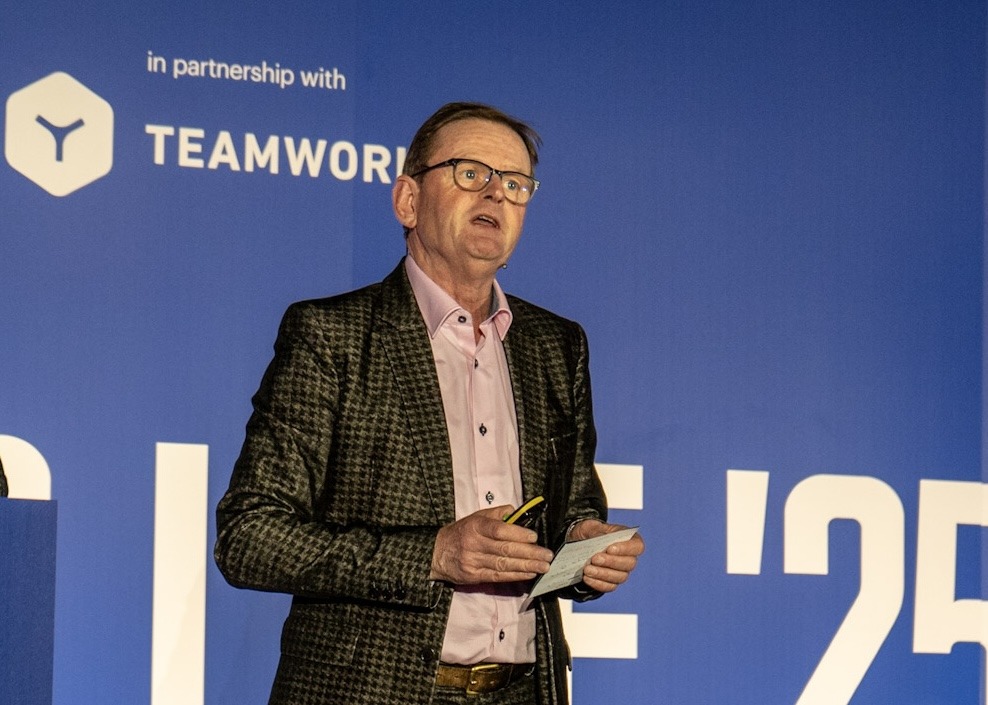
Brentford’s Consultant Welfare Psychologist, Michael Caulfield, delivered a rousing, thought-provoking closing keynote at TGG Live 2025 at Old Trafford. His message was that however much data and technology have reshaped elite football, the game remains, at its heart, about people and connection. What follows is an edited transcript. TGG Members can watch the keynote in full.
TGG Live 2026 is just around the corner! Find out more about our industry-leading Conference – and buy tickets – by clicking below.
Michael Caulfield: You’ve had two days of information, debate, knowledge, humour, science, discussion, gripping conversation and data.
Never have I been more excited about this beautiful, mad, chaotic, random game; never have I been more worried.
This morning I walked from Emirates Old Trafford to here at Old Trafford. I walked past the 1958 Memorial. It’s very moving when you see Tommy Taylor and Duncan Edwards.
You move around the concourse walls and you see the 1968 European Cup winning team. You see Brian Kidd, who was still going strong only two or three years ago.
You move into the Ron Atkinson era. You move into that night against Barcelona, with Bryan Robson. You move into the Sir Alex era, the Ryan Giggs era, and then you move into the current era.
And I read this during lunch, from Sir Matt Busby, on the wall of this Manchester Suite:
Manchester is people. Manchester United is people. The Stretford End is people. Salford is people. And these people are United.
And therefore, for the next 17 minutes and 32 seconds, may I talk about people. It may appeal to you, it may not appeal to you. But it’s my take on this beautiful, mad, chaotic game.
It’s not a view shared by everyone, even at Brentford. This is not a Brentford presentation, though how proud I am to have been at this remarkable small club for the past eight seasons.
We are not Manchester United. If we compared ourselves to them, we’d never get out of bed in the morning.
We haven’t got – and never can have – their remarkable history. But in this international week, can I take you please to St George’s Park, in March of last year. It was Eberechi Eze’s first England camp.
This is a short film (below), taken after training. No coaches, no structure, no-one around. Just Eze and Phil Foden.
🏴 Eze x Foden in England training. 😍✨ pic.twitter.com/qXKWpy3x1o
— EuroFoot (@eurofootcom) March 21, 2025
Watch the absolute joy of these two young men. It is absolutely stunning. Listen to the sound that ball makes, listen to that noise.
I’m still trying to do my work based on conversation, connection and understanding. I try and create time for others to keep that joy and that soul in football. I never, ever want to lose sight of it.
I went to the bathroom earlier, and there’s a picture of Sir Bobby Charlton nearby. As a boy, I dreamt of playing for Manchester United.
My bedroom was named the Bobby Charlton Suite, because I dreamt of being Bobby Charlton. My first game was 1968 at Wembley, watching United beat Benfica 4–1 in the European Cup, playing in dark blue with that sweat-stained shirt of Sir Bobby Charlton.
I hope you still, when you coach and lead and build a club and build a culture, never forget the young boy or young girl who dreamt of simply dribbling and having 10 touches and not two touches.
When we work in elite football, as I do now, I remember them.
At Brentford last year, the players all brought in pictures of themselves when they were seven or eight or nine or 10, growing up in Salford or Paris or Mozambique or Lisbon or Amsterdam or Hull or Copenhagen or Brasilia, and spoke about their first memory of playing football.
It was the most emotional part of the whole season. The players can cope with playing at Old Trafford, they can cope with playing at the Etihad, but they were terrified when they gave their two or three minutes of where they came from, who they were and what they stood for.
Still the most emotional thing I’ve ever seen in football is a young Nathan Collins naturally talking about growing up playing for Cherry Orchard in Dublin.
I read a quote this summer in an article on LinkedIn about preparing a team for football – It’s as technical and tactical as putting a man in space.
Please stand up in this room if you’ve done any space travel, because I’d love to meet you. I don’t believe that football is as technical as putting a man in space.
I've worked out the biggest threat to football - boredom.
Michael Caulfield
It’s a beautiful, mad, chaotic, random, stupid, illogical, emotional game, which I believe has been identified through research as the most popular activity in the history of humankind.
I present to the players at Brentford once or twice a year. That’s enough. And I used this quote in my presentation to the players in pre-season from Donagh (Holohan), who was at Manchester City for 13 years and is now at St Etienne – ‘Human connection beats data collection every time.’
I’m not saying that data is unimportant. I love data. How can we survive without data? However, I’ve worked out the biggest threat to football. You might have your own opinions – social media, demands on players, playing schedule, training loads, injuries, flying to Kazakhstan and back on a weekday – but I’ve got a different answer.
I’ve never said it before in public but I’ll say it now – the biggest threat to football is boredom. We have the ability to bore players if we’re not careful. How dare we stifle a talent such as a young Ryan Giggs growing up in Salford, or a young boy now growing up in West London or West Yorkshire or West Africa.
We mustn’t fall into the trap that because we have so much knowledge we constantly tell them what to do. Guide them, lead them, support them, challenge them, push them, listen to them, yes.
But gosh, we have the ability, if we’re not careful, to make it too functional for a mad, chaotic, beautiful, random-based game.
I got an email last year about this following a presentation I made at St George’s Park. It was from someone at a very well-known club in Manchester. I think they play in red and white. This sentence really stood out:
The continued drive for numbers and certainty creates greater uncertainty.
Because sometimes it’s not perfect, the same as VAR. And if we’re not careful, we can spread that to the players, because they can’t be perfect.
Ryan Giggs – I’ve mentioned him four times now – played 672 games for Manchester United. I don’t know how fully fit he was for the those 672 games, but he wasn’t half bad for those 672 games. This is my point.
I heard Lee Johnson speak so clearly and excitedly about his work and project in Belgium and about surveillance. And I hope that surveillance doesn’t go too far. I think sensitive surveillance is fine, but insensitive surveillance can terrify and bore people.
That’s the list of things a player can do in a morning and then if you’re lucky, by 11 o’clock they’ll get on the pitch. The pitch will always remain king in this mad chaotic world.
And the more we ask them, the more we inquire, the more we survey them, it can make people anxious. If I asked you 50 times a day, ‘How are you?’ then you’d get bored and tell me to go away. ‘Why is he asking me that question again and again and again and again?’
A day in my life perhaps looks silly. I can have a chat with Michael Kayode on his way out to the training ground. You could not meet a nicer young man in sport, let alone football.
Or just sitting down with our captain Nathan Collins, after an international week from the last week when he played for Ireland.
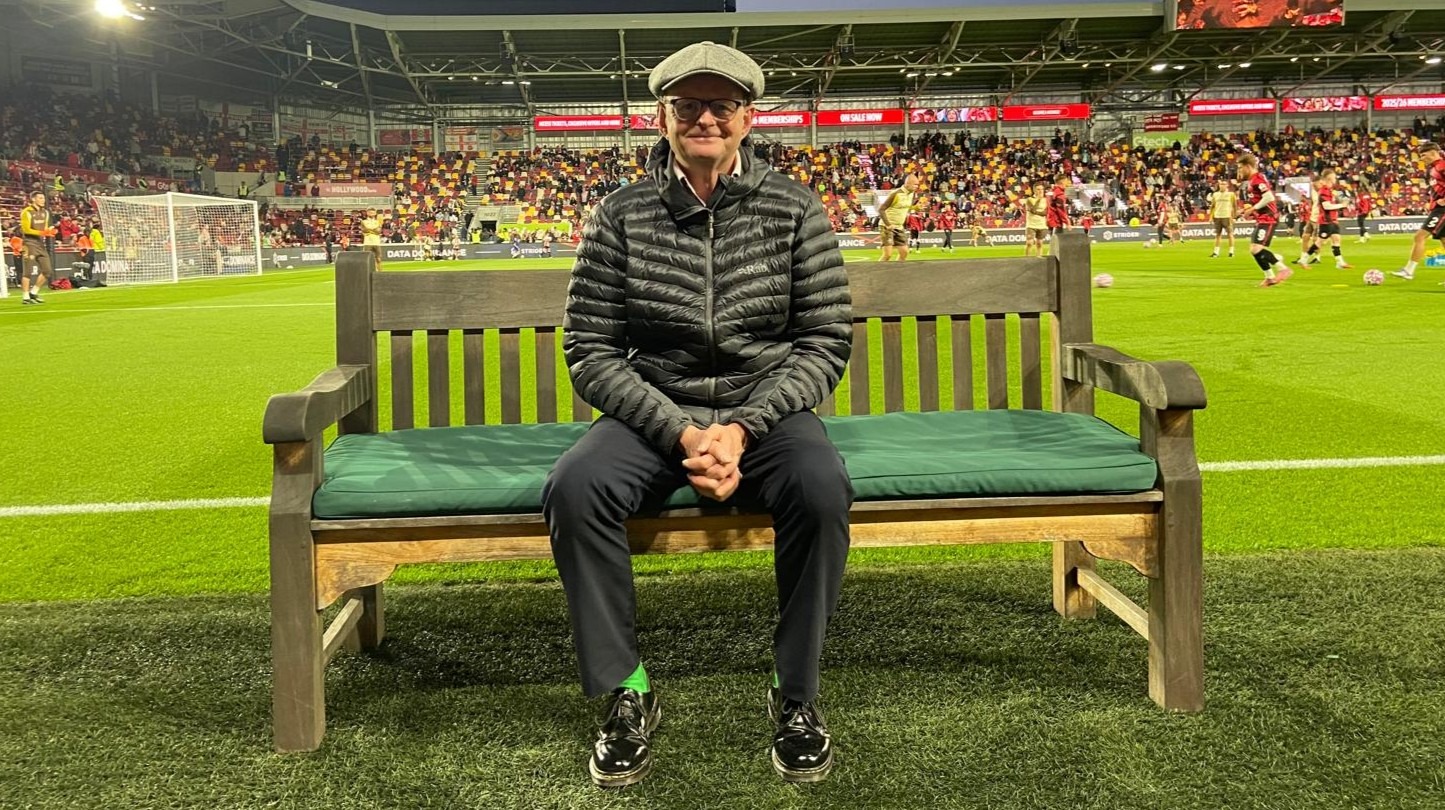
And again, you’ll see me there on my bench, my office, dressed like a maths teacher. I don’t mind looking like a maths teacher; in fact, the players say we prefer that you dress like this, because it gives you that bit of distance from the coaching staff.
That’s called Michael’s Bench and I’ve bought four now. We just sit and talk. Or just sit. Three weeks ago, the Premier League launched a campaign against suicide. It made its way onto Sky News (you can watch below).
Brentford's Kristoffer Ajer spoke with club psychologist Michael Caulfield and David Richardson about the importance of having a safe space to talk.
— Sky Sports News (@SkySportsNews) September 12, 2025
The Premier League have launched Together Against Suicide, an initiative to support fans affected by suicide or suicidal thoughts. pic.twitter.com/4rCi894Jhi
What Kristoffer Ajer said about the bench is a serious point, which he dressed up with some humour:
It’s a very special place for everyone in the squad to come and sit and speak to Michael. And obviously most of it is a lot of nonsense, but that nonsense is very important in football and life these days. Everything is very serious, everything is very strict. You have to try to be as perfect as you possibly can on social media and look good. But with Michael, you can be yourself. You can say exactly what you feel, and he will always try to give you a good answer. So this place means a lot to the whole squad.
Nonsense, but important nonsense.
I couldn’t believe it when I was asked to go to the game against Chelsea last season and take the bench with me.
That became a campaign we’re proud to support. The first bench was opened in the park in Brentford yesterday for the community to go and sit and just sit down and have a conversation.
As we draw to a close, I want to share a quote from Luiz Felipe Scolari, whose Brazil side won the 2002 World Cup: “My priority is to ensure the players feel more amateur than professional.”
I agree with that. I don’t mean Nando’s or double egg and chips every day. Thirty years ago, it was the other way round, but now there is so much professionalism, we have to revert to urging players to like the game, to love it, to do it with joy.
Bobby Charlton is still my hero and I still believe it is a beautiful game. And I hope we can somehow keep it that way, because, as Sir Matt said, it is about people.
Thank you for listening. And one day, if you want a chat, I’ll be on the bench.
Follow Us
For latest updates, follow us on X at @ground_guru