Joe Newton: Why you can’t buy Brentford’s culture
Written by
Simon Austin
June 26, 2026
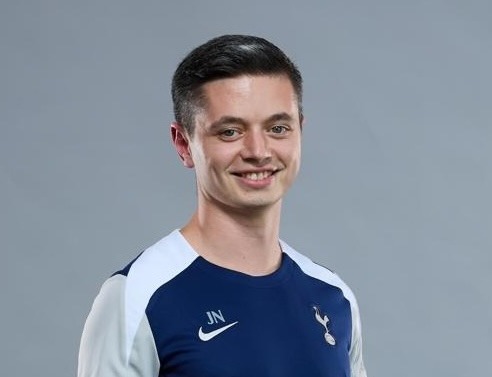
Analyst Joe Newton says you can’t buy Brentford’s culture by hiring their staff – and he should know, having been one of seven who followed Thomas Frank to Tottenham a year ago.
Newton spent six years as a First Team Analyst at Brentford, before moving with Frank to Spurs in the new role of Coach-Analyst. A total of seven staff made the same switch across London, but their tenure was terminated just seven months later, with Spurs 16th in the Premier League and just five points off the relegation zone.
Speaking on Episode #79 of the TGG Podcast, in association with Genius Sports, Newton admitted: “We took quite a few staff to Tottenham, but we found that just because you take six, seven staff, whatever it was, that doesn’t automatically take the culture from Brentford to Tottenham.
“Obviously we knew that, but it was evident when we got there.”
Brentford’s staff are good enough that bigger clubs keep hiring them. Behind that though are processes, a structure and a culture that are unique to the Bees.
In simple terms, culture can be defined as how an environment impacts the behaviour of those within it.
“It’s probably what you call Brentford’s secret sauce, of why people from the outside think they are punching above their weight every season,” Newton said.
“Because they’ll lose players, they’ll lose staff to bigger clubs, but they just manage to kick on again. And I think it’s because it’s the culture, the approach of everyone pointing in the same direction and working in that same way.”
This alignment starts with the man at the top – Matthew Benham, Brentford’s majority owner, who has run the club on data-driven principles since taking control in 2012.
“The owner’s fantastic; the people below him, in terms of (Technical Director) Lee Dykes and (Sporting Director) Phil Giles, just brilliant,” Newton said.
“It’s that culture that I think drives them, as well as obviously top talented people in staff and players.”
Benham isn’t some remote financier, but rather a present, knowledgeable and notably unassuming figure around the training ground.
“Matthew is someone you’ll see in the training ground quite often,” Newton revealed. “He’ll come into meetings. He came into mine once and I was like, ‘Oh my God.’
“It was after a Cup game, I think we played Leyton Orient in the Carabao Cup. I was doing my debrief meeting and he came in about halfway through.
“I froze for probably a split second and then just carried on. Then I look back to Josh (Kirk, Head of Analysis) and you can see the colour come out of him for like a split second, because he realised, ‘Oh no, I’m presenting next and Matt’s gonna be in here.’
“Literally the same day, we had lunch with him, me and Josh, and he sat down with us and said he really enjoyed the meetings and thought they were really good.
“He’s just approachable. He just seems like a normal guy to talk to, but obviously very, very intelligent.”
This combination – deep expertise that’s worn lightly – is rare among owners and Newton believes Benham’s grasp of football operations is what sets him apart.
“He knows football and data extremely well,” Newton said, “and that just filters all the way down through the club.”
Frank and his successor Keith Andrews were both comfortable with Benham coming into their meetings and witnessing their work first-hand, Newton said.
“It also comes from Thomas – and probably Keith’s the same, based on what I know after working with him – they welcome that, they don’t mind him coming into those meetings.
“Probably some managers would think, ‘I don’t want the owner in here, we could be saying all sorts of stuff we don’t want him to hear.’
“But that just shows again the sort of alignment the whole club has and how open the staff are, of having discussions with everyone, from the very top all the way to the bottom of the staff.”
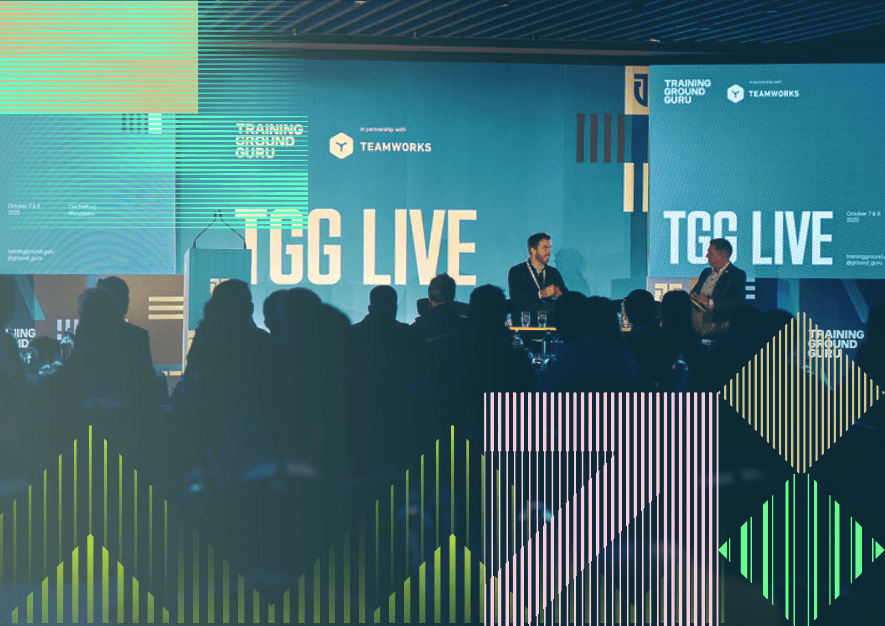
Joe Newton will be presenting at TGG Live 2026 at Old Trafford in September. To find out more and to buy tickets, click below.
What’s non-negotiable
Alignment only works if some things are fixed.
At Brentford, the use of data is one of these things. It’s not a tool that individuals can take or leave, but a condition of working at the club.
“The key thing for me is that everyone is pointing and working in the same direction,” Newton said. “That’s the biggest thing. I don’t think you’ll get anyone at Brentford who’s against the data, for example, because that’s the club.”
Another non-negotiable is to focus on set pieces.
Frank’s former Assistant Brian Riemer, now Head Coach of the Denmark national team, mentioned this in an interview in 2021.
“When I first came to Brentford, I thought this focus on set pieces was a waste of time and resources and the players would never embrace it,” he said. “I was obviously proved wrong.
“It’s something that both Rasmus Ankersen (former co-Director of Football) and Phil Giles care deeply about, and they will tell us if they think we don’t utilise these set-piece situations well enough, or if we don’t allocate enough time at training to work on our set-pieces.
“So, it’s something the entire club wants to be really good at and, therefore, we always spend time on set pieces at training.”
Brentford pioneered the roles of both Set Piece Coach and Set Piece Analyst in English football. Again, their staff have been poached by bigger clubs, but their success in this area has stayed the same.
Gianni Vio, the first Set Piece Coach in English Football, in 2015/16, was pinched by Leeds United and later worked at Tottenham. He now holds the role with the United States national team.
Nicolas Jover followed from 2016 to 2019 and went to Manchester City. The Frenchman is now the most celebrated Set Piece Coach in world football and played a key role in Arsenal winning the Premier League last season.
Andreas Georgson came next, was hired by Arsenal, and after spells at Malmö, Southampton and Manchester United, joined Tottenham (where he remained after Frank’s sacking) and is currently at the World Cup with Sweden.
Bernardo Cueva, who led the department for almost four years, was poached by Chelsea, where he won the Conference League and the Club World Cup in his first season.
His successor was Keith Andrews, who is now, of course, Brentford’s Head Coach. Throughout these changes, Brentford’s set-piece output has barely dipped. The role keeps changing hands; the quality does not.
The case study: Set Piece Analysts
The coaches might be the headline, but the analysts beneath them reveal a fascinating story – as Newton highlighted on the TGG Pod.
In six years at the club, he worked alongside four different Set Piece Analysts and watched as they made big careers.
“One moved on quite early on in my time there, just towards the end of my first Championship season (Dylan Jones, now First Team Lead Post Match Analyst at West Ham),” Newton remembered.
“Then we got in Jack Wilson, who went on to Manchester City as Set Piece Analyst and he’s now transitioned to Set Piece Coach and had roles at Wolves and now Sparta Prague.”
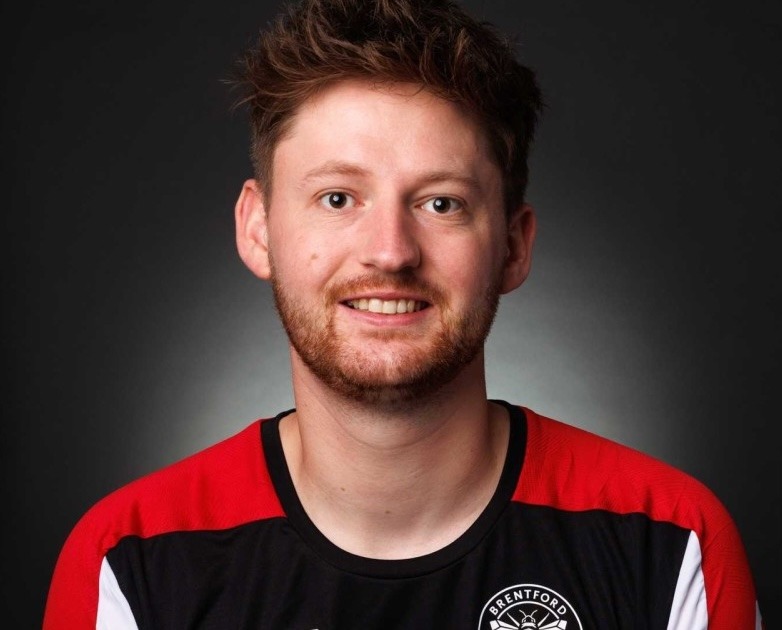
Billy Wright: Destined for big things
“As Jack’s replacement we got Marc Orti Esteban – he deserves a lot of credit but also Brentford as a whole for the development of staff.
“He came in off the back of an internship at Midtjylland, as a Set Piece Intern, and just developed himself. The club allowed that development and he’s now Set Piece Coach at New England Revolution in the MLS.
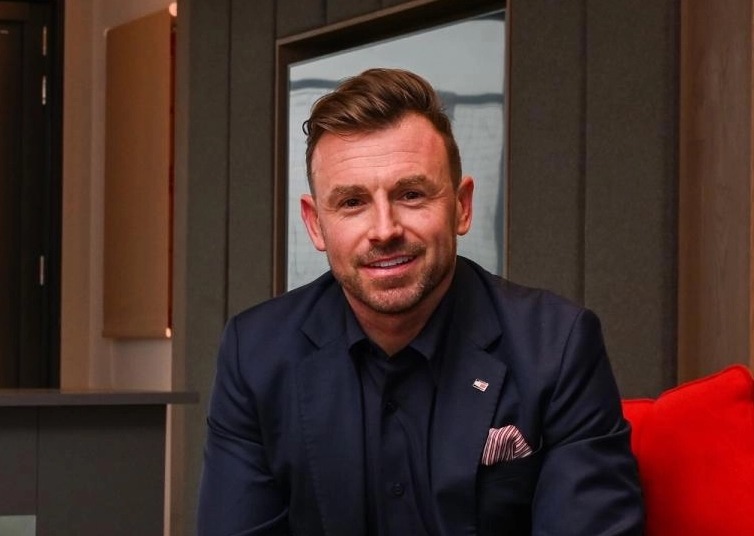
“Then we got Billy Wright in from Norwich to replace him and again he just hit the ground running. If you told me tomorrow that he’s moved on to some amazing role, it wouldn’t surprise me.
“That goes for anyone at Brentford, because they’re a fantastic group of staff that the club allow to develop really well. It’s a fantastic group that can go on to be anything they want, is my opinion.”
How Brentford identify staff
A production line of this kind depends on recruiting the right people – and Newton’s own route into the club illustrates how Brentford go about this.
“It was just a traditional job advert, through my CV,” Newton said.
However, the club were clever in the way they then conducted the interview process.
“Luke (Stopforth, former Head of Analysis) and Brentford deserve a lot of credit for what I think was a very good interview process, because the task I was asked to do was exactly like the job I was going in for,” Newton revealed.
The interview process was almost identical to what I was going into.
Joe Newton
Newton, who was working for The New Saints in the Welsh Premier League at the time, was handed a real fixture – Brentford against Hull in the Championship – to debrief, plus a sub-task producing individual player clips for Riemer.
“Although you might think TNS and Brentford is a big jump, confidence-wise I’d already done the job for the interview. I got a brief – Hull against Brentford in the Championship, the opposition stuff – to debrief the game, focusing on certain areas.
“And then there was a sub-task from the Assistant Manager, individual clips from Brian Riemer, and again that was exactly what I got into the role.
“So the bigger meeting debrief was team based to all of the coaches and the whole squad and then you add these little sub-tasks with Assistant Managers or other coaches to clip up these individual clips.
“That deserves a lot of credit, because the interview process was almost identical to what I was going into.”
How Brentford develop staff
Identifying the right people is half of it. The other half is what happens once they are in the building.
“They’re a fantastic group of staff that the club allow to develop really well,” Newton said. “It’s a fantastic group that can go on to be anything they want, is my opinion.”
So a Set Piece Intern from a sister club (Esteban) was given the room to grow; other staff, including Newton, were backed to stretch themselves, while being supported.
“My role and title was pretty much the same throughout my six years at Brentford, but there were things I was always trying to develop – like learning new skills like Tableau for example,” Newton explained.
“I remember self teaching myself that with YouTube videos, with Tableau forums. Data courses, I did a Google Analytics course.”
“Riding the wave of getting promoted, you get access to software providers, different platforms, different ways of capturing footage live.
“You’re progressing yourself by learning new ways of doing things at the high level. So although my role probably didn’t necessarily progress, the club did and then I was trying to add extra bits to my role.”
Chelsea
Chelsea’s co-owner Behdad Eghbali, of Clearlake Capital, has been open in his admiration of Brighton – a club built, like Brentford, on a data-led model.
“Brighton, we think they are one of the best run teams in the Premier League,” Eghbali said at a Sportico event in October 2022.
“Their founder, owner [Tony Bloom], is a sports gaming, data background. He spends 10% of the payroll [of the top five or six], wins almost as much, and is a very stable mid-table, very profitable club.
“If you apply some of that IP into developing talent, but keeping your own talent, the model of six, seven, eight-year contracts, we think can be a sustainable model.”
Chelsea then set about acquiring the model. In September 2022, they appointed Brighton’s Graham Potter as their Head Coach and brought five of his staff with him – Assistants Billy Reid, Bjorn Hamberg and Bruno Saltor, Goalkeeping Coach Ben Roberts and Recruitment Analyst Kyle Macaulay.
Chelsea also hired Brighton’s Head of Recruitment, Paul Winstanley, as co-Sporting Director in late 2022, and 15 months later hired his successor in the role, Sam Jewell.
By early 2024, reporting put Chelsea’s combined compensation to Brighton for players and staff at more than £200m.
The results have not necessarily followed the personnel. The reason was perhaps articulated by the man who managed Brighton after Potter.
“The big clubs can buy the players,” Roberto De Zerbi said, “but they can’t buy our soul and our spirit.”
Former Brighton Technical Director David Weir, now Sporting Director of Chelsea’s sister club Strasbourg, has described the Seagulls’ secret sauce as “stability and alignment”, starting at the very top with the owner.
Sound familiar?
Follow Us
For latest updates, follow us on X at @ground_guru