Azeem Amir: Challenging perceptions, breaking down barriers
Written by
Simon Austin
August 11, 2026
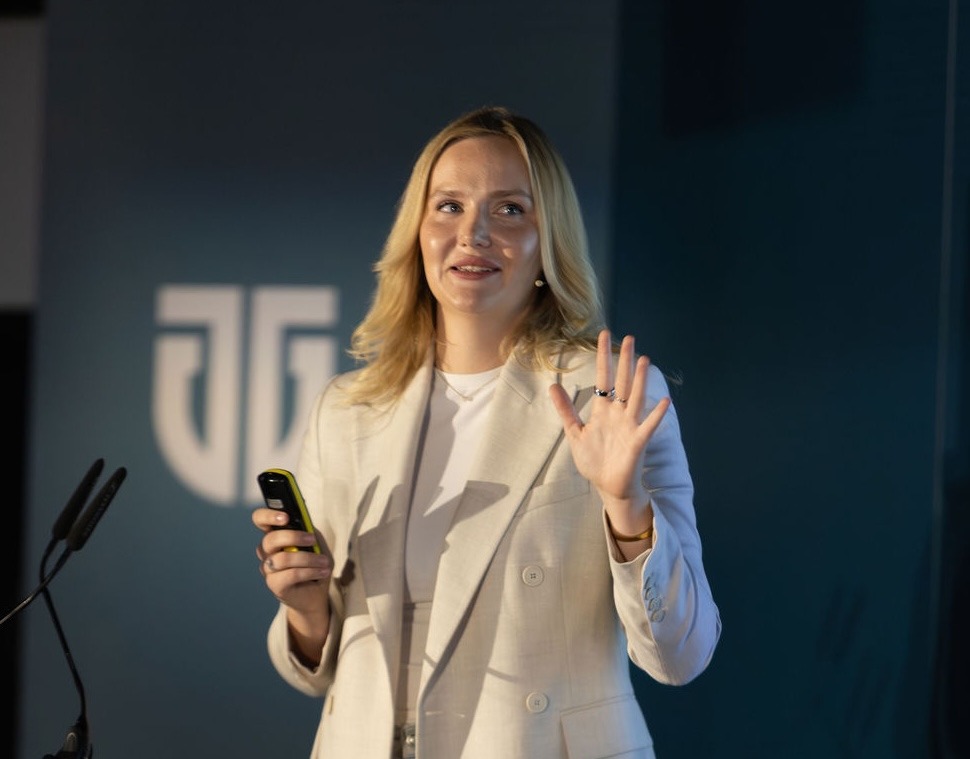
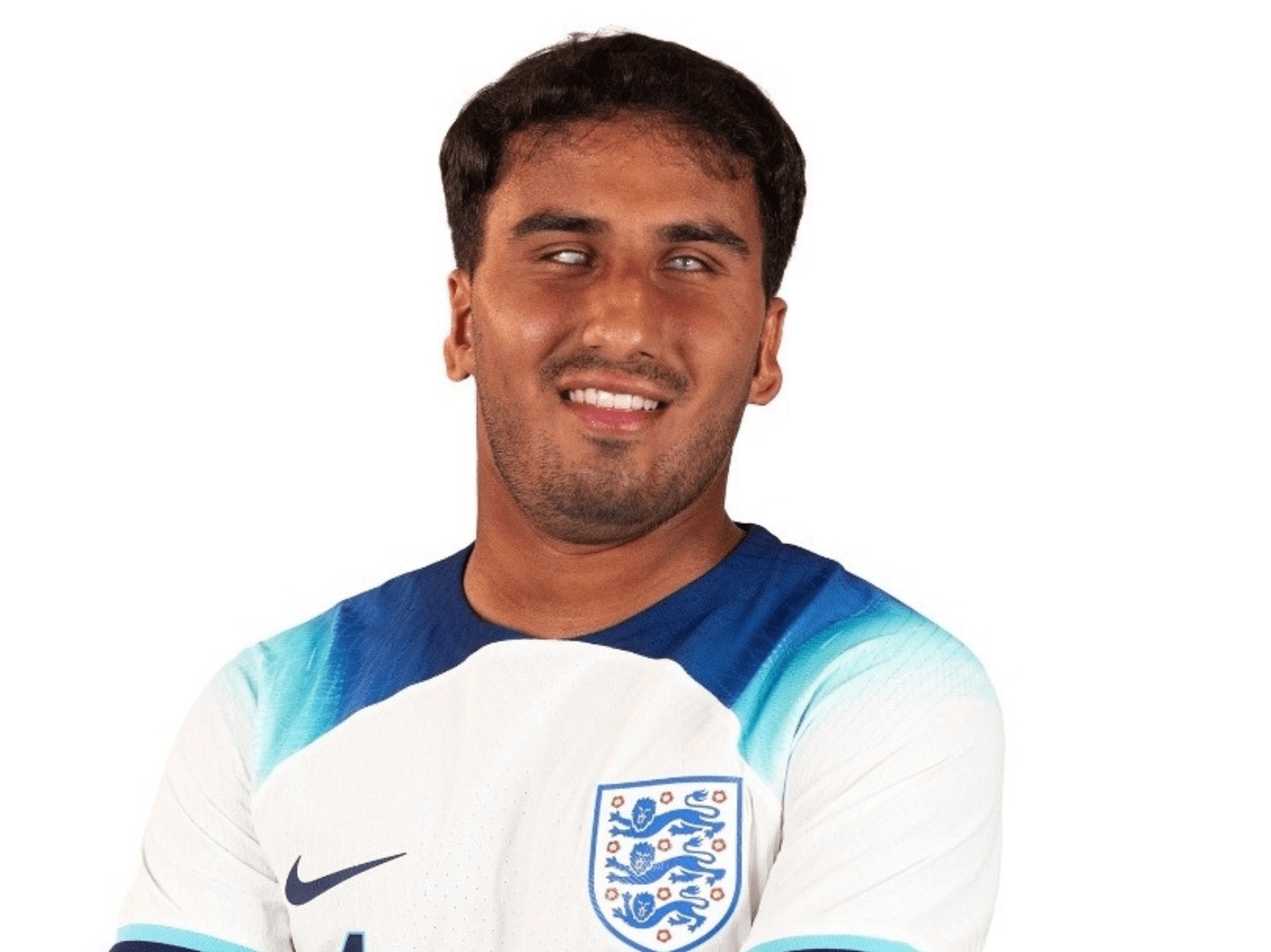
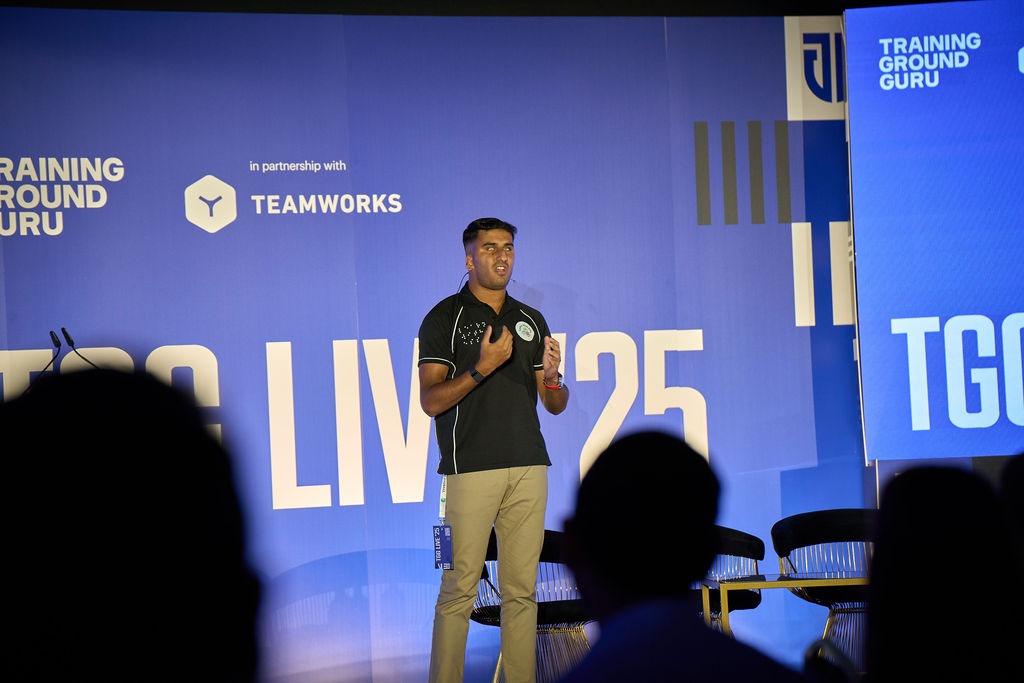
Azeem Amir is an England blind football star who scored a last-gasp winner to clinch the 2025 IBSA Nations Cup in India last October – the team’s first piece of major silverware. He is more than a footballer though, running a social enterprise that challenges society’s perceptions of disability. Azeem delivered a truly inspirational closing keynote on Day One of TGG Live 2025 at Old Trafford. What follows is an edited transcript. TGG Members can watch the keynote in full.
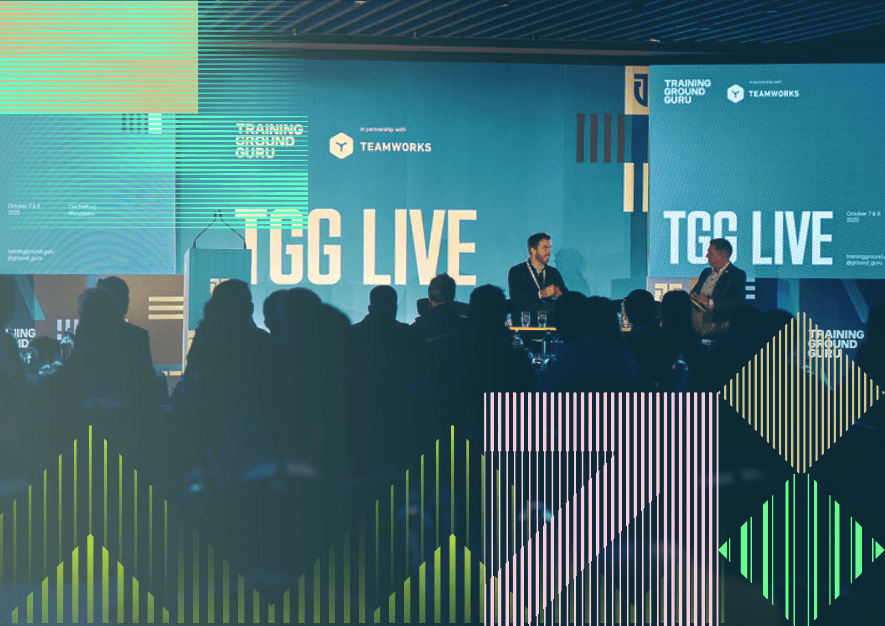
TGG Live 2026 is just around the corner. To find out more about our industry-leading Conference – and to buy tickets – click below.
Azeem Amir: I was born with a visual impairment. Some people call it blind, some call it partially sighted, some call it sight impaired.
I just say I struggle to see.
I was born with no sight in my right eye and just light perception in my left. So I can make out light shapes, shadows, from about an arm’s distance, but apart from that I really struggle with detail.
People ask me, ‘Azeem, do you get nervous when you’re public speaking?’ I say there could be six people or 6,000 – a benefit of not being able to see is you don’t know your audience, so usually I manage the nerves quite well.
I went through mainstream education and had someone that would support me. They taught me how to use braille. They would read what was written on the board to me. They adapted work so I’d be able to access it through technology.
Sport was a big part of my life; sport was something I was really passionate about. That really meant a lot to me in terms of all the skills that would come alongside it.
And school were great here too. They would try to adapt sport for me to join in, for me to feel as included as I possibly could be. And they got quite creative. So we would use, for example, walkie talkies on a climbing frame or a climbing wall.
They tried to adapt badminton by putting an LED light inside a shuttlecock. They’d dim the lights and try and see if I could pick up on the haze of it. I was still horrendous, but they were trying.
My favourite one was rugby. They tried to adapt rugby by using a fluorescent rugby ball, which was great for the first five minutes until it got muddy and then I couldn’t see the ball anymore.
TGG Members can watch Azeem Amir’s full presentation – plus others from TGG Live 2025 – by clicking below
Blind football
There was one sport that really did change my life – blind football. A lot of people have probably never even heard of blind football before, they’ve never seen blind football.
When someone first presented it to me, my first thoughts were, ‘Blind people playing football? Get the first aid kit out. That’s a recipe for a disaster. That’s a car crash waiting to happen. How do they know where the ball is? How do they know where the goal is?’
It just didn’t really make any sense until someone said to me, ‘Azeem, I’m telling you, this will be the first time you’ll play on an even playing field. You should really give it a go.’
And that’s what I did. It was yes to an opportunity that truly did transform my life.
So a little bit about blind football. It’s a five-a-side sport played by four outfield players and one fully-sighted goalkeeper. The four outfield players have some form of visual impairment.
To ensure that none of them can see anything at all, the outfield players wear a blindfold. We play on a specialist pitch with boards going down the sides, which help the ball stay in play and create a perimeter for us.
They also help with our echolocation, so we can hear whether the ball is to the left or to the right. The ball is a futsal ball and slightly heavier than a normal football. There are ball bearings in the panels which, when shaken, make a sound. That’s how we’re able to know where the ball is.
One of our coaches stands behind the goal we’re shooting towards and, using that person’s voice, we will be able to identify where the goal is. They’ll give us instructions like, ‘Dribble to the left, dribble to the right, shoot towards my voice,’ and that’s how we’re able to know where the goal is.
As a defender, you have to say the word ‘voy’ (Spanish for ‘I’m going’) when you are in close proximity to the ball and the referee has to be able to hear it. As an attacker, I’ll be able to then manoeuvre myself away from that sound.
If someone is saying ‘voy’ over here, I know the defender is coming from that side, so I’m going to take the ball this way. It’s all about painting that picture in your mind.
The game is played from grassroots level all the way up to European, world and Paralympic level.
England international
I started to play at county level and was then very fortunate to be scouted and go through a talent ID programme. Then my life really changed in 2019 when I got invited to St George’s Park to train alongside the England men’s blind football team.
It was my first visit to such a world-class facility. As we walk through the corridors, who gives you a high five? It’s Harry Kane. Holding open a door for you as you walk through is Jude Bellingham. You’re stood having coffee and the person in front of you is Jack Grealish.
I watched these guys on TV and now I’m training and utilising the same facilities as them. Later that year I got a call to say, ‘Azeem, we’d like you to come out to Japan, to Tokyo.’
That is where I put on the England kit with the three lions on my chest, with my name and number on the back, singing the national anthem. It was a day that truly changed my life.
Ever since then, I’ve had the privilege of representing England all around the world, playing at European level and world level, competing in Japan, Argentina, Brazil, America, most countries in Europe, and doing something that people dream about.
Growing up, I used to watch David Beckham, Frank Lampard, Steven Gerrard. I didn’t think I’d be able to play football, let alone play for my country. And now I’m super, super, buzzing to say I’ve got 40 caps for England.
On Sunday, I returned from India, where the England men’s blind football team won our first mainstream trophy ever – and the first gold medal in 20 years for an England disability team. That’s something I’m super, super proud of.
We did it by scoring in the final against Iran with 0.1 seconds to go [Amir scored the winner]. So that was something super, super special. That night in India will truly stay with me for the rest of my life.
‘We’ve already won’
Culture is a massive thing. We have this concept of ‘we’ve already won’. The fact we are doing something we love, we’ve already won. The fact we are playing the sport we love, we’ve already won.
The fact we’re all together, the fact we’re able to do something people would only dream about, we’ve already won.
We look at what we’ve come through as a squad and what we’ve achieved and that really helps us. It really helped the lads manage nerves and manage that tournament uncertainty, especially as we got deeper into it.
When you do something you love and start to instil all these messages into your day to day around being positive and open minded and focusing on gratitude, it does really pass on.
Not only are we trying to become good players, but the bigger picture is becoming great people. Because football is a very small part of life. In the grand scheme of things, it’s about family, it’s about community, it’s about legacy. And that’s something I’m very passionate about.
If I can influence one person, whether it be within the squad or wider, then I feel I’m doing something positive.
Wider mission
We’re semi-professional. All of the England para football teams – across cerebral palsy, deaf men, deaf women, power chair, partially sighted, blind – all the lads and ladies will do something alongside their football to complement it.
So I still studied, I went to college and University, did my Masters in business and sports management, and then, when it came to thinking about what I wanted to do to complement my football, it was a really easy decision. I just wanted to do something where I was having impact.
I wanted to do something where I was leaving a mark, where I was leaving a legacy, where I was making some form of change. Someone told me about the world of entrepreneurship – ‘Azeem, if you’ve got an idea, we can help make it into reality.’
My idea was quite simple – I wanted to change how society perceives someone with a disability. And it came from personal experience.
Particularly within my South Asian culture, there was almost a pity culture, they call it a bachara culture – ‘I feel really sorry for you. Bless you. It’s amazing what you’re doing.’
I started to feel people would just look at me as someone with a visual impairment or someone who’s blind. It was that pat on your back culture – ‘You’re doing great things, you must have a really low quality of life.’
All of a sudden we started to reframe that word 'disability'. It wasn't just disability awareness, it was challenge awareness.
Azeem Amir
I just wanted to say, ‘Do you know, I live a better life than 99% of fully-sighted people. I get to travel around the world and play football. I run my own organisation. I’ve achieved and experienced some amazing, amazing things.’
But people would always look at me as ‘that lad with a visual impairment.’ I wanted to really change that.
That’s where Learn with ESS – Learn with Education, Sport and Speaking – was created. It’s a community-based initiative that drives change through practical and interactive workshops where we give people the chance to experience a day in the life of someone who can’t see, hear, talk or walk. We do that via the use of blindfolds, ear defenders, wheelchairs.
And we start conversations around invisible disabilities by giving people the opportunity to speak to someone who’s got a lived experience, who does it every single day, because they can’t take their blindfold off, they can’t take their ear defenders off.
We can give people the opportunity to feel and experience what a day in that person’s life is like, whether that be going to the shop for a pastie, buying a drink, going for coffee, doing the shopping, getting on a train, going on a plane.
That was my idea around giving people that lived experience to make them feel the little things they could do to make a big difference to helping others.
All of a sudden we started to reframe that word ‘disability’. It wasn’t just disability awareness, it was challenge awareness. Because challenges will come into people’s lives in lots of different ways. Some people have disabilities, some people have bereavement, some people have illness, some people have mental health issues.
Challenges will come into people’s lives in so many different ways. It’s about creating a positive mental mindset and instilling a set of skills where people feel anything is possible. They can achieve anything, they can make things happen.
Developing the skills of empathy, gratitude, perspective, compassion, communication are super, super important. Hopefully we can drive and create societal change. That’s our mantra – changing how society offers a helping hand. What little things people can do to help others?
I truly love what I do. I’m fortunate to have had people around me that said, ‘Azeem, we’re going skiing, you’re coming with us. We’re going to find a way. We’re going kayaking, we’re going surfing, we’re going scuba diving.’
When you surround yourself with that – ‘we’re just going to find a way’ – you get creative, you think outside the box. That’s what it’s all about.
Mindset + technology
Now I know a big focus today has been on technology.
Technology is truly revolutionising my life. I recently got hold of a pair of AI glasses and I can’t really explain how much they have changed my life in the last six weeks. The fact I’m able to go into a coffee shop and read the menu independently for the first time in my life is huge.
The fact I’m able to look at my post in the morning and read it and access that for the first time in my life is huge. I bought my first book and the glasses were able to read it to me last week. They’ve got cameras in and are able to describe the environment around you.
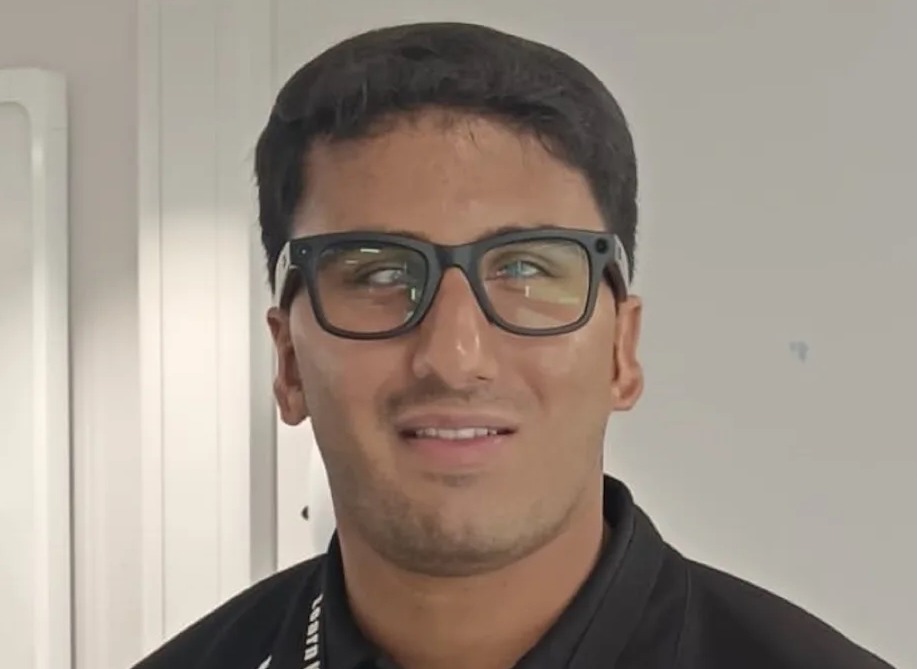
Azeem Amir wearing AI glasses
I go all out. I was like, ‘Let’s test these out properly.’ So I went Go Karting. I rang my mate and said, ‘Your job is to guide me around this track.’
That was the first time in my life I’d been in an individual Go Kart and through the glasses getting information – turn left, turn right, press your accelerator – I was able to navigate a lap independently. Now I’ve got my mind set on jet skiing. I’m open to suggestions.
I’ve got the best job in the world. Not only am I the CEO of winning life, but I do something I truly, truly enjoy. I get paid to play football and travel all around the world. I get to do a job that is a hobby.
Then it’s about driving societal change, to showcase that anything is really possible. Some people are presented with challenges earlier on in life, some people later in life. Some challenges are really really big, some challenges are really really small.
But with these set of skills, with a positive mental mindset and an outlook where we focus more on what we have instead of what we don’t have, then hopefully we can start to think about little things we can do to help others.
That’s truly what I’m passionate about.
Follow Us
For latest updates, follow us on X at @ground_guru