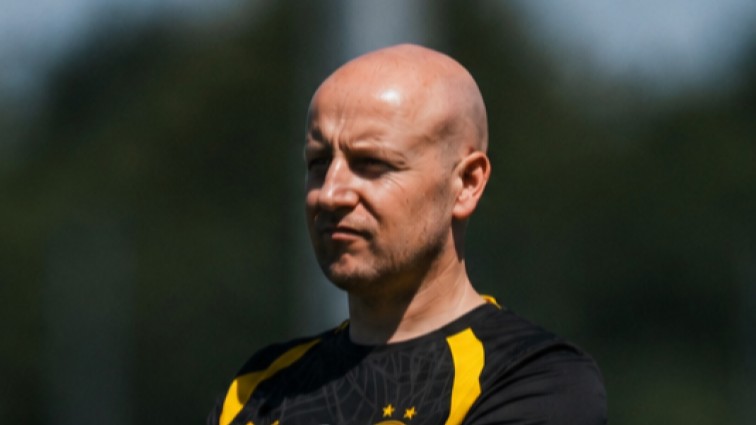
How Charlton integrated tactical, technical & physical to survive Championship
Written by
Simon Austin
May 21, 2026
Charlton Athletic have survived their first season back in the Championship – a brutal division defined by fixture congestion, elevated physical outputs and tactical variety.
With three-game weeks not uncommon, the Addicks faced compressed recovery windows and needed to turn analysis around quickly, without sacrificing depth.
They responded to these demands by embedding Genius Sports Performance Studio – and its core Insight platform – into their workflows. The platform brought together tactical structure, technical actions and physical KPIs as one.
“The physical demands that are placed on the boys and the playing squad are significant,” said Head of Sport Science Luke Sanders. “To be able to roll that performance out of a three-game week can be challenging. So optimising recovery alongside the performance demands is probably our biggest challenge.”
First-Team Performance Analyst Dan Mahony agreed: “You’re playing three games a week pretty often, so being able to stay ahead of your workflows and make sure you’ve got that preparation in place is key.
“Even if you’ve only got a couple of days between games you want to do your due diligence and make sure the work’s done properly. Just dealing with that time pressure is the biggest thing.”

Performance Studio: One platform, three integrated layers
The Addicks adopted Genius Sports’ Performance Studio in their first season back in the Championship following five seasons in League One.
Head of Performance Analysis Peter Booker explained: “Performance Studio allows us to cut out a lot of the coding ourselves.”
Within this workflow, Insight combines event and tracking data into XMLs that drop into Sportscode or are used natively in Performance Studio’s video tool, where events appear as searchable clips.
A rankings layer then aggregates tactical, technical and physical metrics into comparative tables for reports.
Booker’s focus is almost entirely pre‑match, with post‑match support tailored to the needs of Head Coach Nathan Jones, who has been with the club since February 2024.
“You want to know everything about the opposition, because you’re essentially trying to predict what they are going to be doing, especially against your shape or specific players,” Booker explained. “Also how their shape works, their structure and the individuals that affect that.”
In League One, Booker once watched 11 full games to prepare for a single opponent. Performance Studio can automate and speed up many workflows, saving considerable time.
“The job requires a lot of man hours,” he said. “Then it depends on what sort of week you have. When it’s a normal week you’ve got a lot more time in terms of your training week.
“If it’s a three-game week, you’re essentially trying to cram three weeks’ worth of work into one. That’s where Genius Sports are very good, because their platform allows you to cut a lot of the noise down and look at specific things.”
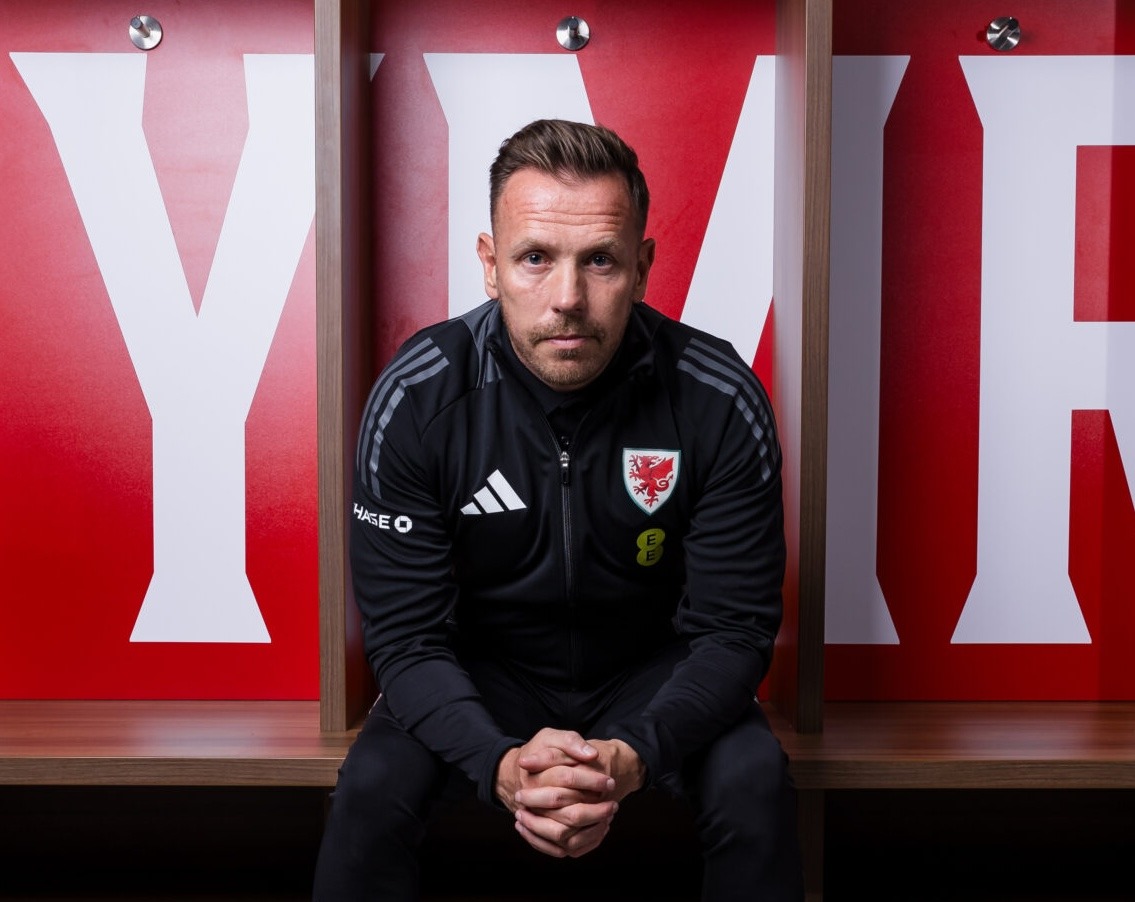
Mahony explained how the filter engine helps to make this possible.
“What I think Performance Studio does really well is it’s got all these different filters you can choose from to see certain video clips. So instead of trawling through every single set piece a team has, you can focus on the ones that are more specific to you.
“So if you know another team puts the same number of players in the box as we do, then we might be able to hone in on those and see how our opponents react to that. It really streamlines what we can do.
“We also get a lot of questions off the cuff from coaches. Such as, ‘If we do this, what do you think they’ll do?’ And again, using those filters you can quickly find a clip that’s as similar to that as possible and give them the right answer.
“One thing that’s really good as well is telling you who’s involved most in certain things. So we might look at key passes and see if a certain player plays the most.
“It also tells you which ones created the highest XG, so we can see which players are most dangerous. Again, we can then marry that up with the footage using the filters to see what their high XG moments are coming from, what kind of threats we need to be aware of.”
Team-shape outputs in different phases can be exported into reports that are shared with coaches and players.
“We’ll put that in the report that’s shared with all the coaches and with the players as well,” added Mahony. “So they’re able to get that insight should they want it.”
Physical insight: Benchmarking, KPIs and rotation intelligence
Sanders uses Performance Studio to gain physical insights across the first-team squad.
“We use it for pre- and post-match physical analysis,” he explained. “We use it to compare to the upcoming opposition, to give the guys a gauge of what they’re going to face in-game on an individual and a team basis.
“Post-match, we utilise it to benchmark ourselves across the league and benchmark ourselves against that opposition to see how we performed relative to match context and playing style.”
The physical step from League One to the Championship was immense.
“Predominantly we look at high speed running and sprint distance as our two main KPIs across the league,” Sanders explained. “We’ve experienced a significant increase in both metrics since we’ve been promoted from League One, probably a 30% increase across both metrics.
“So we predominantly look at them to see how we’re matching up relative to Championship opposition, across high speed and sprint. So for example, our wing backs will get the data relative to opposition wing backs and relative to the upcoming threat from the opposition wide men.
“We try and do a lot of comparative data to give the guys an idea as to what the physical expectation is in the game and what the potential demand is.”
Coaching staff can also receive position-specific information via Performance Studio.
“From the coaching staff perspective, they like the benchmarking data,” Sanders explained. “We give them benchmarking data relative to league and opposition and it allows us to bucket opposition teams into sub-categories as to what we’re expecting from a physical demand standpoint.”
The insights then help inform the rotation decisions that are made by Head Coach Jones.
“There’s an expectation that we are going to have to rotate,” Sanders admitted. “We benchmark reliable, valid data alongside our subjective wellness to make sure we’re making the right decisions with rotation and try and give the coaching staff early indications.”

Single data stream = confidence across the MDT
Sanders said “the biggest positive” of the platform was the way it pulled tactical, technical and physical together into “one initial data stream.”
He explained: “It allows Peter and the guys to be across everything from tactical and technical. If they need to view anything from a fitness standpoint, it’s easily accessible. The main positive is that everyone has confidence in the data quality and reliability.”
Booker agreed that integration was crucial.
“It incorporates tactical, technical, physical – it does genuinely bring all those three together. You need a case of oversight that has everything in it, because that’s the way the Championship is.
“Every team plays very differently. Some teams are more technical and tactical, whereas a lot can be more physical or direct. It allows you to bring everything together to understand the needs of the game.”
Charlton’s tactical philosophy
Charlton’s game model is clearly defined.
“We have a clear structure in terms of how we want to play,” Booker said. “We are a very structured team. We have what we call solutions for scenarios.
“So whether it’s building from the back or when we do go a bit longer, how we try and create that effectiveness. We’re very structured out of possession as well, in terms of we’ll look at the opposition and change in terms of maybe starting positions or how we press a team.
“But we’ll be clear in terms of how we’re going to do that to the players.”
It helps that the Head Coach has an appetite for analysis.
“We do a lot of work we give to him,” Booker said. “He takes that and still watches games himself,” Booker said. “He’s very keen, so he allows us to do our work and we take a lot of ownership in our work.”
Next season
Charlton’s first campaign back in the second tier was about stabilising. This meant coping with a heavier physical load, tighter turnarounds and a wider variety of tactical approaches from opponents.
Booker says they’ll be looking to push on next season – and that Performance Studio will be a key part of that.
“The first year is about getting familiar with it more than anything else and how you can use it. Next season we’ll look to incorporate it into our workflow even more.”
Follow Us
For latest updates, follow us on X at @ground_guru