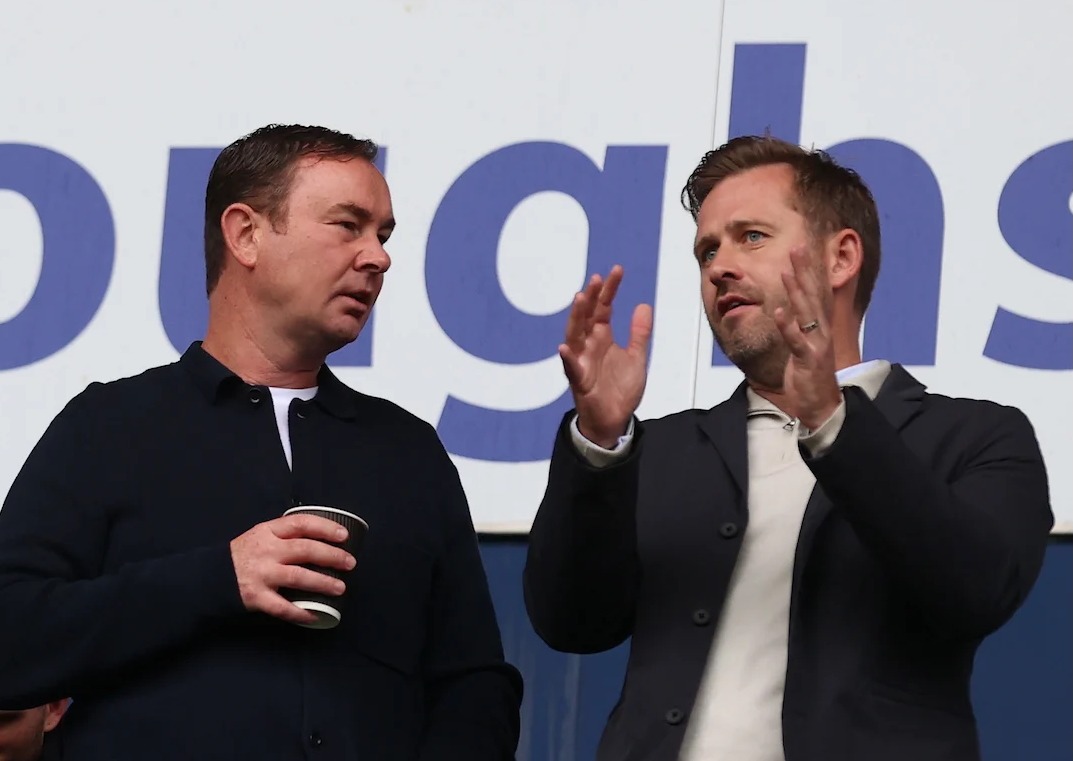
Wales’ Genius move: How video and data are forging a national identity
Written by
Simon Austin
April 16, 2026
When Craig Bellamy sits down to review a match, he doesn’t just watch the footage – he interrogates it.
“I’m always looking at the shape. Is this making sense in terms of how we are building up? Are we creating efforts on goal? Are we creating the overload but not able to convert those moments?”

This forensic, almost obsessive, blend of eye test and data has defined Bellamy’s time in charge of the national team. Appointed in July 2024 after serving as Assistant to Vincent Kompany at Burnley, the former Wales international has made a big impression during his time in charge.
At the heart of his strategy is Performance Studio, Genius Sports’ flagship analysis platform, alongside ProView 3D and the company’s proprietary tracking data.
In a series of conversations with Bellamy, Chief Football Officer Dave Adams, Head of Performance Analysis and Football Insights Esther Wills and Lead Men’s Senior Team Analyst James Turner, a picture emerged of a Federation turning limited resources into a competitive edge through technology.
The interviews took place before Wales’ agonising penalty shoot-out defeat to Bosnia & Herzegovina in the World Cup play-off semi-finals. However, despite the heartbreak, Bellamy is committed to staying on and insists his group will keep improving.
The Welsh Way: Alignment from Youth to Senior
Dave Adams is the FAW’s Chief Football Officer, having previously served as their Technical Director. The Welshman brings a wealth of experience from coaching roles at Swansea City, Middlesbrough and Everton, as well as in elite coach education.
One of the big projects Adams has delivered has been the Welsh Way, the country’s football DNA.
“It’s really important to have an overriding DNA, or way of playing, because it affects so many different departments within the organisation,” he explained. “We created a Welsh Way, which is our national syllabus, in 2019, making sure that all young players that come into our environments have a very similar experience.”
In appointing Bellamy, Adams saw the perfect fit.
“When we interviewed Craig for the job, one of the big requirements for that role was someone who could play with this sort of identity with a lot more intensity, try and be a lot more aggressive.”
Adams is clear on why the FAW invested in Genius’s single-source platform. With Performance Studio, Bellamy’s style – high press, counter-press and progressive possession – is now measurable.
“We want to be a team that dominates the game through control and possession,” Adams continued. “When you look at Performance Studio, the way in which you can compare yourself to other teams… you can actually track how our teams are performing across a period of time.”
Wales have climbed the European rankings in counter-pressing and regains since Bellamy took over.
“Maybe we were ranked midway in Europe when Craig started 18 months ago, but over this period we’ve been able to move the dial significantly in that one metric,” Adams said. “We’re now one of the best teams in Europe at counter-pressing.”
The same principles apply to the Women’s National Team under Rhian Wilkinson – and to the entire youth pathway.
Adams stressed: “We have a real clear identity of how we want to play with our teams, across the youth and the national teams on the men’s and women’s side. All of our youth teams then say, ‘Well, if the men’s team have got this improvement from coaching this behaviour consistently, we can probably achieve very similar things.'”
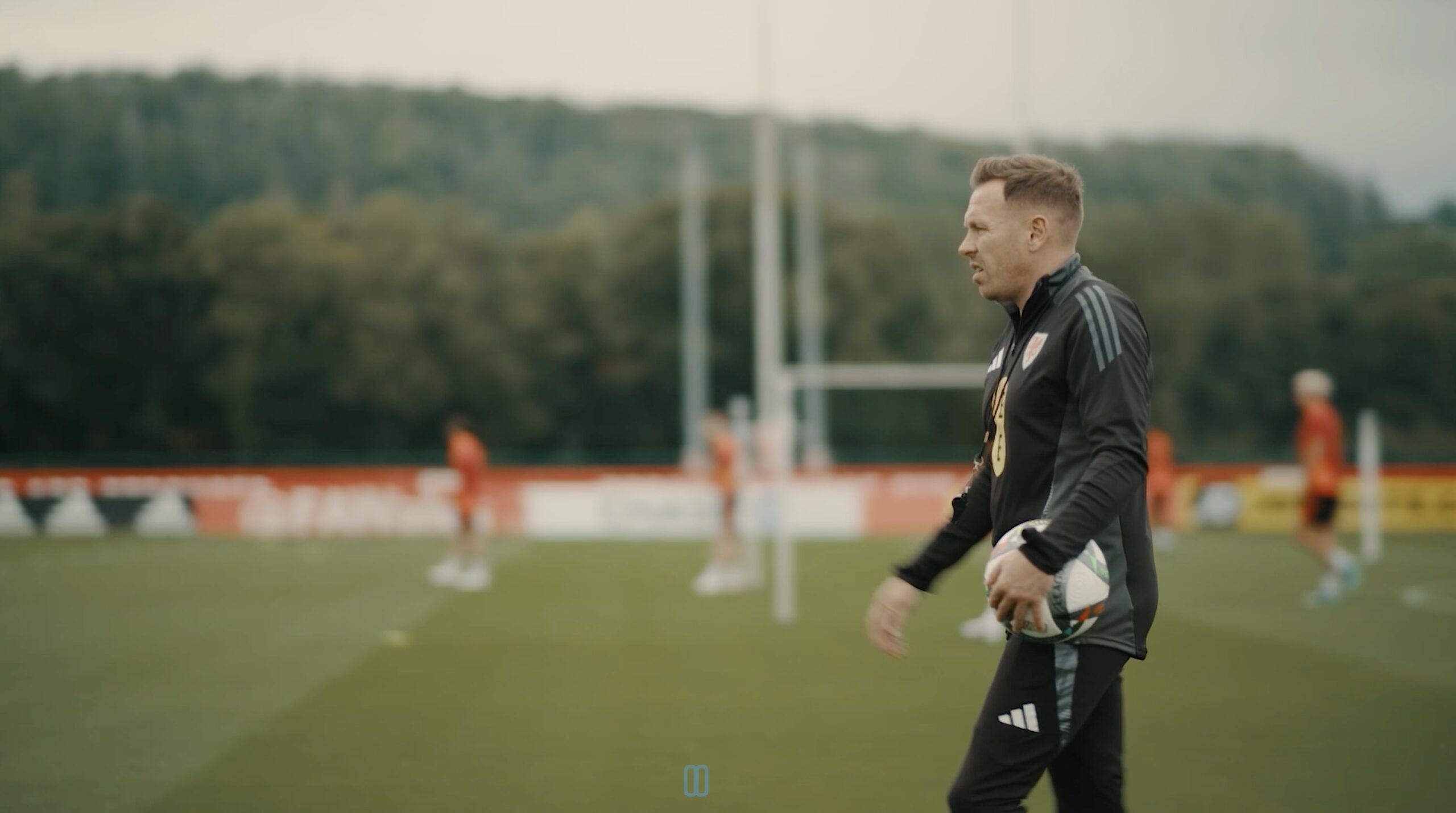
The Welsh Way is to play with intensity - from seniors to youth and in both Men's and Women's
Adams highlighted how Performance Studio’s integrated tracking data – now part of the Genius Sports platform following the Second Spectrum acquisition in 2021 – helps sustain the high-pressing identity.
“We want to play with intensity, so we want to see the players who have the capacity to expose themselves to high-speed running, to recovery runs and can sustain that over a 95-minute period,” he said.
“You can also make more agile decisions in games now around substitutions.”
This dual technical-physical lens helps across a squad that often plays three games in a week.
“When players start to hit their threshold at 75-plus minutes, you know they’re going to drop off physically.”
Bellamy’s tactical obsession: ‘I catch myself going through it at night’
Bellamy is unapologetic about his ‘geekish’ love of the Genius platform.
“It really fine-tuned us to where we progressed, but also where we were lacking – it was clear,” he said. “The performance platform really gave us a big insight into that.”
He is particularly animated about breaking lines – a non-negotiable in his game model.
“We break lines [and] now we’re sixth overall in possession. That’s good because we gain control of the game, but we’re actually first in breaking lines, which is the most important. On crosses we rank really high too.”
Don’t just show me the numbers – I still have to watch it.
Craig Bellamy
Ranking tables and benchmarking tools within Performance Studio have become daily fuel for the former Liverpool and Newcastle United forward.
“I even catch myself at night going through it, which I shouldn’t do,” he admitted. “But I’m like, ‘Where are we? We’re third in this now. How do we get to one?’
“I see the common theme: all the teams I really like the most are ranked the highest in those areas. So I know it’s where we want to be.”
He uses the data to validate (or challenge) what he sees with his own eyes.
“I honestly really do like to see it on the pitch, but I need to be backed up as well. I need it to match what I see. Don’t just show me the numbers – I still have to watch it.”
Opposition analysis is equally granular.
“When I look at opposition I like to look at the overview computerised and you see certain patterns, how they develop, and actually that fits really well with a person with my learning abilities.”
The Analysis department: Six full-time staff, 15 to 20 students and one centralised system
Esther Wills, who has led FAW performance analysis since 2008 and was the Lead Analyst during Wales’ run to the Euro 2016 semi-finals, oversees a department that punches well above its weight.
“We’ve got six full-time staff here and 15 to 20 student placement analysts at any one time,” said Wills, who drives data and insights across the entire player-development pathway.
Having a centralised system was a non-negotiable for her.
“It’s really important to have a centralised system, because it provides that single source of truth,” Wills said. “It also makes the workflows far more efficient rather than having different platforms.
“The platform provides the data AND the video to analysts, to coaches. There’s no sort of limitations in terms of who we can get on there.”
Performance Studio’s appeal, Wills added, was its reliability and ability to be customised.
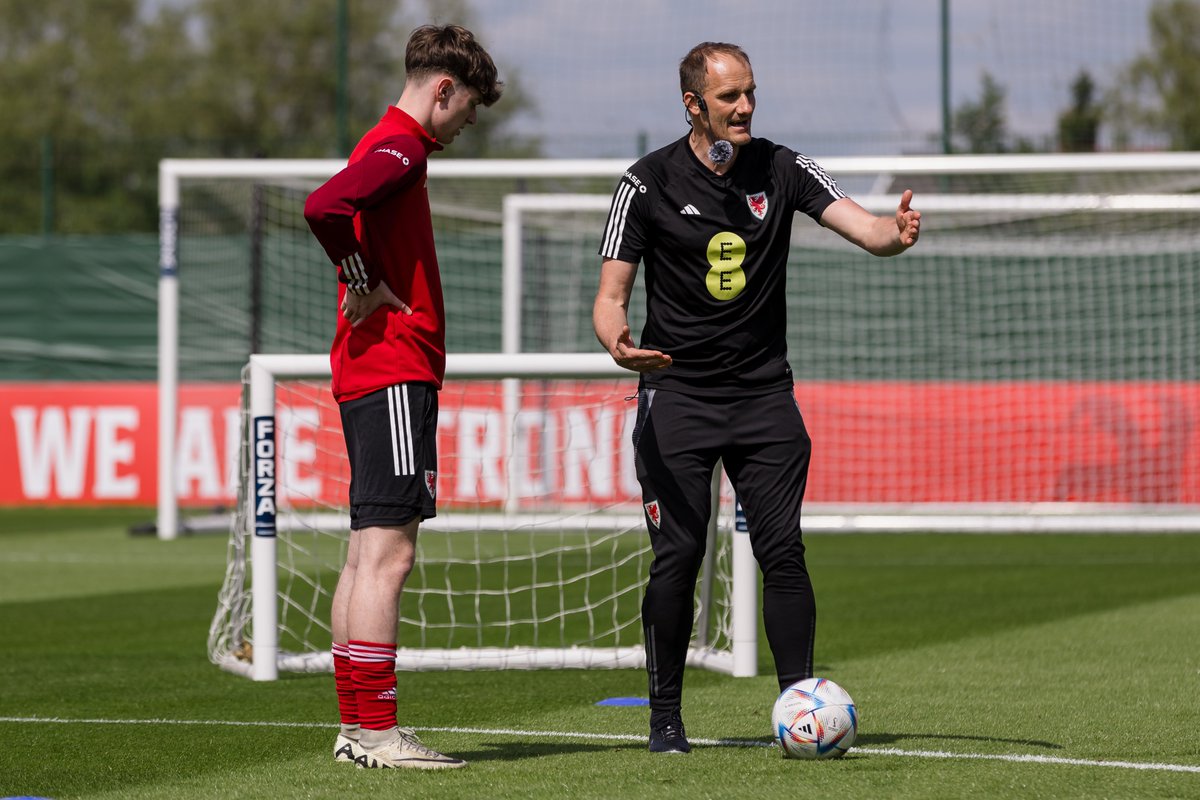
Chief Football Officer David Adams leading a coaching session
“I think in the first instance with Performance Studio is the reliability of the data, and then the ease of use with the interface. You don’t really need to train the coaches to go on it like you might do with some other analysis systems – there is the ability to tailor it to exactly what we want.
“So looking for metrics that specifically fit our way of playing and how we want to analyse the game really works for us.”
Key metrics include breaking lines (with precise receiving zones) and compactness of defensive shape.
“We can be real specific with this, with the platform here and with that metric,” Wills said.
The same tools support best-practice modelling for the youth pathway, ensuring self-review skills are embedded early.
“Being able to show our younger players exactly the type of player that we’re looking to and we can be specific about ‘in this area of the pitch this is the types of movements we want to see from you.’
“And being able to pull all of those video clips out really easily from the system.
“We try and encourage all of our players to learn the skills necessary for self-reflection and self-review. The analysis support is actually the same right from our younger age groups right the way through to our seniors.”
James Turner: From wide-angle video to 3D player POV
James Turner, the FAW’s Lead Men’s Senior Team Analyst since 2012 and a Newtown native who has delivered insights through multiple major tournaments, described how Performance Studio has transformed daily workflows.
“What’s great about Performance Studio is the built-in wide angle for each game – we can bring that into our meeting-room environment with our telestration tools and bring that to life for our players,” he said.
Data and video are seamlessly linked.
“From the data part of things we’ve got a clear playing style that if we can accurately measure that and compare that to other teams… we can get real buy-in from our players in terms of why we’re playing a certain way.”
The rankings tool is used both for senior-team benchmarking and as a modelling tool for the under-age squads. “We can see if we’ve got certain teams that we aspire to play like, we can see how we actually rank compared to those… how close or how far away we might be to them.”
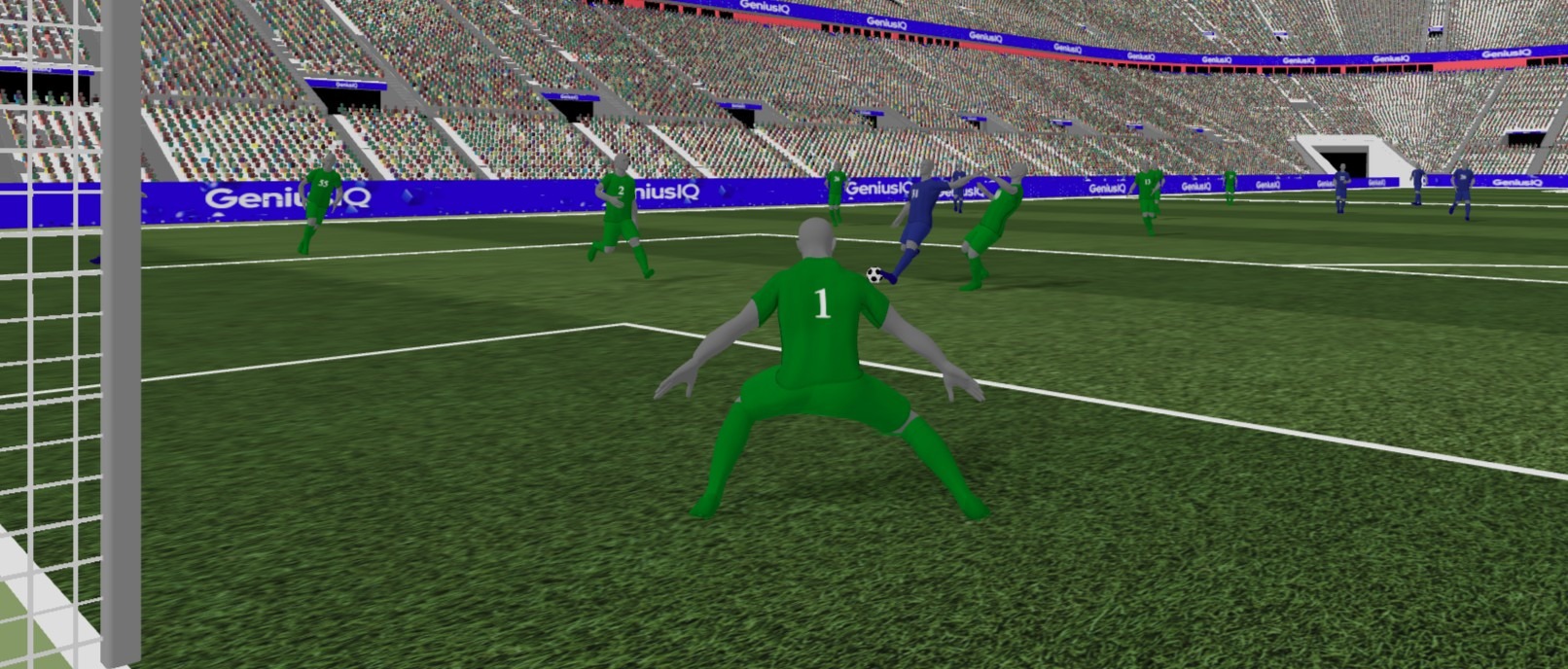
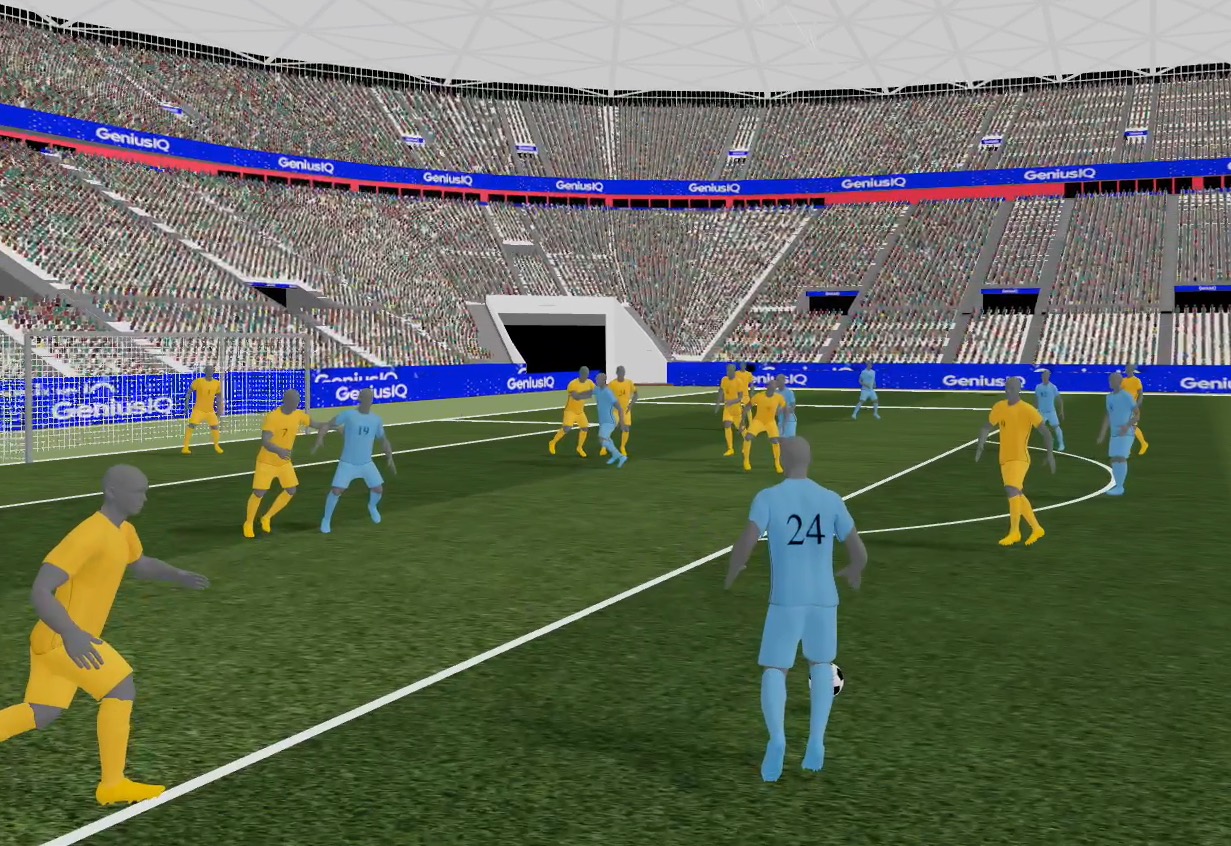
One feature stands out: ProView 3D.
“ProView 3D for us has been really beneficial. It’s something that we haven’t really seen anywhere else in the market,” Turner enthused. “It’s just the flexibility of us being able to jump out of the actual video environment into the 3D environment and essentially look at any point in the 3D space where we want to.”
He gives a practical example: reviewing a clip where a player could have passed.
“When we jumped into the 3D view environment and put the camera on that player’s point of view it gives you that clarity.”
Opposition analysis has become dramatically more efficient.
“Those like last-minute requests that you get from coaches, when they want clips on a specific aspect of play… we can just search for that within the platform and we can give an answer really quickly.”
Even individual player reports on late call-ups are now possible in just 10 to 15 minutes.
Performance Studio’s combination of trusted data, intuitive interface, searchable video library, wide-angle footage, linked rankings and ProView 3D reconstruction has streamlined opposition analysis, accelerated decision-making and given coaches and players a shared language.
Bellamy perhaps summed up the impact best.
“I know I’ve spoken about it quite a bit. Even for me to do this interview is quite rare, because I won’t usually talk in this type of depth. But your software keeps that passion going.”
As Wales regroup after March heartbreak and eye their next qualifying cycle, the foundation is already in place. The numbers are rising, the identity is clear.
Follow Us
For latest updates, follow us on X at @ground_guru