
Ben Ryan: Why Brentford hire from outside football for diversity of thought
Written by
Simon Austin
May 5, 2026
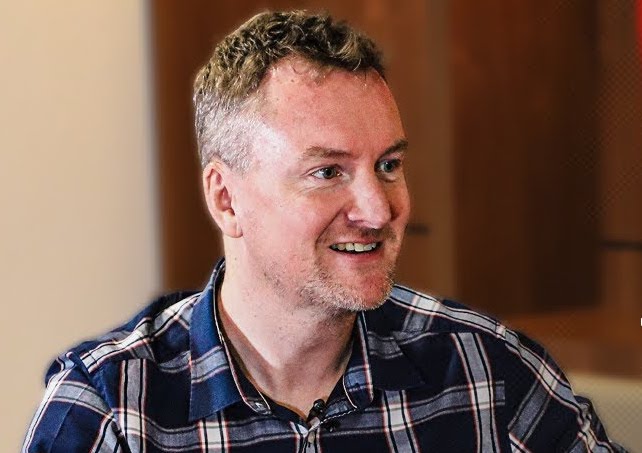
Brentford Performance Director Ben Ryan has revealed that the club is deliberately recruiting performance and medical staff from rugby, basketball and beyond to bring greater diversity of thought and fresh problem-solving approaches.
Ryan joined in June 2022 after guiding Fiji to Olympic Sevens gold and has also worked for UK Sport and Nike. Speaking on the TGG Podcast, he explained that Brentford had built their performance and medical departments with a conscious mix of football insiders and outsiders.
This has had a big impact on the way that the department operates, which is what this article is about.
“We’ve appointed a mix of people that are from inside and outside football really,” Ryan told the TGG Pod. “You can’t get away from having a good core of football, you have to. But also having those different ways of thinking and coming from different experiences.”
He highlighted several key appointments that reflect this philosophy. Paddy Hogben, formerly Head of Performance for the Atlanta Hawks in the NBA, now works as Rehab Strength and Conditioning Coach.
Robbie Palmer, previously Head of Performance at London Irish in Premiership Rugby, is Lead Strength and Conditioning Coach. Toby Banfield, Head of Sport Science, previously worked with the Sydney Kings in basketball and Super Rugby.
“The medical department’s got a similar story as well – a ton of experience from lots of different angles – and I like that,” Ryan added. “I like that different flavour to people’s thinking, because then we look at solutions to problems in a slightly different way.”
Risk Compass Testing
Ryan also explained how the club goes further to guarantee that mix of perspectives. “The club also do Risk Compass Testing to ensure they have different personality types and approaches,” he explained.
The Risk Type Compass is a specialist psychometric assessment tool that analyses how people naturally react to risk and uncertainty. It places individuals into one of eight distinct risk types on a 360-degree circular model — like directions on a compass — according to their temperament.
This could indicate whether someone tends to be more impulsive and adventurous, cautious and vigilant, optimistic, or anxious about potential downsides. The idea is to build teams with a deliberate spread of different thinking and decision-making styles so they don’t fall into groupthink.
The same approach applies at leadership level.
“In the leadership group it’s the same – me, Keith, Lee and Phil have very different characters and it’s a nice blend,” said Ryan.
Director of Football Phil Giles has previously explained why Brentford prioritise wide external recruitment over relying on existing networks.
“If I just focus on my contacts and network, I have a very small subset of available people and there must be some people out there who are so good at their jobs that I wouldn’t actually know,” Giles said on Episode #35 of the TGG Podcast.
Giles added that this method supported greater workforce diversity. “We believe a more diverse workforce will be a better workforce. By advertising externally we get a much broader range of diversity of candidate as well and that’s really important.”

Stronger emphasis on gym work
Ryan detailed how Brentford have placed increased importance on gym-based strength and conditioning — an area not always prioritised in traditional football training.
In 2018, former Chelsea manager Maurizio Sarri memorably said: “Nobody does weights. I’ve never seen a player with a weight on the pitch.”
Things couldn’t be more different at Brentford. Their S&C push is being led by Lead Strength and Conditioning Coach Robbie Palmer, who is a decorated elite powerlifter in his own right, with 12 British Powerlifting titles, a 2012 European championship, multiple Arnold Classic appearances and more than 40 British records to his name.
He previously spent more than a decade at London Irish in Premiership Rugby, where he rose from Rehabilitation Co-ordinator to Head of Strength and Conditioning.
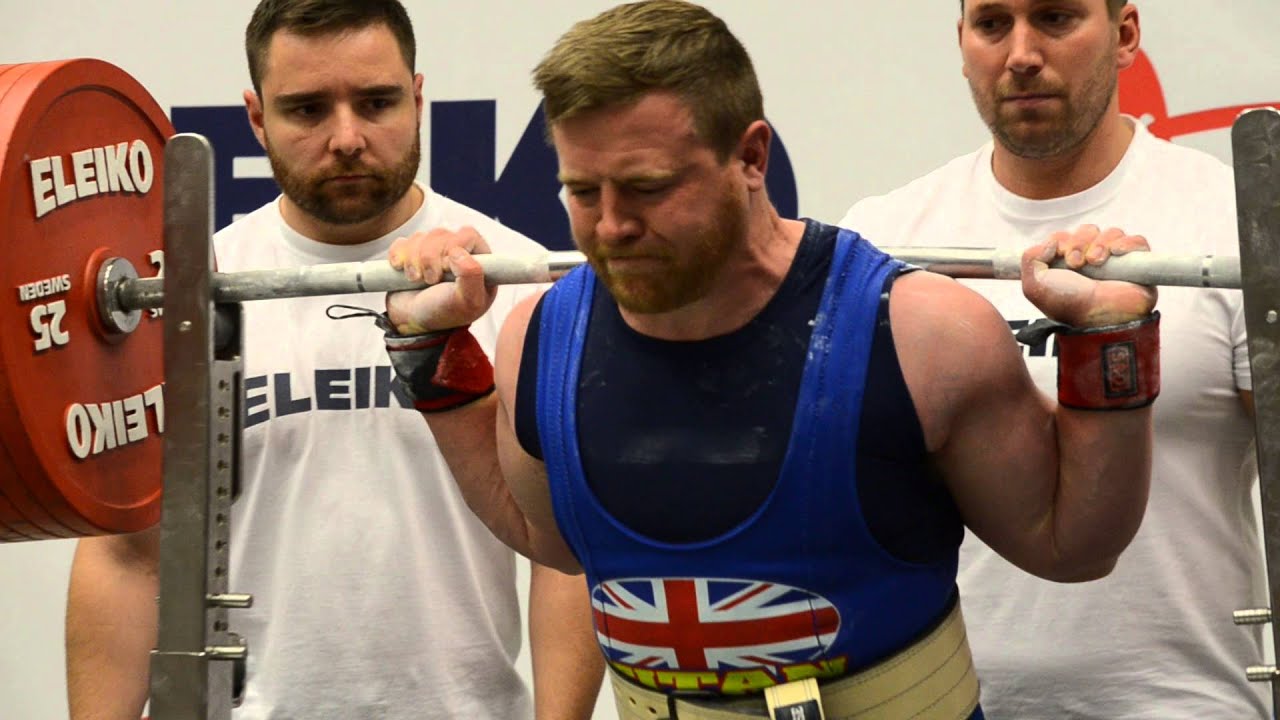
Lead S&C Coach Robbie Palmer has 12 British Powerlifting titles
Ryan, who comes from a rugby background himself, said bringing in a coach like Palmer allowed Brentford to import best practice from a sport that had treated strength and power development as a non-negotiable for decades.
And drawing on practices seen in the NBA and other sports, the club has protected gym sessions even during busy fixture periods.
“Finish a game and the boys are doing some gym work in the changing room and it’s quite heavy,” Ryan said. “The NBA pioneered a basic premise that on a high day, make it a high day.
“You’ve got so many games, the one thing that normally gets marginalised is their work in the gym. It’s also that one thing that historically in football they’ve seen less of a connection between playing well on the pitch and lifting weights, but we’ve had a real push on making our players stronger and more robust and resilient.
“Some of the stuff they do in the gym won’t make a huge difference in the next few weeks, but it will over the coming seasons. That was a smaller change we made last year.”
Load management and the limits of data
Brentford have also benefited from a detailed load-management model developed by Dr Ben Cousins, their Head of Performance Planning – a dedicated specialist role that Ryan said was unique in the Premier League.
“Ben Cousins, who’s our head of performance planning. I don’t think there’s too many clubs that have a Head of Performance Planning. In fact, there isn’t anybody in the Premier League that has a Head of Performance Planning,” Ryan revealed.
The model was first successfully implemented with Brentford’s B team, who played around 70 games in a season without any soft-tissue injuries. It has since been rolled out to the first team, contributing to high player availability.
While GPS remains a key monitoring tool, Ryan was candid about its limitations. “It’s the most consistent yardstick for some of the load… However, it is not as accurate as you want it to be.”
The club is currently running a PhD on the physical demands of kicking a football and exploring technologies such as LiDAR for better measurement of accelerations and decelerations.
Ryan stressed the importance of balancing data with human judgement. He noted cases where all objective metrics appeared perfect, yet a player still suffered an injury.
“We have those conversations that involve the art as well. Even though his metrics say this, there are a few signs here that we have no measurements for, but we just feel.”
Ryan predicted that the industry’s heavy reliance on GPS would decrease in the coming years: “I don’t think in five years time we’re going to be talking about it at the level we currently do.”
And he acknowledged that football’s environment is significantly more complex than rugby union’s due to transfer windows, agents, managerial changes and international breaks, but described it as “incredibly challenging, in a good way.”
He also praised the open culture at Brentford, where ideas are encouraged from every level of staff.
“Anybody is able to say anything to anybody if they’ve got a good idea and not get shut down. We’ve had plenty of good ideas from every level of staff at the club.”
Follow Us
For latest updates, follow us on X at @ground_guru