77
Ben Ryan
From Olympic gold to powering performance with Brentford
April 26, 2026
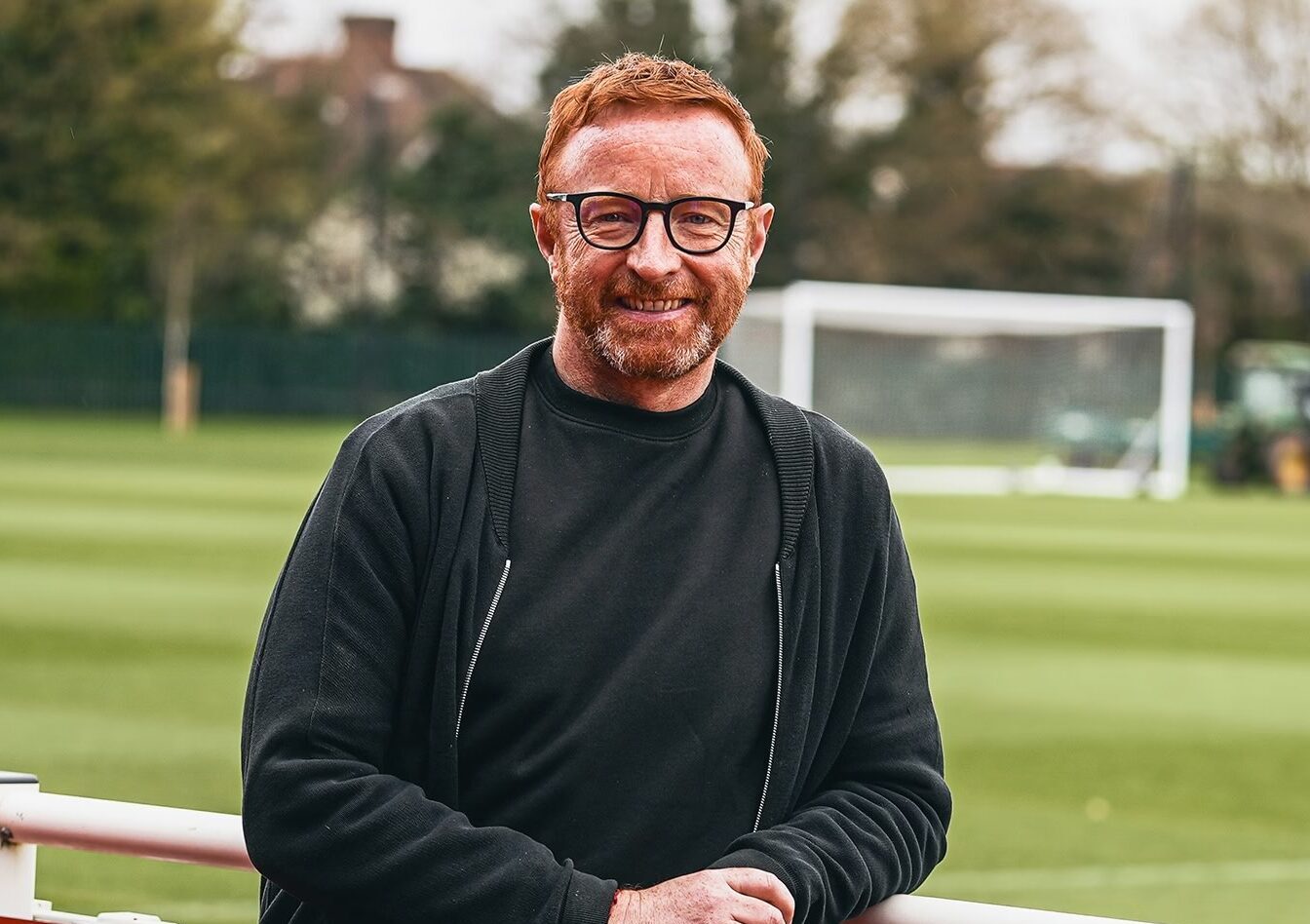
Ben Ryan is the Performance Director of Premier League side Brentford, responsible for making sure that the club’s players are mentally and physically equipped for matchday.
Before joining Brentford four years ago, Ryan consulted with a number of leading organisations and was Head Coach of Fiji’s rugby sevens team, leading them to Olympic glory in 2016.
In this Episode, Ryan told us:
- What his Performance Director role involves and why it’s broader than at other clubs.
- Changes at end of last season and how Keith Andrews confounded the critics.
- How club’s unique ‘Supremacy Rating’ keeps them focused on long term.
- About winning Olympic gold with Fiji Rugby and what it taught him.
- How club would adapt to being in Europe in the ‘Brentford way’.
You can WATCH and LISTEN to the podcast below and also read an edited transcript.
Training ground
Ben Ryan: We’re actually in the old cricket pavilion. When I joined four years ago, this is where we were. Phil Giles had a little room that was basically in the boiler room. It was really hot in there and I was next door. We ate here and some of the gym equipment was in here and it was all very piecemeal.
Then obviously we moved across to the other side and it’s slowly been expanded over the last few years, because the Academy’s come on line. Over your right shoulder is the Academy buildings and then we’ve got 12 pitches over your left shoulder, most of which are hybrids.
Then we’ve got a dome that’s under construction as well, to push towards that Category One status. Then we’ve got the training facility on the other side where the Under-18s, the B team and the first team are. We’ve got everything across there, from where we eat to where we train, where we recover.
We’ve added this year a big sauna that was bespoke, we’ve added a swimming pool that’s made out of a shipping container. And we’ve done it the Brentford way really. If there’s been a need and if we know it’s going to move the needle, then we’re gonna make those changes. So, yeah, it’s a nice compact space.
Pampering the players?
We talk about it quite a lot. If you get into a Premier League game, you’re expecting them to make decisions. Yet if the whole day, week, month has been given to them on a plate… You just have to try to widen the options for those players so that you don’t give them everything and try and find those opportunities to chuck in a bit of resilience.
And it’s around standards. We don’t have expectation from our players that everything’s delivered to them on a plate. There’s stuff they have to do for themselves. But, saying that, in an elite environment, where time is quite precious, when they come in it’s important that the chefs know exactly what they should be having for breakfast and for lunch and for their snacks; that the kit’s appropriate; that the meetings run well; that the therapists make sure they have that individual treatment time with the players.
There’s still always going to be, in any elite organisation in sport, a high degree of service towards the athletes, but it’s bespoke and we don’t go over the top on all of that.
And we make it really clear around our standards of creating a positive culture that there’s not a feeling on the other side where there’s a them and us, that the players and the staff interact all the time on a regular basis.
What does your role as Performance Director involve?
Yeah, it’s a good question really, because Performance Directors in other Premier League clubs – and we chat to each other most of the time – have a very different remit. The traditional Performance Director is looking after a couple of departments – sport science and medical.
So I look after those, as well as the performance and the S&C, but my remit is far broader. Performance touches so many different areas, whether it’s team operations, player care, the data and technology research – we’ve got 11 PhDs running here – and innovation, all the catering and nutrition, the external services you’d have from the different social sciences, the kit, the logistics.
I think it’s about nine departments in total here. And then, with Lee (Dykes) and Keith (Andrews), we sit underneath Phil (Giles) as Director of Football and we’re in that senior on-field group as well that then link into off-field and John Varney the CEO and the Board.
It’s flat, you know, the hierarchy is great. It really is a top organisation to be working for. I don’t know how many meetings I’d have in a day and all the different conversations, but they’ll be so varied.
It’s important for a Performance Director – and my role is not really a Performance Director, it’s kind of a hybrid role – that you understand exactly what’s going on and then you can make sure that everything’s connected and aligned.
Because often you get these pinch points at elite levels of sport between coaching, medical and performance. It’s a common triangle, where if things aren’t done well, you might have a coaching group that veers more towards the medical or more towards the performance, depending on relationships and styles.
And so to have somebody in my role that can make sure that everyone’s communicating, having high-quality conversations and that everyone’s aligned. We can have plenty of debate and talk through lots of different things, but once there’s an agreement there, then we’ve got that alignment.
That’s really important, because often that’s where things can break down in organisations.
What have you been doing today?
Today, I was in at 7:30, catching up on a few bits of admin and signing off a few PO’s. Then I think it was 8am that we have our first PEG, which is a Performance Executive Group. So myself, the Head of Performance Planning, Head of Medical and Head of Sport Science sit down, have a look at some of the numbers around the players and the training that’s going to be on today and any nuances, so we’ve got alignment.
We then go into the Coaches’ Group Meeting that we’ve expanded this year. I think there are 17 people in our Coaching Group, which will be all the First-Team Coaches and then that group that I just talked about, as well as our Player Care General Manager, Barney (Bossom), who’s brilliant, and Rhys Weston, who’s equally brilliant, who’s our Head of Team Operations.
Those two have a much wider remit than their job title suggests. And we will have Josh Hiller (Kit Logistics) in there, who’s the guy that will put the cones and the kit on the pitch. We’ll walk through the modifications that might be being put in place for the players, anything else that’s popped up overnight.
We would have had some of the players in early that we’re reporting on, if they’ve got any niggles or injuries that we need to look at. Then we go through the practices for the day. Today we’re on an extensive day, so it’s a big volume day with plenty of intensity and we’ll go through all of that.
Ben Cousins is our Head of Performance Planning. There isn’t anybody else in the Premier League that has a Head of Performance Planning. He got his PhD in GPS and he really understands some of the loads, so we’ll always direct some of the questions about that to Ben.
And Ben might say, ‘Can you take 30 seconds off this?’ Or, ‘How about this?’ After that I go into a combined medical performance, which is a wider group, where again we’ll tell everybody what’s happening at training and then they’ll talk about what they’re doing post training as far as the S&C and the extra work that they’re doing in the gym, as well as individual work-ons.
Then I caught up with with Rhys and Barney just to go through some of the logistics for the next few days and some planning.
We’ve got a planning meeting later that will look at the next six weeks. Every fortnight we have a couple of hours planning meeting where we’ll look at the next two weeks in absolute granular detail. Weeks three and four as a bit more of a broader scope and then five and six to give us some perspective.
We’ve got training in the middle of that and today I’m hanging out with you guys for a bit as well. Then, at the back end of the day, we’ve got a couple of other meetings – one’s around staff recruitment and then I’ve got a call with an external consultant.
It sounds like I’ve got hundreds of meetings, but my point is they’re clear, short and interactive. We create simple guardrails where everyone’s got a voice and there are no stupid suggestions.
We’ll have a coaches’ meeting at the back end to see how everything’s gone and review. We do the same for the performance and medical. So you’re probably adding 14, 15, 16 meetings, really short and sharp, and it’s going back to high-quality conversations and making sure we’re not missing things.
We’ve got security safety catches to make sure no one’s getting overcooked from the loading, that’s there’s nothing missing that’s going to be vital for us in the following days. So they don’t burn you out, they give you energy.
We put that in place far more rigidly this year than we had done in previous seasons.
Changes at the end of last season
We’ve had so much change this year that it was obviously a threat, because we’ve got so many different people and voices. But it was also an opportunity to have a look at the framework, make some modifications, change the way we train.
We changed our training model, we changed our working week. We have a day off at a different time. We use different load metrics.
Now we’re chasing different metrics at the higher end around some of the accel and decel stuff that I won’t bore you with. So there’s a lot going on, but it’s a really varied and fun day if I’m honest with you.
There were a couple of things that we slowly changed last year. A good example would be post-game lifting. Something I’ve seen a lot more other teams doing this year is finish a game and the boys are doing some gym work in the changing room and it’s quite heavy. The NBA pioneered a basic premise that on a high day, make it a high day.
You’ve got so many games, the one thing that normally gets marginalised is their work in the gym. It’s also that one thing that historically in football they’ve seen less of a connection between playing well on the pitch and lifting weights, but we’ve had a real push on making our players stronger and more robust and resilient.
Some of the stuff they do in the gym won’t make a huge difference in the next few weeks, but it will over the coming seasons. That was a smaller change we made last year. The training schedule, the meeting set-ups, the metrics we’re using, bringing in Ben Cousins as Head of Performance Planning – it was a chance to freshen things up.
Thomas was – is – an amazing man, a great Manager, and every Head Coach likes to do things slightly differently. He’d been here a long time and there were some things that we wanted to freshen up. Last summer gave us the chance on a really short runway because everything happened really quickly over the summer.
There’s lots of things we look back now going, ‘We made a couple of errors here in the pre-season, maybe didn’t have enough minutes here, we didn’t do enough here, there’s a few other things we didn’t do in the individual players on their offseason training.’ So we’re reflecting on all of that and thinking, ‘Right, okay, where can we kick on again for next season?’
If you go back to that triangle of coaching, medical and sport science, we lifted across from the Academy four staff that came into performance and medical and that’s been great, because the Academy can see there’s a pathway and all of those staff have landed beautifully.
We’ve had some additional roles and some changes in roles in S&C and performance. We’ve added a couple of physios. We’ve also changed some roles and responsibilities around things. And then on top of that, we’ve had some new coaches that have come into that first-team group. So we’re probably touching double digits for the amount of staff that we’ve brought in.
We have naturally had to expand our staff as well. This is almost seven days a week now. We’re here more than we were last year. On our plus-ones, on our off days, we’re in here more for recovery and for some other planning.
I’m sure we’re nowhere near some of the top teams and their staffing, but we probably doubled in the last 18 months across the club as a whole.
When you have that much growth, you’ve really got to be on top of making sure all the staff you’re bringing in add value and are doing something specific. We’ve still got that alignment and that bit we referred to before – it’s quite a flat leadership model, so the owner, Matthew, the Director of Football, Phil, and John the CEO, and Lee as as Director, these guys know everybody else in the building.
We don’t want to lose that, because it’s a real superpower for Brentford.
Keith Andrews and confounding the critics
I just reflected back on all that change. Then you add on that we’ve not the got the biggest budget. We’re down the bottom end of that. Compared to all the other roles I’ve had, we still have budgets that are absolutely good enough to make sure they don’t become a limitation to what we want to achieve.
But with all those moving parts, yeah, there’s a bit of nervousness, but Keith was brilliant last year in the building and when the opportunity came for him to put his his hand up for this role, it was a very obvious choice to me that he would add huge value.
He’s been brilliant. He’s not lost the values that we have at Brentford. He’s continued a lot of that stuff. He’s put his own twist on things. He’s very open and inclusive and he knows his mind as well and he’s brought a lot of energy. You can’t ever be sure, because football’s random.
We started the season a bit undercooked. A few players hadn’t got back into the building and weren’t fit enough and we were pretty average against Forest in that first game of the season (which Forest won 3-1) and suddenly that relegation conversation looked pretty real.
But internally we knew there was always going to be a little bit of a hiccup as we changed our physical model, our training model and everything else.
And with that you always get a little bit of damage. We had a few injuries that were three, four-day injuries that we knew we were going to get and predicted. And we predicted that we’d also get out of it pretty quickly and that’s exactly what happened.
Everyone kept the faith. We actually got an injury every day for the first four days and you can imagine the coaches, ‘Well what’s happening here? Who’s going to be left in a couple of weeks time?’
It was the fact we had already predicted that and we’d said to everybody, ‘Look, this is going to happen, but don’t worry, none of them are going to be significant. And we’re going to get the benefits of getting them fitter and more robust. Just hold the line, hold the faith.’
It was a testament to the culture that everyone stuck together and then we put ourselves in a really good position for where we are now. You’ve constantly got to be hungry and things can change really quickly, so Keith’s been brilliant. It’s been a top year – really enjoyed it and there’s a good buzz about the club at the moment.
You would hope – and this is definitely the case – that with Thomas and Keith, they put their own flavour on things and some of their personality is reflected in how we play. For both of them, they have a terrific work ethic and and those standards are high.
Outside of that is the stuff you’ve probably talked about a lot with the way that Phil and Matthew have run the club and the underlying principles that we adhere to. And you touched upon it – data is incredibly important to us and and we hope that we use it in a clever way, but the human touch in what we do is equally important at Brentford.
And I think maybe that gets lost sometimes in some of the narrative around Brentford. Matthew and Phil in particular, but all of the senior staff here, have time for everybody, are personable, are down to earth, and are open and want to want to grow. And I think that’s as much as as part of our success as some of the data.
Supremacy rating
We have our own internal statistical model that a number of us get every week, that gives us a number on how we’re performing in relation to the rest of the league.
It takes away the randomness. You know, it’s a low scoring game. You lose games you shouldn’t and you win games you shouldn’t. We look at the wider performance and within that model you can also get stuck into the granular detail of where in particular things are going well or not so well.
It means you don’t get knee-jerk reactions. We’ve had that Supremacy Rating go up after losing and we’ve had it go down after winning. It just gives you a really good chance to take a break, a breath, and look at things with a far more considered eye.
In any sport, but particularly in football, you’re marked to market every week. How people come in on the Monday after the Saturday is largely down to how we’ve done on at the weekend. Emotions and decision-making can sometimes fall too heavily on that side of things, so this is one of the tools we have that gives us that chance to take a breath and actually look at things more strategically.
It’s a brilliant metric, but within that, there’s other stuff that, as a club, we keep to ourselves. You’re far better off talking to some of the quant analysts at Smart Odds or to Phil (Giles) or Matthew (Benham) around some of the data stuff.
I’ve learned huge amounts since I’ve been here around all of that. Looking for those pieces of data that actually make a difference to how we play is underlying it all really, because sometimes there are things that are measured and seem to have a higher weighting of importance than actually they do for the game and for how we want to play.
We’re clear about what we’re looking for.
We can’t say, ‘Oh look, our Supremacy Rating puts us at 15th’ and we finish 18th and are getting relegated. The Premier League aren’t going to suddenly change a decision.
So yeah, it’s incredibly important, but it’s not what drives the internal decisions on what’s going on as far as our performance is concerned.
Developing players
It’s definitely a big focus for us to make all the players in the building better. That is everything around their game, but it’s linked into the parts we think will help them become more of a threat and a better player.
It’s not just a general, ‘Right, we’re going to make him stronger and faster.’ It’s all relative to what we think they need. With the huge amount of data now that’s coming into clubs, the recruitment world is becoming so competitive that the differences between getting those players, some of which you talked about over the last few years, is getting increasingly harder.
When players get into the building, yes, there might be players at another club that are a few percent better in these metrics, but really it’s about how can you add value – in the way you play, the way you measure, where you play them and how you play them.
Also, how do you improve those players from a performance availability metric, which we have here? It’s not just about, ‘Well, we’ve got 15 players this weekend’, it’s about whether they can play to this physical metric that’s linked into our game model.
And then beyond that is, ‘Well, what do they need to be at the next level and what areas do we need to help them get better at?’ That could be longer-term stuff around their diet or their sleep or it might be around some of their strength work.
All of those things we put a big onus on, because that’s where the value lies – adding to those players so we get them in the building and make them better.

Coming into football from rugby union
I was coaching Fiji, left, worked for a few years doing different consultancy. I was with the French Federation rugby team for a long time and UK Sport and Nike and different teams.
Then I got invited after the Olympic Games by Dean Smith to come in and chat to the players about my story. He knew that I was a Brentford fan. So I came and met them here, just a few yards away from here in their meeting room, and a few of the players reached out to me after that and we carried on having conversations and helped one or two of them on their journeys.
Over that time period I loosely kept in touch with Brentford. I was doing other work in other football clubs around the world and actually spent a year at AFC Wimbledon with Mark Robinson and loved it.
It’s a brilliant club with great people and that kind of gave me a taste again for wanting to look at what opportunities there might be in football.I think we have it a lot easier in rugby for culture.
Take Fiji – the boys all came from very poor backgrounds, they’re all Fijian, they all grew up in the same areas. We don’t have transfer windows, we don’t have agents, we don’t have Head Coaches getting sacked and we don’t have international breaks.
We don’t have major competitions at the end of the summer. It’s complicated, the football landscape, and I find that incredibly challenging, in a good way.
And then Phil rang me and said, ‘Look, we’re looking at putting this position in place. Don’t know if you’d be up for it?’ And I said, ‘Yeah, I would.’ I then went through the process and he appointed me. We’ve appointed a mix of people that are from inside and outside football really.
You can’t get away from having a good core of football, you have to. But also having those different ways of thinking and coming from different experiences. In our performance department we’ve got Paddy (Hogben), who was Head of Performance for the Atlanta Hawks in the NBA and was in the AFL (now Rehab Strength and Conditioning Coach).
We’ve got Robbie (Palmer) who was Head of Performance for London Irish in the Prem in rugby (now Lead Strength and Conditioning Coach). We’ve got Toby (Banfield, now Head of Sport Science), who was Head of Performance for Sydney Kings in basketball and previously was in Super Rugby.
The medical department’s got a similar story as well – a ton of experience from lots of different angles – andI like that. I like that different flavour to people’s thinking, because then we look at solutions to problems in a slightly different way.
In the leadership group it’s the same – me, Keith, Lee and Phil have very different characters and it’s a nice blend. Phil thinks about that, you know,
We do Risk Type Compass Testing and that’s quite important. If you’ve got a group of staff that are picking the team and they’re all very pragmatic and conservative, then when we’ve got to make a change with 15 minutes to go and they all think, ‘Right, well, let’s go defensive,’ then that blend is maybe not quite right.
You might not suddenly change a a coach because you know they think like that, but at least it gives you insight into looking at behaviours. Phil’s very very good at that – and Matthew – getting that blend and having that overriding view.
Anybody is able to say anything to anybody if they’ve got a good idea and not get shut down. We’ve had plenty of good ideas from every level of staff at the club. Again, that adds to that positivity around the culture here.
Head Coach of Fiji
I went unpaid for six months and had to put petrol in the mini bus. We didn’t have any money. Our kit we wore to play in the World Championships was the same kit we trained in. So we would get constant complaints from World Rugby saying, ‘Your kit looks too dirty.’
And it was, ‘Well, it’s the only piece of kit we have.’ For me, that was a really good reset though, coming from UK Sport, having a background in sport science and then coaching and teaching, where it was very much science led.
Budgets were pretty decent. You’re doing tech projects with Nike on the tight shirts and I was the first coach to use GPS in world team sports, back in 2006.
Clive Woodward was the Head Coach of the Test team. He’d used the GPS for one session. The coaches didn’t like them on the back of the neck for scrummaging, so he put them in a cupboard that happened to be my office when I joined.
I started using them and was quite heavily involved around data and technology and looking for those gains – I don’t like using the word marginal gains.
Then you go to Fiji where like there’s nothing. It really gives you clarity on how you create and sustain a world-class environment, because it isn’t about the cash. It’s about standards, values, conversations, and directing what money you do have into those moments that you know will make the biggest gains.
With Fiji, we ended up being highly successful and winning everything we could. And it kind of planted firmly in my philosophy that working together, doing things collaboratively with alignment is absolutely crucial.
Not just about gaining success but sustaining it. We’re in that phase still with Brentford and I think it’s incredibly important – in Fiji they call it veilomani, working together.
You cannot lose sight of that and in clubs I’ve seen it uncountable times that you suddenly get silos when pressure comes. Suddenly medical start withdrawing, pointing fingers about an injury, or performance do, or the coaches do and then you start getting disconnection. Before you know it, you’re starting to tumble the wrong way.
So, understanding that landscape, joining everything up, me being one of those voices that helps to make sure that everybody is aligned and letting them do their thing is crucial.
You can’t just sit back. I can’t go back, ‘Phil, we’ve nailed this. Everything’s good. Don’t worry about it. It’s all perfect.’ Because tomorrow morning it could be a very different story.
So yeah, lots of lessons I learned in Fiji and I’m very grateful for my time there.
It was my first week. We were in Dubai, in the hotel and a player called Mosese Mawalu has got about 10 pain of chocolats with 10 fried eggs on top.
And I was like, “Mosese, what are you doing?” He said, “What’s wrong about this?” He’s like, “Bread good, eggs good.’
You don’t know what you don’t know. And in Fijian culture, there’s this thing sega ni mataka, no tomorrow. They don’t know what’s around the corner, so a buffet, a breakfast, they get cleaning that place out, because they don’t know if there’s going to be any food tomorrow. And they played rugby like that. They play in the moment.
They’re a bit like the Brazilian footballers in the 70s, where the risky pass, the joy in playing, that was because they’re in the moment. They didn’t think about where that pass might go.
That led us to holding on to that as a superpower and then putting some good standards around everything. Every environment you look for trampolines – applying what I consider to be Pareto’s Principle.
So 80% of your success is around 20% of the things you do. Find those within individuals and with departments and the team, jump on them as a trampoline almost to accelerate your performance and wrap other stuff around it.
With Fiji, my line manager was a convicted murderer and the military dictator was my boss. We had a cyclone and lots of other things that were happening. So I learned lots of lessons in lots of different ways in Fiji, but I’m massively grateful for stuff like that.
And it came at a time in my career where I was turning into this pretty average coach-practitioner that was relying too much on all that other stuff and not on actually helping human beings be their best versions.
It’s never lost me and I hope it will never lose me, that my job is helping people be their best version, helping a team be their best version; standing in the shadows, pushing those guys to do their thing and understanding that you don’t know everything and let people do their thing.
I think we do that pretty well at Brentford, the robustness and resilience around things.
There have been a few occasions here when a player’s maybe been moaning about something. When you’re with players that have had their house destroyed by a cyclone and then they’re in the following day for national training and they’re like, ‘Well, we’ll find a way. We’ll go into the other side of the island, live with our cousins. When we’ve got enough money, we’ll slowly start building things up.’
And you go to a village, where they’ve had a tidal wave and salt water’s destroyed all their crops and they’ve got to find another way to make a living in that village for the next five or six years and they’ve got a smile on their face and they’ve got a real gratefulness.
Or you’re getting off a plane and you’re seeing our players suddenly taking all the baggage off the carousels for other people and no one’s asked them to. They’re not doing it for a social media clip, they’re doing it because they know that’s the right thing.
Our culture was to help each other and look after everybody. For them, that meant anybody.
And it allowed us to have this very robust culture. I see it in a lot in elite sport – you want everybody to be over-competent. Anything that gets thrown at our boys, we can deal with.
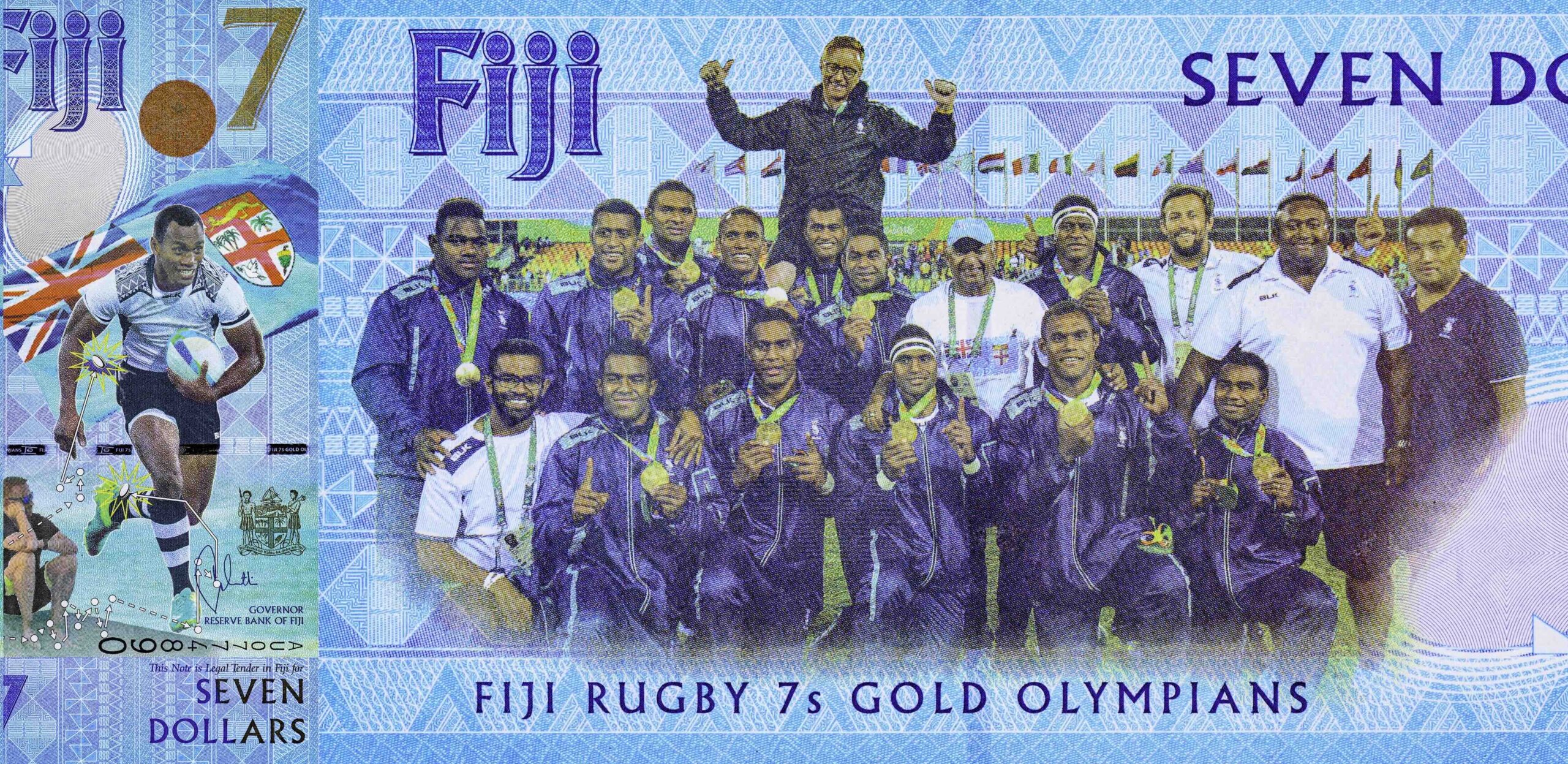
Ben Ryan featured on a commemorative $7 bank note in Fiji after the country won Olympic gold in 2016
You want that, but when you get teams that are highly competent they sometimes get a little bit carried away and overconfident. And when you get that mix wrong, you take your foot off the gas, you take your eye off the ball of some of the fundamentals start falling away.
It’s another thing you have just got to keep on top of, because it’s fine margins. You want to breed confidence, but you don’t want to get cocky. You don’t want to get ungrateful. You don’t want to forget why they’re here in the first place.
We have a little board of hexagons as you go out of the training room onto the pitches (at Brentford) that’s a picture of them when they were seven, eight or nine-years-old and playing football for the first time. The initial time that they put that hexagon in, they explain the photo, say why it was taken, why they started football, who helped them on their journey.
Even on their bad days, where they’ve been dropped, when they’ve picked up an injury, when we’re on a losing streak, they can walk past and and see their nine-year-old self and tell them, ‘Look, you’re going to be a Premier League footballer one day.’ It’s kind of cool.
Take a breath, control what we can control and be a bit more grateful for everything we’ve got. These are things I’m sure other clubs have variations on, but we want to keep our players and our staff grounded.
GPS
It’s the most consistent yardstick for some of the load. Ben Cousins has set up a model that he used with our B team. They played like 70 games last year and didn’t get any soft tissue injuries. A lot of it was down to his model and his understanding of this.
We’ve applied his model to the first team and we’ve got really high availability and our numbers around what we can do are as good as we’ve ever had. However, it (GPS) is not as accurate as you want it to be.
There are other things we can use to measure and LiDAR and accuracy around high metrics like accels, decels. Still nobody knows how many times kicking a football affects injury or fatigue.
We’re doing a PhD on this at the moment, but there are other metrics that can affect performance and fatigue and injury.
I think we’ll we’ll slowly move away from it (GPS), but it gives us a good indicator. There are still things you don’t know. Joe’s got injured. We’ve looked back and done a review: all his GPS is perfect, all his bloods are perfect, his screening is perfect, his diet, everything’s good. But he still got injured.
And the art, the little nudges that we have as a group to go, ‘Do you know what, today I think we need to turn this down. Even though his metrics say this, there are a few signs here that we have no measurements for, but we just feel.’
If you have an open environment where no one’s getting pointed at and no one’s going, ‘He said that person should do that or shouldn’t do that and they’ve got injured.’
We have those conversations that involve the art as well. I see the benefits of it (GPS), but I don’t think in five years time we’re going to be talking about it at the level we currently do.
Overmonitoring
It’s a valid question. If you look at the monitoring we have – the GPS, the IMUs, the little monitors we can put in boots, heart rate, saliva, bloods – it’s a lot. You have to look at the signal, but there’s a lot of noise and data.
You have to look at the signal and then you can filter that down to some of the more important metrics. Because it’s only going one way. There’s more and more numbers coming in. We’re very aware of that. You can’t just give one number, but you don’t want to give 100 either.
So you have to find a balance with the players on what information they want and what information you want to give them to help improve their performance. And also point out sometimes where, in relation to the top players in the league, they might be ahead or below and how we can help them get to those.
Because it’s not about getting your numbers up, it’s about being able to create more chances, get more interceptions, make more of those forward runs, be available for more minutes.
I see massive value in data, but it’s got to be used appropriately.
Power of play
There are some fundamentals you have to put in place. There are some things you need to do to make sure everybody understands what’s going on and has that alignment. But if you have long laborious meetings and everything’s rigid, everything’s directed, then yeah, you’re never going to get a group that are working hard.
You look at a matrix of formal, informal; structured, unstructured. And you make sure you get those blends. We create touch points in the building, where players sit and chat with staff.
We’re creating a much larger first-team cafeteria area for next season that’s really just an opportunity to chat. We’ll throw a barista in there and they’ll have a nice area, but it’s about those chances to take a breath and have a bit of fun.
There are a lot of traits you’ll see in the building which might not look that professional, because they might be messing around a bit too much. There was a moment at the beginning of the season where staff and a couple of top-end players were trying to chip a ball into a paper cup down the corridor and they were there for three hours.
Now, with my sport science hat on, I go, ‘There’s probably not appropriate load.’ I think there were six of them rotating shot after shot and it was over three hours. I think they left at about half seven, eight at night, but one of them eventually nailed it and they talked about that for the next three or four days and there was a real added togetherness.
So, to Michael (Caulfield)’s point, you know, that’s a good example of pure play. Nothing was put in or rigid but it adds to the culture around things. We do create clear guardrails, so this is what’s expected from our players and our staff. Everyone agrees it. These are our standards.
But within that we have to allow the freedom for them to be themselves, to be authentic, to do their thing. And I think we create that space that’s not too narrow so that they feel suffocated and not too wide where they’re like, ‘Well, they they never keep an eye on us.’
You have to constantly get those guardrails right in agreement with the players. And I think we do that well.
Guardrails
It was some work I did with another team, talking about the Firth of Forth Bridge and asking if anyone had driven over it. They’d all had. I said, ‘Okay, would you drive over it without the guardrails on the side?’
They’re like, ‘Well, it’s high up. It’s windy. I’ve got a nice car. Probably wouldn’t or I’d go slowly down the middle.’
‘Okay. How many of you have actually crashed into those guardrails when you’ve gone across it?’
None of them had. And that’s the key aspect of guardrails – if you put your rules in or your metrics are too tight, then you’re going to suffocate people and they are going to crash into them.
If you make them too wide, they’re going to veer all over the place and it’s going to take them a long time to get to the end of that bridge. That’s my point around getting the right size to those guardrails, so that you have clarity about where you want to go but within that you allow individuals to be individual, because the game of football requires those magical moments where you have that creativity.
Culture requires personality, different opinions, different ideas. All of that comes from having the guardrails in place, but that space to be able to think, play, not be judged.
And again, it goes back to constantly reflecting on that.
Europe on the horizon - challenge of extra games
It will definitely be a challenge and we’ve obviously been doing some work around that, from the basic fundamentals of how does that affect the squad and then looking at it with the Brentford lens to go, ‘Alright, there’s a standard way of doing this which is just we see it as more games and we rotate a little bit more and we plan well.’
And then there’s those curious questions around how do we solve these problems to stop players getting burnt out, stop staff getting burnt out?
How do we win games without increasing physical load and causing a chronic overload? How do we fit this into our season when we want to get them increased time in the gym? All of these things come into play and we’ve had some really interesting conversations around that and thrown some very weird suggestions on the wall.
That’s not because we’re thinking, ‘Oh, we’re going to be in Europe.’ It’s just it would be naive of us not to know there’s an option here. I think we have a 10% chance of the Champions League, but there’s still a chance.
So why not go through that process, because it might also throw out some other ideas that might be completely unrelated to Europe that might have something to do with how we travel to away games next season.
And so we’re looking at all of that and, again, the Phils and Matthews of this world, and Lee and Keith, will have some cracking ideas that we’ll throw into the mix. Because it’s an exciting challenge for Brentford.
Everyone’s pumped to try to see how far we can go in the next six games. We know we could finish right down the bottom here because it’s so tight. But we’ve also got an opportunity to do something good and give it a shot and if it doesn’t work out, well, we’ll try again next year.
Football is traditionally those big teams with other ones coming up the rails. The light will shine on them for a season or two and then they’ll drop down to where they should be. But we’re seeing with a number of clubs in the Premier League that it’s not the case.
It’s incredibly competitive and we just want to give it a good shot and we’re realistic, but at the same time we feel that on a good day we can beat anyone. Over a season, there’s so many challenges to get consistent performances.
We have a small group and we’re one of the youngest squads in the league, but you embrace that and see where it will take us. And as long as you keep everyone’s feet in the ground, don’t get carried away, we’ll keep going and try to see where we can get some benefits to be better next year.
Chaos and surprise
I’ve had conversations with Stephen Rice and before that with Bernardo (Cueva) around some stuff. And I mean again stupid ideas. So corners, are you allowed to lift anyone, like a line-out? Answer, no you’re not, under regulations.
There’s another thing we used a lot in rugby: fast plays. So fast set-ups where you don’t take your time, you just overload a defender. Basically you put more attackers in that space and then that’s where your first point is. Then, where the second touch would be in football parlance, you put some more numbers, just quickly.
So surprise. There will be, across football in general, a move towards surprise and chaos. It might be slow, because change is difficult, but teams will slowly throw things at other teams that you won’t have seen in the analysis.
That might be something around set pieces, that might be around changes in formation, that might be within-game multiple times, that might be your substitution tactics.
There’s a ton of different ways that I think there’s opportunity still in football. And I think on the back of all this over-analysis, surprise and chaos will emerge as something clubs will use more of.
The style changed a little bit under Keith – he does want to create some chaos for the opposition. And yeah, there’s been some stuff he’s applied and that he would like to use in the future.
I think this first season, where everything was quick to put together, we went, ‘Right, what do we want to be good at and let’s get this nailed and then we’ll start putting the layers on top.’
Keith’s got some really interesting thinking around football and I guess in the future there might be some changes there. It constantly comes up in our conversations around ‘What else can we do? Where are their opportunities?’
Every club must look at the same picture and think like that. We do it and occasionally we might come up with a half-decent idea and most of the time we might come up with something where we’ll have a chuckle and then someone will bring it up in another six months.
It’s about having an open forum where you throw those ideas and occasionally use them. And obviously we’ve got the B team in the Academy where things get tried as a bit of an incubator. So all these things that we hope to continue to develop really.
Ambitions for the future?
I love it here, so that’s my ambition. Keep walking in the door every day with a smile on my face.
As long as I’m doing that then I’m very happy at Brentford. And for the club, I think it is just to keep getting better really. You know it’s that straightforward. I think we’ve established ourselves, but it doesn’t mean that suddenly we’ve got a guarantee we’re going to stay in the league.
We’re very aware that it’s very competitive. Teams coming up will often come up with more resource than us, bigger crowds, more money behind them. So it’s about constantly getting better and where that takes us, who knows? Because everybody’s trying to do the same thing.
But having that growth mindset, where I don’t think at any point since I’ve been here anyone’s ever thought, ‘We’ve done this now.’ They’ve always thought, ‘We can be better at this.’ Doesn’t mean you can’t occasionally say well done to people and enjoy the journey, but I think we’ll constantly be reflecting on well, what’s next? How can we get better?
This content is for TGG Members
Join up today and get access to:
- All articles: news, interviews, analysis
- Masterclasses & Online Conferences
- Full Academy Productivity Rankings
- Club Directory: 1,000+ staff profiles
- Personal Profile Builder
- TGG Live 2024 & 2025 presentations