
Signing who they’ll become, not who they are
Written by
Simon Austin
July 16, 2026
In the summer of 2024, Toulouse paid Leeds United €4.5m for a centre-back who had barely played first-team football.
Charlie Cresswell had spent the previous season in and out of the Leeds side, with a loan spell at Millwall the closest he’d come to sustained senior minutes.
On paper, it was a punt.
PRESENTATIONS: Kristian Kjaer (FC Midtjylland), Garvan Stewart (Hibernian), Rich Byrne/ Alexander Hinton (Teamworks), Andy Watson (GBE expert), Jay Socik (EFL club), Neil Whitbread (Sportective), Brad Pryjmachuk (Hudl).
Toulouse didn’t see it that way though. Behind the deal was a projection model that had run Cresswell’s data through Ligue 1 standards and come back with a striking conclusion – one built by a platform Toulouse themselves had helped develop, having been a founding client of Zelus Analytics (now Teamworks Player ID).
“Based on everything we had observed from Charlie, our models really liked him as a player,” said Rich Byrne, who leads Player ID for global football at Teamworks.
“Our models projected that over the next three to five years Charlie would be an 85th percentile performing centre back at French league standards.”
Two years on, the bet looks shrewd.
“I’m just back from the Monaco GP where I spent some time with Viktor Bezhani, the Sporting Director at Toulouse and I know there’s a lot of interest in Charlie across pretty much all of Europe’s top leagues at the moment,” Byrne said.
“His value has increased dramatically since they made the decision to sign him.”
Within weeks, Cresswell was closing in on a move to Rennes, with a deal of €25m plus €3m in add-ons reportedly agreed with Toulouse.
It is a neat illustration of the question that Byrne and his colleague Alexander Hinton, a Product Scientist at Teamworks, set out to answer at TGG’s Scouting & Recruitment Webinar last month: not who is this player right now, but who will they become.
Why the market is still so inefficient
Despite the explosion of data available to clubs over the past decade, Byrne argued in the presentation that transfer success rates haven’t kept pace.
“Despite this proliferation of data across the industry, the transfer market is still incredibly inefficient,” he said. “With all of the video clubs have, the event data, the tracking data, we’re not seeing the corresponding uptick in transfer success rates.”
Having spent the best part of a year meeting clubs, Byrne pointed to a recurring set of problems. The first is simply capacity.
“Most clubs at this point are investing in data teams, whether that be one, two, three, 10 Data Analysts. But across the board, what’s commonly happening is that these teams are pretty overwhelmed pretty quickly,” he said.
Requests pour in from “the medical team, the performance team, the Sporting Director, the Academy,” and, “the first thing that falls off the plate for a data team when they get pulled into the day-to-day is that focus on truly innovative work.”
The second issue is that even with objective data sources, clubs are often left making a subjective leap.
“Typically, teams are looking at what a player has done last season or over the last couple of years and pulling out their metrics into a player profile,” Byrne said.
“But then they’re kind of left to almost subjectively… transplant that into, ‘If we bring them into our league and into our team, how do we think those metrics would translate?’”

Hinton framed the underlying dynamic as a split between two types of work: generation and application.
“Generation is everything that you have to build – data pipelines, infrastructure, models, internal tools, websites,” he explained. “Application is the club-specific stuff.
“So how do you actually translate those insights and models into decisions for your club, factoring in your club strategy, your specific market position, your specific player development pathways?”
The problem, he said, is that generation eats almost all of the available time – and clubs are converging on the same tools while doing it.
“There isn’t actually much differentiation in generation,” Hinton said. “The potential differentiation would be an application – club specific stuff that can’t be bought off the shelf. But without the capacity to get there, that opportunity is still untapped within the industry.”
A warning shot: Nicolas Pépé
Hinton referenced one well-known case study to show what happens when clubs don’t have time to stress-test their own models. The season before Nicolas Pépé was brought to the Premier League, in 2019, he had won five penalties.
“A naive possession value model is going to see a player win a penalty and register a massive value spike, as you’ve moved the probability of scoring on that possession from something like 5% up to 80%,” Hinton said.
“You do that five times over the course of a season and the model is going to register you as a very good player.”
The trouble was repeatability.
“Penalty drawing isn’t really a stable skill, so the following season it rarely repeats at the same rate,” he said. “So it looks like an elite attacking output was driven by a handful of high value incidents. The present looked great and the future didn’t follow.”
Same league, different world
To show how their model tries to avoid that trap, Hinton walked through a live example: recruiting a Premier League winger.
Three players – Andreas Schjelderup at Benfica, Saïd El Mala at Köln and Kevin Schade at Brentford – all looked strong on raw output.
“All the players look strong on key metrics… they pass the basic filters,” Hinton said. But that is where most clubs’ data process stops.
“The analytics team gets you a short list and then the process fully hands over to other pieces like subjective scouting, the eye test.”
The problem is those raw numbers aren’t comparable.
“You can’t just compare their outputs, their percentiles – they’re in different leagues, different competition levels, different systems,” Hinton said. “Playing on the dominant team in Portugal is going to have a different opportunity than playing for the 14th place side in Germany or a mid-table team in the Premier League.”
Teamworks’ context-adjustment models attempt to strip that environment out. Hinton walked through the workings using Schjelderup’s 2025/26 season at Benfica – the Norwegian winger scored seven goals and set up six more in 28 Liga Portugal appearances.
“This model is asking how much of that is him and how much of that is the environment,” Hinton said.
From there, three adjustments are applied in turn. First, league quality: Portugal’s top flight is an easier competition than the model’s baseline, so that brings the number down. Second, role: a winger has more attacking opportunity than a player in a deeper position, which brings it down again.
Third, team style: Benfica’s possession-heavy approach in the final third means more of Schjelderup’s output is down to the system rather than the player, adjusting the number down a third time.
“Now you can normalise players to the exact same global baseline and compare their adjusted outputs.”
Too many models, not enough answers
Context-adjusting one metric is only the start. Clubs typically run several models across dozens of metrics, which creates a different problem.
Byrne described what happened when Toulouse first started working with the platform’s predecessor, Zelus Analytics.
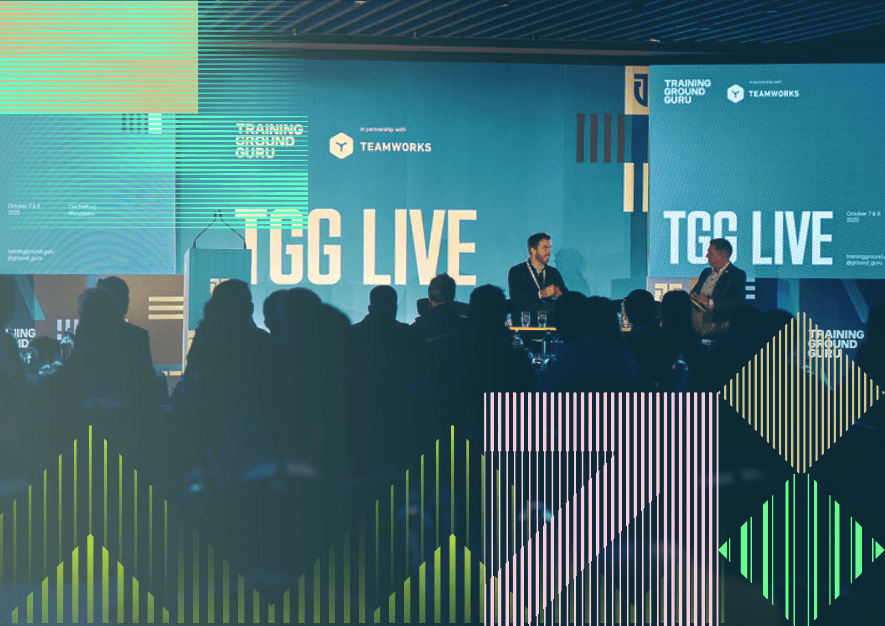
Teamworks are the Headline Sponsor of TGG Live 2026 – our industry-leading conference at Old Trafford in September. To see the draft agenda and to buy tickets, click below.
“We created seven or eight models to enable them to adjust for all of these contexts,” he explained. “And when they went to evaluate a player, they’d say, ‘Look, six of these models say the player is good and two of them say the player is not good. Which one should I place the most weight on when I’m making a transfer decision?’”
The team’s answer was to build a single Composite Player Metric (CPM), with weightings learned from data rather than picked by a human.
“It’s not us subjectively deciding that passing matters more than shooting, or that dribbling matters more than crossing,” Hinton said. “It’s the data learning these patterns over thousands of observations.”
The output, Byrne said, is a single, digestible figure clubs use to start a shortlisting process and provide more certainty in their final decision on players: “This player is an 80th percentile Premier League striker.”
Hinton was clear this is about giving clubs a “single starting point to compare numbers” with still the ability “to drill down into those components when you want to understand why a player is valued the way they are.”
He also flagged a risk that will be familiar to anyone who has sat in a recruitment meeting: confirmation bias.
“If you have 15 metrics and three models, you can always find a few of those metrics, or one of the models, where that player looks the best,” Hinton said.
“It feels like a data-driven process and you’ve come to a good outcome. But in reality it’s just using data to justify a decision that was made somewhere else.”
From who they are to who they’ll become
Even a clean, context-adjusted composite score is “a snapshot of today.”
The final stage – and the one that gave the session its title – is projection. This is taking a player’s trajectory, age, sample size and consistency and forecasting forward.
“It’s going to pull outlier performances back towards what’s going to be sustainable and predictable,” Hinton said. “It weights recent seasons more heavily than older ones while still factoring in a player’s full career of data. And it uses skill based aging curves to project performance forward.”
Teamworks validate the model against the simplest alternative most clubs use implicitly – a two-year average of recent form.
The results, Hinton said, favour the model “across every age group, whether you look one, two or three seasons in the future.” The biggest gains are concentrated exactly where recruitment risk is highest, “on younger players and on lower minute players, where a lot of the action and the risk tends to be.”
A wider bet – and one that paid off
That distinction between confidence and risk played out in Teamworks’ second case study.
With Cresswell, the model had seen a lot of his football – across Leeds’ Academy, Under-23s, a loan at Millwall and back at Leeds again – so it could predict his future performance with real precision. Reuben van Bommel was a very different case.
At the point Teamworks made their projection, in the summer of 2023, Van Bommel had played only one season of senior football, for MVV Maastricht in the Dutch second tier. With so little data to go on, the model couldn’t be nearly as precise.
“We were projecting that he had the ability to perform as a 70th-percentile winger a league above that,” Byrne said, “but we’re very confident he’ll be between about 55th percentile and 80th percentile, with an upside of potentially up towards 90th percentile.”
In other words, there was less certainty about exactly how good he would be, but a strong signal that he would be good regardless. So AZ Alkmaar took the bet.
“They felt the upside was there and that the downside wasn’t too bad – he’d still be above average,” Byrne said. AZ signed Van Bommel for just under €500,000 and within two years he had been sold to reigning Dutch champions PSV for €15.8m.
‘Nothing more than advanced analytics’
After all the technical detail, Byrne wanted to end with a simple point.
“Player projections and predicting player performance can feel – and often is, depending on who you speak to – quite black box,” he said.
“And now with AI coming on stream it can feel very voodoo,” he said. “But what we’re talking about today is really nothing more than advanced analytics by a big dedicated team of Data Scientists – which is much bigger than most clubs can resource internally.”
He ended with a line from Billy Beane, who co-founded Zelus Analytics – the platform Teamworks acquired and built its Player ID product on.
Teamworks’ aim is simply “to supply our partners with the best information available for them to go and bring that into their world – and for it to help them make the best decisions possible when it comes to recruiting players.”
- To watch this full presentation (and six others) you can buy the 2026 Scouting & Recruitment Webinar HERE – or you can watch ALL Webinars for free by becoming a TGG Member.
Follow Us
For latest updates, follow us on X at @ground_guru