Written by
Simon Austin
August 14, 2026
Wrexham go into the new Championship season with a squad that’s been rebuilt for more than £40m over two seasons, a fifth series of their Disney+ documentary having just aired, a new Kop under construction and a global fanbase that keeps on growing.
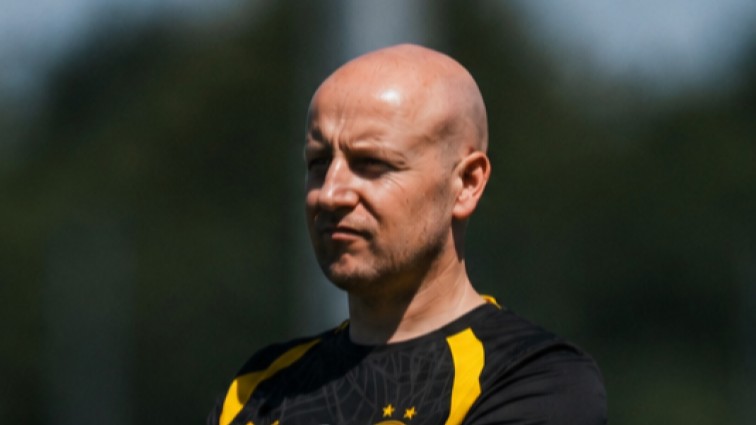
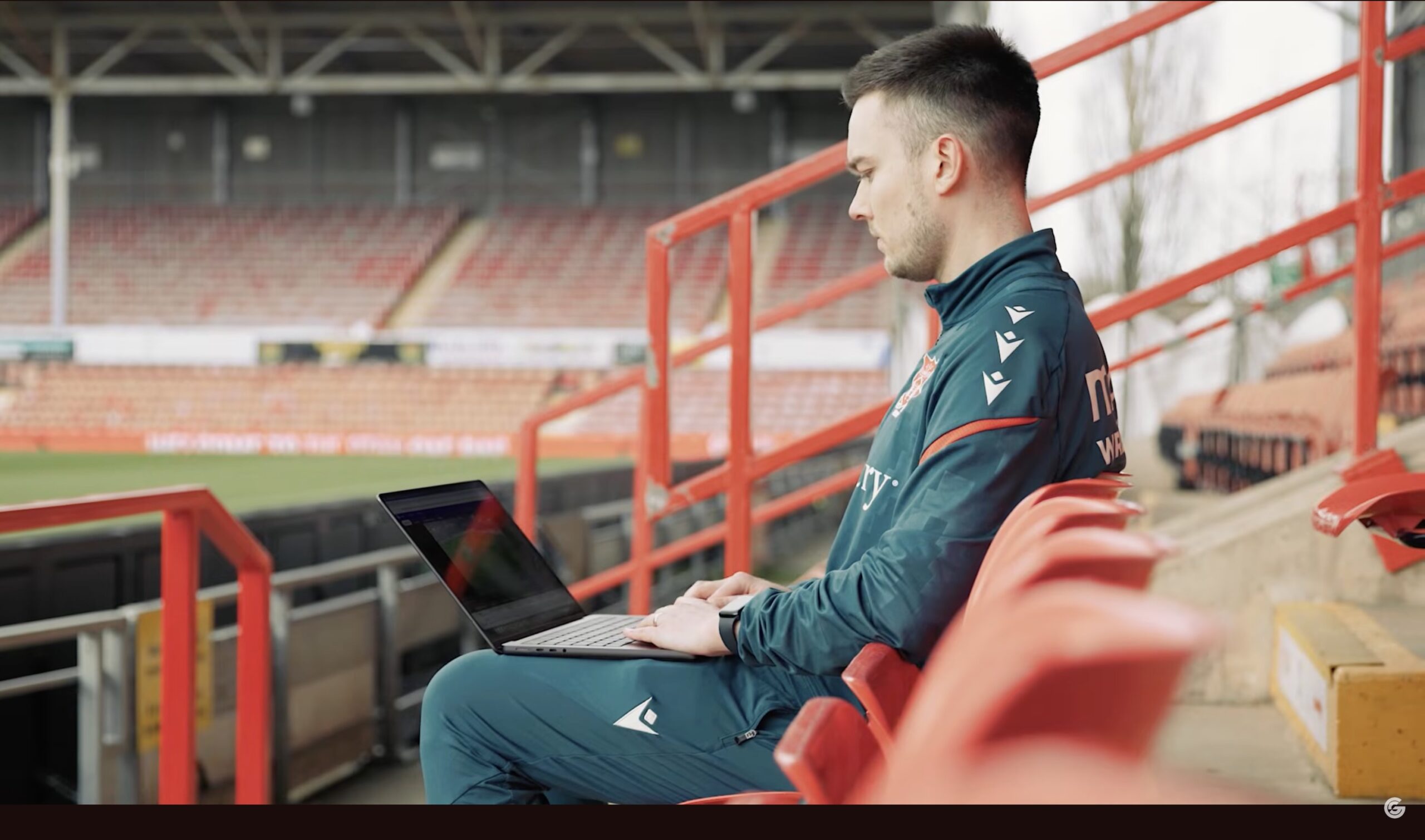
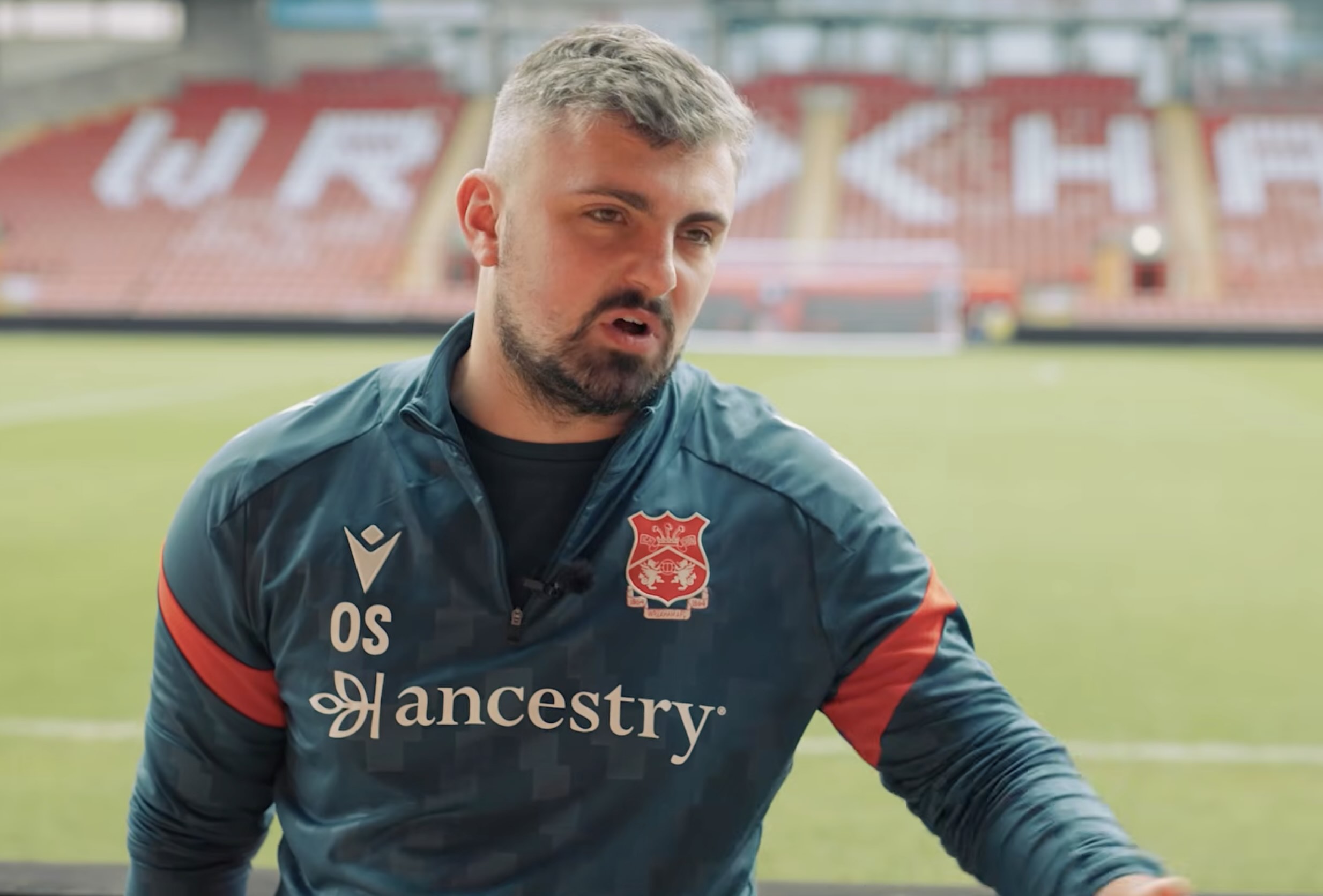
Their performance analysis department is still relatively modest though, consisting of George Parkinson, Kyle Crutchley (pictured above) and Oli Staines.

Parkinson started working for the club in September 2021 when they were still in the National League, three months after a play-off semi-final defeat to Grimsby Town.
As the club climbed the divisions, resourcing scaled up, but not lavishly.
“We’ve been very lucky that we’ve had great owners and we’ve had resources in the National League,” Parkinson said. “But as you go up the leagues, you need more and more. It’s also about manpower. It started off as two of us, now there’s three.”
Crutchley is the longest-serving member of the trio and the only one to pre-date the high-profile takeover by Ryan Reynolds and Rob McElhenney in 2021, having arrived at the club in February 2019.
“I’ve been at Wrexham now for just over seven years, so been here quite a while before the takeover,” he said. “I’ve seen the growth of the club.”
Oli Staines is the most recent arrival, having joined as Lead Academy Analyst in September 2023. He moved up to work with Wrexham’s first team last summer.
The three roles are tightly demarcated. Crutchley takes the first look at the opposition and builds attacking player clips.
“I’m like the first look for the staff, so then they can decide how they want to play against teams.”
I don't think a lot has changed in terms of the way we do things - it's just been improvement in softwares
Kyle Crutchley
Parkinson covers opposition and set plays, plus midfield player clips. Staines focuses mainly on Wrexham themselves, doing “post-match, training analysis, little individual meetings with the lads, unit meetings,” as well as helping his colleagues with opposition analysis.
The most dramatic changes to the department over the last few seasons have actually been in terms of software, Crutchley said. Wrexham use Performance Studio, the analysis platform built on Genius Sports’ optical tracking and event data.
“I don’t think a lot has changed really in terms of the way we do things,” Crutchley explained. “I think it’s just been improvement in softwares.”
Performance Studio is split into three areas: Insight, for interrogating video and long-term trends; Creator, for packaging clips; and Fitness, for physical output.
“Now having Genius on board we’ve just been able to grow the department and also the softwares that we use,” Crutchley added.
Opposition analysis: Focusing on what matters
With the proliferation of data in the modern game, the biggest challenge is often what to leave out rather than what to put in.
“You see it in the media, on Match of the Day – there’s so much narrative about expected goals, this and that data,” Parkinson admitted.
“It’s about narrowing it down to the data and the stats that are important to ourselves and that are actually going to be practical in improving us. So basically cutting out all of the excess information and streamlining it, just to make it a clear and concise message for the players and staff.

“When we’re analysing the opposition, naturally we’re looking at patterns of play, what system they play and whether they rotate to a different system in and out of possession.
“Then, for us, the fundamentals are in both boxes. We look at individual players, what the opposition’s left back is good and bad at.
“Most teams will do the same thing, but it’s about going through everything in fine detail – and that can sometimes take time.”
Performance Studio provides opposition pages with templates that are already built.
“That ready-made opposition page is so helpful,” Parkinson said. “It’s all got templates ready, and you can look at the opposition build-ups, counter-attacks, as well as the set pieces.”
Filters let him test whether something he has spotted is a habit or just a coincidence.
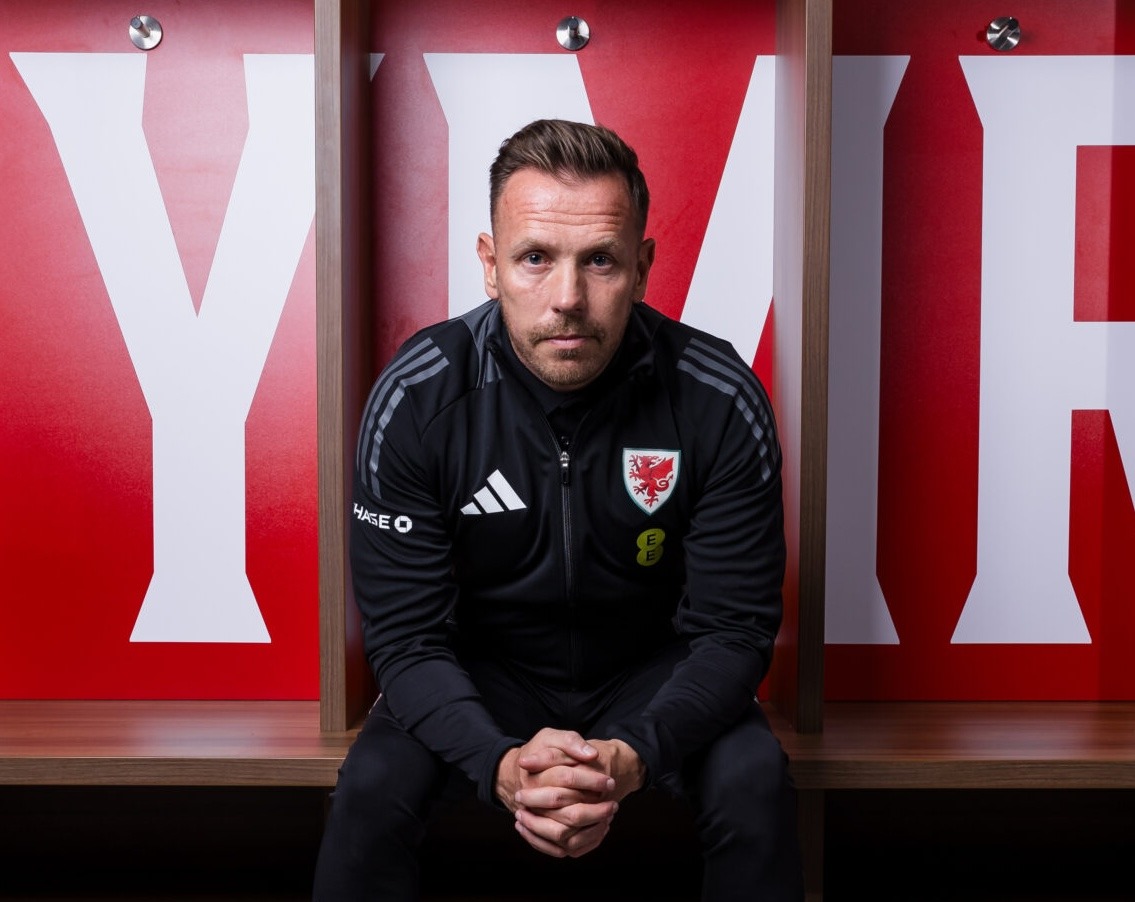
“If I want to see a specific pass from a centre back to a midfielder, it’s really easy to find if they’ve done that before, a repetition, or just a one-off,” he said. “So it’s easy to test new things and see if it is a continuous theme throughout the season.”
Individual running patterns are treated the same way.
“You can narrow down to overlapping runs, underlapping runs, runs in behind, runs when they’ve been targeted,” Parkinson added.
“Typically you’d say full-backs and wing-backs like to overlap their wingers. But some players in the league are really good at underlapping runs, so that’s important to highlight, because they’re in a team that might thread balls through to them.
“And we really need to make our wing-backs and our wide centre-backs aware of that. With Genius, what it has over other platforms and other softwares is just there’s so many filters and so many options.
“And the support team have been absolutely excellent at helping us with what we need.”
For Crutchley, the biggest change in moving up to the Championship has been opponents who change shape between phases.
“A lot of teams in the Championship play a 4-2-3-1 base shape, if you like, but then they transfer that into more of a 3-4-3,” he said. “So one player will drop to become a back three in possession, but then out of possession that will then become more of a 4-2-3-1. So we’ll use Genius and look for the shapes and how they differ between the two stages.
“I think in the lower leagues, shapes tend to just be one shape. Whereas now, particularly in the Championship, teams do rotate a lot more.”
Keeping pace off the pitch has mattered as much as on it.
“It’s really important that we’re not lacking with any software that other Championship clubs might have as well,” Crutchley said.
Set plays: ‘One goal can win a game’
Most people are aware of how important set plays are in the modern game – but Parkinson said they always have been.
“I don’t think they’ve just become so important,” he said. “They’re in fashion at the moment with Arsenal scoring so many set play goals, so many corner goals, so there’s been a lot more attention brought on it.
“But I think it’s just the absolute basics of the game – that if you defend your own box from set plays and you’ve got a goal threat going the other way, you’ve got a good chance of winning a game 1-0. And in those tight games that’s so important.”
Crutchley added: “Everybody’s looking at how you can improve all those little extras to score goals. It can be the difference between winning and losing games a lot of the time. And sometimes one set play goal can mean you win a game.”
Before a game, Parkinson pulls every corner the opponent has taken into a single playlist, switching between the tactical wide angle and broadcast feed.
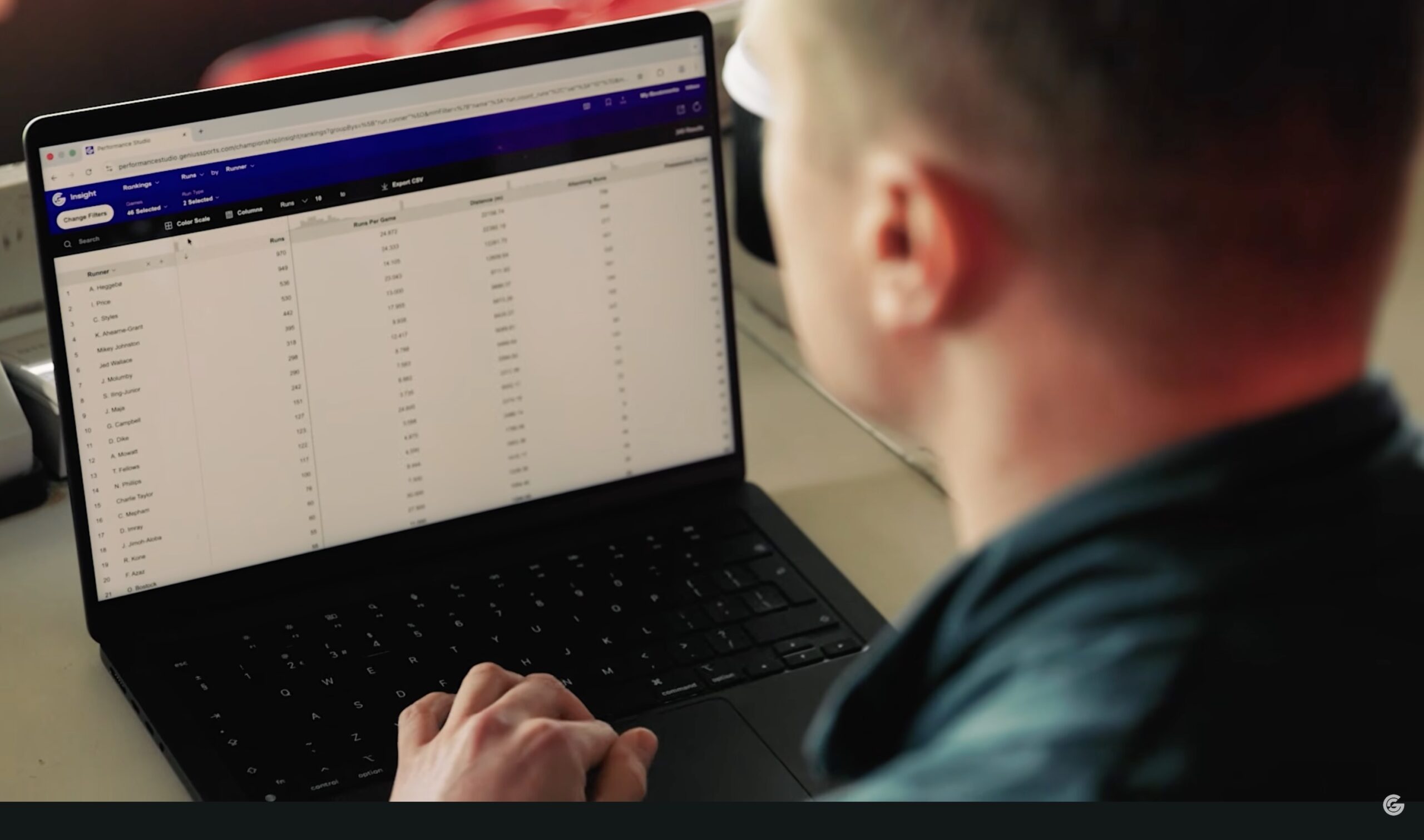
George Parkinson using Genius Insight, within Performance Studio, to analyse running data
“It’s so easy just to change from the wide angle to the TV footage, which both are important,” he said. “We might from the last three games have coded all of the set plays, but you can go back to all of them from the start of the season.
“Firstly, what’s important is to look at the number of players that go in the box, and then we can start looking at who are the key players for the opposition, and then we start narrowing down who we could match up with.”
The wide angle shows what the broadcast feed often leaves out.
“It’s important to see if the opposition are doing any blocks, or if they do a short corner, how many players have been sent out. You don’t always see that on the TV production footage,” Parkinson said.
“And then again, looking at if players are back. So it’s about seeing the whole structure of the team.”
The platform’s 2D reconstructions, built from the tracking data, label every player in the box.
“Rather than taking 10, 15 minutes looking for where players make movements, or trying to work out which player is which, those 2D animations mean we can look straight away at their numbers and we can see exactly where they are within the box,” Crutchley said.
“Otherwise it would mean going through all of the set plays, trying to work out where players are, and it would probably take a good few hours to do that, because we’d have to go through each set play. Whereas now we still will go through each set play, but it will make it a lot quicker, because we can quickly go between angles and also we can look at the 2D animations.”
Long throws are listed automatically rather than found by watching every throw-in.
“You can see which players have taken long throws, whereas other than that you have to go through every single throw,” Parkinson said. “So that’s a great example of saving time.”
The list also catches what a manual search could miss.
“It’s interesting to go through the last five or six games, all of their throws, to see which players take long throws. But then a player might have been injured that’s returning to fitness,” he said.
“And if you look on the Genius template with the long throws, it will tell you that they in fact have a long throw as well. So you could have easily missed that.”
Matchday: Speed through technology
On a matchday, speed is of the essence, which Performance Studio makes possible.
“If it is a match day and a coach or the Manager comes in and asks for a specific clip, then we can do that quite quickly, whereas previously it would take a lot of time,” Crutchley said.
“It might be that the Manager wants a specific movement – we can narrow that down really, really quickly and get two or three clips for the Manager to see.”
For three people covering a 46-game season, technology is crucial.
“You’ve only got so many hours everybody can spend in a day,” Parkinson added. “So it’s all about maintaining that detail but saving as much time. So you can improve your softwares, like Genius for example. But you can also improve with more staff.
“But there’s so much more you can look at, like patterns of play, set pieces – teams are getting cleverer and cleverer. And every team’s got a similar amount of resources, really.”
Post-match: ‘You could win 3-0 and still not perform well’
The day after a game, Staines gets to work on breaking it down.
“Sunday is a day off, but not in the analysis or football world. You don’t really have a day off,” he said. “I’ll code it myself.
“So I do all the stats and create a post-match stats report for the coaches. Turn up Monday morning and print that off and give it to all the coaches.”
The report measures Wrexham against themselves rather than against the opposition, “because you could win 3-0 at a weekend and still not perform as well as you have been performing.”
“It’s good to have that context of not just game by game, but compared to your whole season as well,” Staines added.
Oli Staines: Breaks down Wrexham's performance
It covers attacking and defensive KPIs, set pieces and an individual page for every player. The passing section measures territory rather than volume.
“We look at how many passes we made in each third, for example, but then also how many passes we made third to third,” he said. “Did we look to break lines and play into our middle third and final third? And what was that success rate as well?
“There’s been a few games where we feel we’ve gone too short with the ball and played too much football, and we may need to look longer. And that’s where that data’s helped objectify that, as well as have that subjective view of just looking at the footage.”
The defensive numbers track the standards the club treat as non-negotiable.
“We look at defensive duels in terms of tackles, we look at loose ball duels and we look at aerial duels,” Staines said. “That’s where we can objectify how good we were compared to previous performances.
“How we deal with diagonal passes – you can clip the area on the pitch that the pass was made and then the area on the pitch that the pass ended in. It saves you going through hundreds of clips. That narrows it down into the last 10 clips of the last 10 games.”
From the analysis room to the training pitch
Ultimately, Manager Phil Parkinson decides what analysis his players will see.
“In the early stages I will get the clips ready and we’ll go through all the clips and the data and their strengths and things,” Crutchley said.
“And then at the back end of the week he will then narrow that down into what he wants to look at, and we just make a larger video that he [the Manager] can access.”
George Parkinson said: “Whenever we see a player with a key stand-out feature or a key stand-out stat, that will filter back into the coaches and then they’ll build that into the week’s session and also into the presentation and the key information we give the lads.”
Most of the analysis delivery happens in smaller groups, rather than being delivered to the full squad.
“We always have one pre-game meeting, but then leading up to that we may bring the defenders in, bring the midfielders in, bring the attackers in,” Staines said.
“Just because then you have that more personal connection of a meeting between one person and five players rather than 25 and the whole squad. You can have that personal interaction with it, and they become a lot more engaged with it.”
The ‘ultimate goal’
Wrexham finished seventh last season on 71 points, two behind Hull City and the final play-off place. It was heartbreakingly close, but nevertheless the highest league finish in the club’s history, reached via three successive promotions.
The Reds begin their new campaign away at Cardiff City on Monday (August 17th) – the first league meeting between the two Welsh rivals since March 2002 and Wrexham’s first senior fixture at the Cardiff City Stadium.
Crutchley’s ambition is for the analysis department to keep pace with the rest of the club.
“The ultimate goal for the club is to hopefully one day get into the Premier League,” he said. “And I think if departments grow within the club at the pace that we’re growing, then I think we can eventually get to the Premier League – and hopefully quite quickly.”
- Genius Sports’ James Young will be presenting at TGG Live ’26. His session is titled Inside the AI that turns video into live football events. To find out more and to buy your ticket, click HERE
Follow Us
For latest updates, follow us on X at @ground_guru