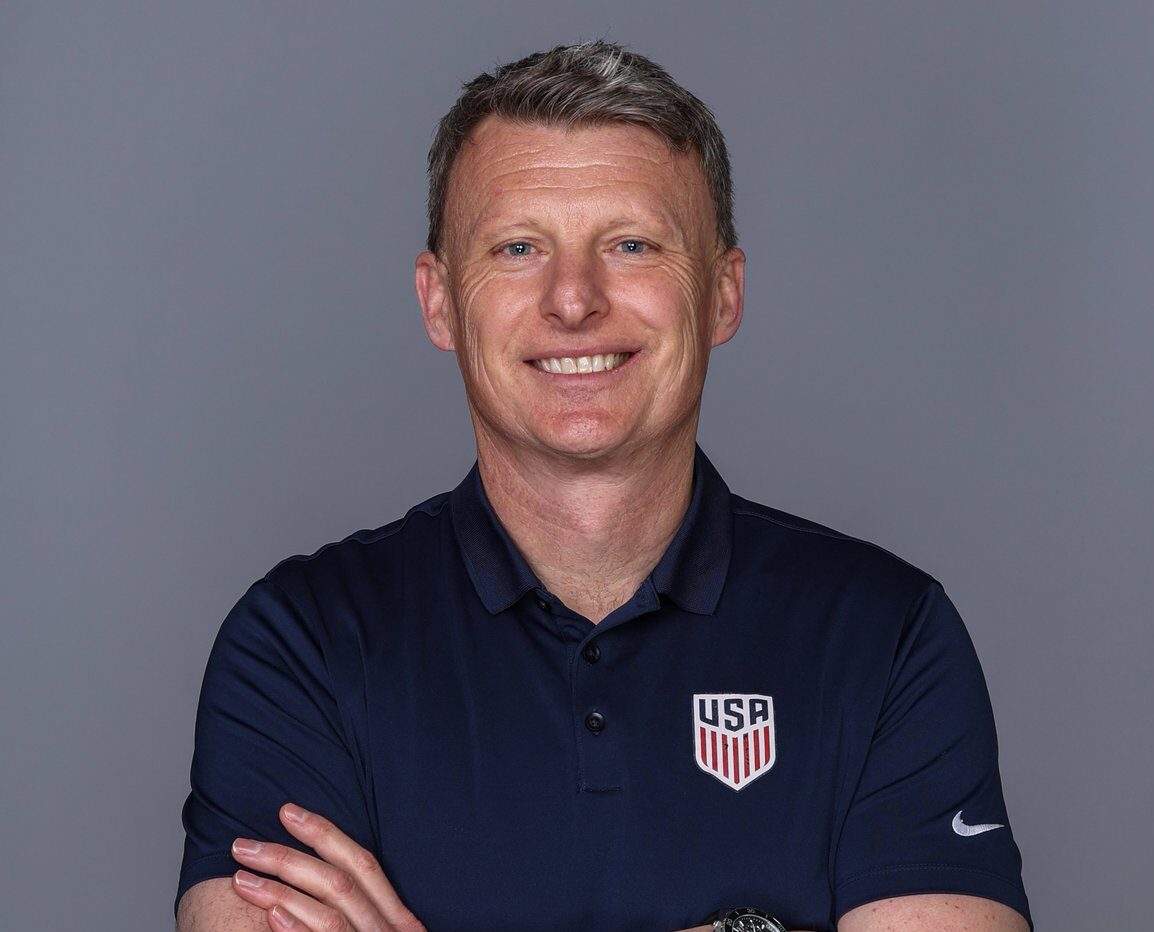
Daunté Crawford: The structures behind winning teams
Written by
Daunté Crawford
April 4, 2026
My first TGG column outlined the shift we are seeing from unicorn Sporting Directors to distributed leadership teams.
Today I want to take this one step further: what are the structural features that allow good people to make good decisions on a consistent basis?
I think there are six structural dimensions that determine whether a club functions coherently and makes the most of its staff:

Daunté Crawford is Domestic Football Club Development Manager for the Football Association of Wales. He also runs Sentinel Sports Group, which delivers strategic advisory and operational support to clubs, leagues & investors. In his monthly TGG column he will be exploring some of the challenges and issues facing Sporting Directors.
1. Scale isn’t the same as clarity
The default assumption can be that the best-resourced clubs have the clearest structures, when in fact the opposite is often true.
Clubs that expand their staffing without first codifying ‘decision rights’ tend to create what I would call interpretive work.
This means staff having to negotiate what they own, who they need to consult and when they can act. It creates daily friction that might not be visible on an organisational chart, but leads to missed decisions, duplicated effort and low-level confusion.
Bristol City’s recent decision to bring in a Sporting Director above both the Technical Director and Head Coach is an attempt to resolve this type of ambiguity. When two senior roles operate in adjacent territory without a clear authority structure above them, decisions slow down and accountability blurs.
Bristol City’s new structure will not not guarantee clarity, but it will create the architecture for it.
Following the departure of Kevin Thelwell, Rangers recently abandoned their plans to hire a new Sporting Director. Chairman Andrew Cavenagh told supporters that the club believed its current football structure was working well and that the executive team was committed to being ‘smaller, nimbler and more entrepreneurial’.
However, being lean is not necessarily the same thing as being clear. A lean structure with poorly-defined decision rights is no better than a larger one with the same.
The question is not how many people you have, but whether these people know exactly what they own. Before the next hire (or decision not to hire), the question should be what decision is currently being made poorly and why, rather than how many people do we need.
Expansion without clarity does not add capacity – it simply distributes the problem into more people. Nor does contraction without clarity simplify anything either, it just concentrates dysfunction into fewer hands.
2. Integration is the result of behaviours, not structure
Clubs have different departments: coaching, medical, analysis, operations, recruitment and more. They exist as distinct functions with distinct heads. Having them on the same organisational chart does not mean they are integrated though.
Ensuring that departments operate as a unified system is not achieved by structure, but by behaviour – and specifically by the frequency and quality of cross-functional contact.
Clubs that do this well tend to make cross-functional contact structural rather than optional. They have brief, regular touch-points across coaching, medical and operations that keep information moving and prevent decisions sitting in one department while another waits.
When this rhythm exists, alignment is continuous. When it does not, formal mechanisms, governance documents, weekly reports and sign-off processes are substituted for the reality of integration.
The Geoff Scott situation at Tottenham illustrates what happens when this breaks down. Scott served under 11 permanent Managers as the club’s longest-serving backroom staff member before leaving in August 2024 following differences of opinion with Head Coach Ange Postecoglou about the structural and operational direction of the performance department.
Tottenham then suffered a significant increase in injuries the following season. Scott has since joined Nottingham Forest with a mandate to modernise and strengthen the club’s medical and performance framework. Same person, two different structural environments.
Physical environments matter more than most clubs acknowledge. Having the training ground and stadium on the same site – and departments sharing corridors rather than buildings – can reduce the friction of cross-functional contact.
When staff are dispersed, alignment has to be engineered deliberately – and this rarely happens.
3. Structural inflation is a competitive disadvantage
Top clubs have followed a familiar pattern in recent seasons: increase resources, grow complexity and create new specialist roles.
Some of these roles are high impact and necessary; others exist because contemporaries have them and the Board likes to see them on a structure chart.
When you add roles before defining what the problem is, the result is structural excess: resources misalign with genuine priorities, roles drift because the mandate wasn’t precise and decision-making fragments as accountability becomes shared by default rather than by design.
A useful diagnostic for any existing or proposed role runs to three questions:
- Can you trace this role directly to player availability, decision quality or operational efficiency?
- Does it solve a defined problem, or does it manage complexity that the structure itself created?
- Would performance decline measurably if the role did not exist?
Roles that survive these three questions are worth protecting and investing in; roles that are created to follow trends become structural weight without a competitive return.

4. Cohesion built on personality is only temporary
The departure of Sporting Director Kristjaan Speakman from Sunderland in February showed how structures can become dependent on individuals. Speakman had led the rebuild of the club’s football operations over five years, helping take them from League One to the Premier League.
When Florent Ghisolfi arrived as Director of Football in July 2025, and assumed control of all football operations, Speakman’s position became untenable. The structure had not been designed to absorb the change.
This is the risk with cohesion that is anchored to the current leadership configuration rather than to shared principles. When the configuration shifts – as it always eventually will in football – the alignment resets.
Authority boundaries that were implicit have to be renegotiated. Cultural standards that had accumulated over a cycle have to be rebuilt.
Leicester City’s recent restructure is worth examining in this context too. Chief Football Officer Jon Rudkin has spent decades at the club in various roles and now sits above the incoming Sporting Director James McCarron.
The design creates a layer of institutional continuity, which should in theory insulate against the kind of reset that comes with leadership change.
Whether it works in practice depends on how clearly the decision rights between the two roles are documented and respected.
Clubs that sustain performance through leadership transition build alignment through shared principles and repeated relational contact over time. They don’t do it through deference to any one individual.

5. Adaptability without identity is reaction
Every club faces external shocks: relegation, ownership change, a transfer window that doesn’t go according to plan.
The question is not whether disruption will arrive, it is whether the club has the structural capacity to absorb it without losing operational identity.
There is a meaningful distinction between principled and reactive adaptation. Principled adaptation means that when circumstances change, the club’s core standards and processes remain stable.
This means workloads flex and role allocations adjust, but behaviours, values and decision logic do not drift.
Reactive adaptation is what happens when those things are not codified. Each external shock triggers a reset, strategy alters according to league position and staffing changes with the Head Coach.
This type of club doesn’t accumulate institutional knowledge, because the conditions for this keep being cleared.
The framing of Bristol City’s new CEO is interesting here. Charlie Boss has described the club’s Sporting Director search as being about creating the conditions for the first team to succeed. That language – conditions rather than personnel – suggests an awareness that the structural environment is the primary investment.
Whether the club can sustain that framing when the inevitable short-term pressure arrives will be the real test.
Clubs that sustain performance through disruption are not necessarily the ones that plan most comprehensively for each and every scenario. They are the ones that codify what doesn’t change – the non-negotiable behaviours, the decision-making principles and the standards.
That codification enables flexibility at the operational level without fragmentation at the identity level.
6. Culture is the result of structure, not the other way around
Culture is the most discussed and perhaps least understood element of football organisation. Clubs reference it in press releases for managerial appointments, in onboarding materials and values statements. They describe it as the foundation of everything they are trying to build.
Yet culture is an output, not a foundation. You cannot engineer it directly. What you can engineer, however, are the structural conditions that produce it. What those conditions generate, over time and through consistent behaviour, is culture.
The clubs with the strongest performance cultures share the same features:
- Clear decision rights, so that staff know where they stand.
- Consistent cross functional contact, so alignment is maintained without friction.
- Leadership cohesion built on shared principles, so behavioural standards do not shift with every change of personnel.
Culture is what emerges when these conditions are expressed daily, in punctuality, communication norms, preparation standards and staff feeling able to raise concerns without fear of consequence.
Head Coach-dependent culture is where norms are set by the incoming person’s preferences and which reset with each transition. English football has tended to normalise this mode, which can produce volatility, staff disorientation and loss of institutional knowledge.
So investment has to go into structure and leadership first, because culture will follow from what you build. If the structure is incoherent, no amount of values work will compensate.
The question clubs are not asking
These six dimensions are not independent. They reinforce each other when they are aligned, and undermine each other when they are not aligned.
A club with clear decision rights but fragmented contact between departments will find clarity degrading over time; a club with strong leadership cohesion but coach-dependent culture will reset cohesion with each managerial change.
Structural design can be a genuine competitive advantage. This is why clubs are starting to think about what sits above the Head Coach, how functions connect and what kinds of environments they are building.
The clubs that benefit most will be the ones that apply the same rigour to structural design as to squad building. They will profile, model and assess fit.
This is not a staffing problem, it is a design problem.
- COLUMN ONE (Feb 2026): From the ‘unicorn’ Sporting Director to leadership teams
- COLUMN TWO (March 2026): The case for Sporting Director visibility
- COLUMN THREE (April 2026): The structures behind winning teams
Follow Us
For latest updates, follow us on X at @ground_guru