Ewan Sharp: Can club success translate into World Cup glory?
Written by
Ewan Sharp
May 12, 2026
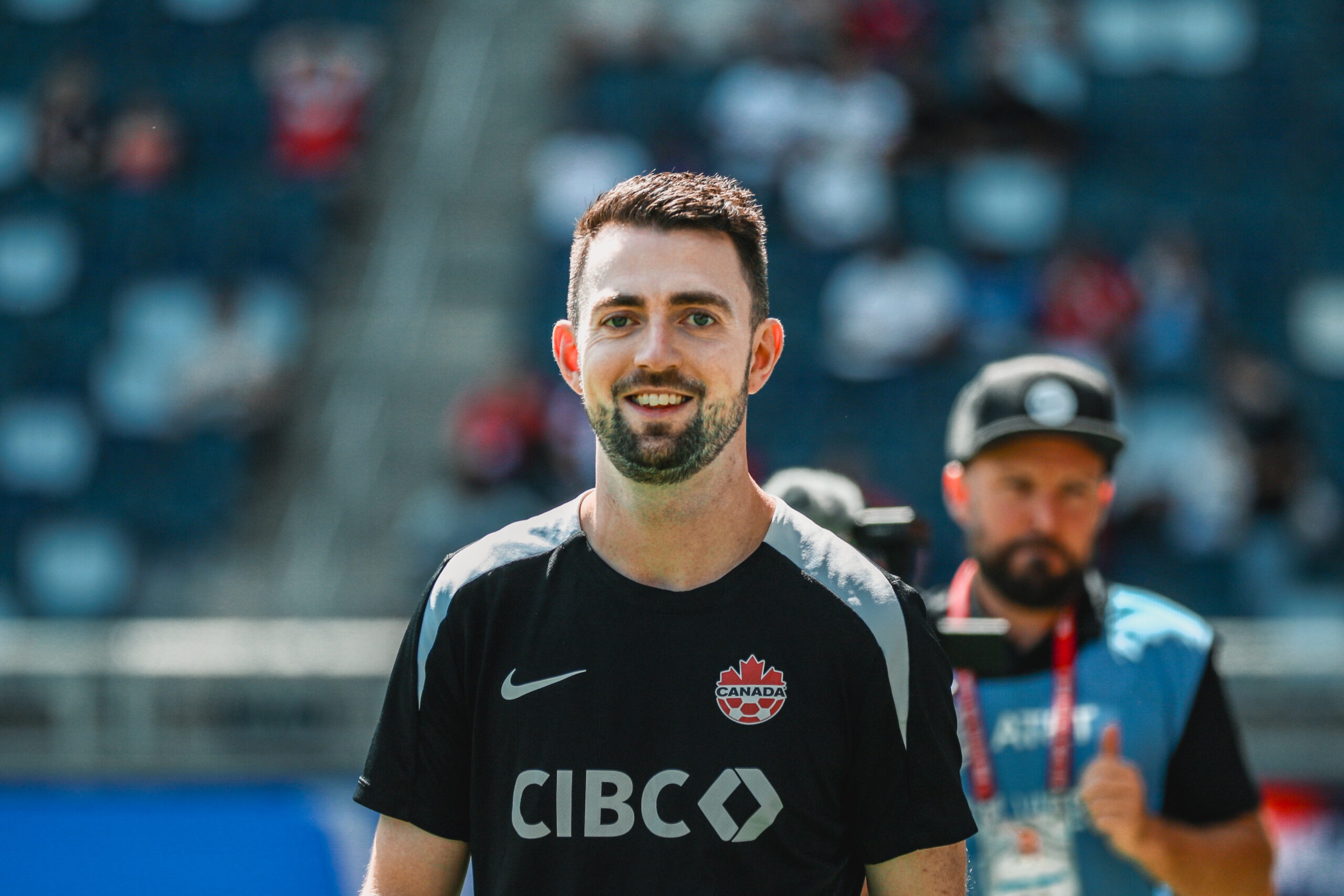
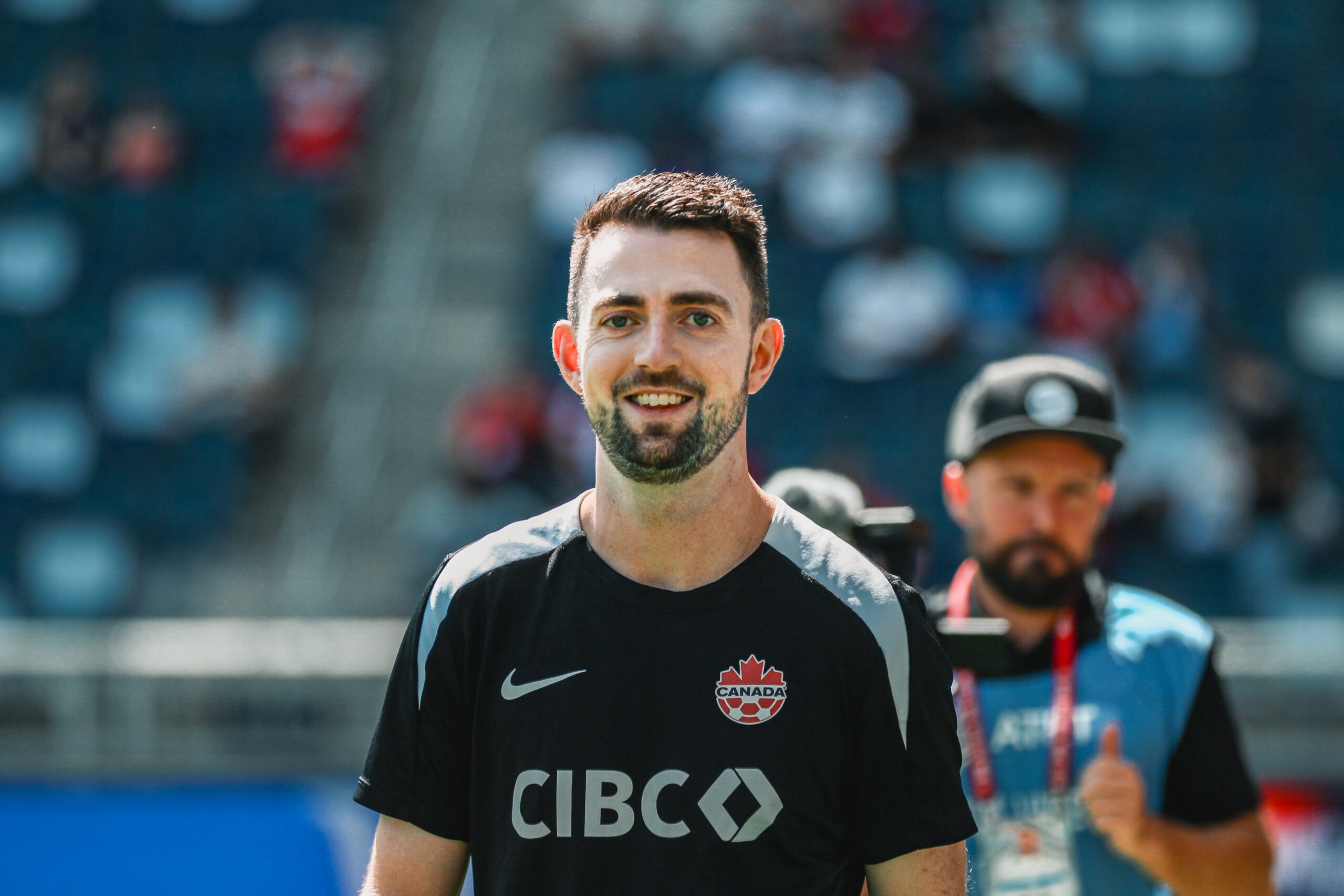
Ewan Sharp is a month away from coaching at a World Cup finals for the first time. The Scot has been Canada Men’s National Team Assistant and Head Analyst for exactly two years, reuniting with Head Coach Jesse Marsch, with whom he worked at Leeds United. He has also worked for Manchester United with Ralf Rangnick. In this article, Sharp outlines the challenges in transferring the way club sides are coached into the international arena.
With the World Cup rapidly approaching, attention is starting to shift from club football to the international game. For many fans, club football is viewed as the benchmark – higher quality, greater cohesion, more tactical detail.
However, the inspiring football we saw in the first leg of the Champions League semi-final between Bayern Munich and PSG feels like an outlier. The race for efficiency and effectiveness in Europe’s elite leagues has led to football becoming more risk-averse and homogenised.
The World Cup offers something different. Not only does it bring together the best players – it brings different footballing ideas into direct competition. Distinct footballing identities shaped by culture, history and context compete on the world stage.
Knockout football inherently brings out the best and worst of players and teams and its do-or-die nature leads to the fear of making mistakes but also the need for risk-taking.
With limited time to work with the players and high stakes, how does a coaching staff implement a style of play and football identity for the world’s biggest sporting event?


Club versus country
Each player arrives on international duty immediately following a club match in which they are asked to display habits developed from their daily sessions.
In their club environment, an elite professional will spend between 250 and 350 hours on the training pitch. For international football, a non-summer tournament year would allow about 40 hours of training and a World Cup year potentially up to 85 hours.
It would be easy to believe developing behaviours and instilling principles is extremely difficult and perhaps not possible given the limitations of international football. It makes sense to focus on developing tactical understanding and creating clear instructions on what to do in each phase of the game. However, that has not been the approach of the Canada Men’s National Team staff. From our experience the principles outweigh the tactics.
But for us, principles are not abstract ideas – they are tools to manipulate the opponent. In possession, and out of possession, the objective is not simply structure or organisation, but to actively create problems for the opposition. Whether pressing or building attacks, everything is framed around how we can distort, isolate, or force decisions from the opponent that we can exploit.
Jesse Marsch and Ralf Rangnick are both synonymous with the “Red Bull” style of high-pressing, high-octane, attacking football. Every coach associated with this style is known to promote intense pressing, fast attacking, immediate counter-pressing and aggressive decision-making.
Moving into International coaching with one of the most distinctive playing styles in world football creates an interesting challenge for how to implement a “game model” with limited training time and long gaps between games.
In the Premier League, every game is played on such a high level and every detail matters. The top teams are so well trained and understand exactly what the coach wants them to do in each moment of the game. Each team has a style of play and the players have ingrained habits.
When I was at Leeds, we played Thomas Tuchel’s Chelsea at home early in the season. Tuchel is meticulous tactically and we knew he’d have creative ideas to try to beat our pressing.
We predicted Chelsea would use Marc Cucurella in a fluid role rotating between a traditional full-back position and into midfield and prepared a fluid pressing plan that allowed our forwards and midfielders to decide when and how to press based on his position.
The players executed it excellently and we were 2-0 up by half-time after pressing Chelsea into dangerous turnovers. I remember seeing Tuchel animated and instructing his players to rotate to disrupt our pressing. But on the day we were prepared for the changes and the players could adjust and apply our principles effectively.
International football is different though. There is a time limitation and teams can’t be as tactically intelligent and organised and have well-established principles and behaviours like club teams.
In general, the European teams we’ve played against tend to lean more into the tactics and are very well-organised. The South American teams are more aggressive and play with more freedom. The African teams are creative, athletic and there’s more space between the lines but it’s difficult to penetrate through their backline.
Unfortunately, we haven’t played as many Asian teams, but from what I’ve seen they are technically very good, well-organised and hard-working. CONCACAF seems to have a bit of a mix of all the confederations.
CANADA’S WORLD CUP 2026 GROUP B FIXTURES
FRI 12 JUNE – Bosnia-Herzegovina (Toronto – 20:00 BST)
THU 18 JUNE – Qatar (Vancouver – 23:00 BST)
WED 24 JUNE – Switzerland (Vancouver – 20:00 BST)
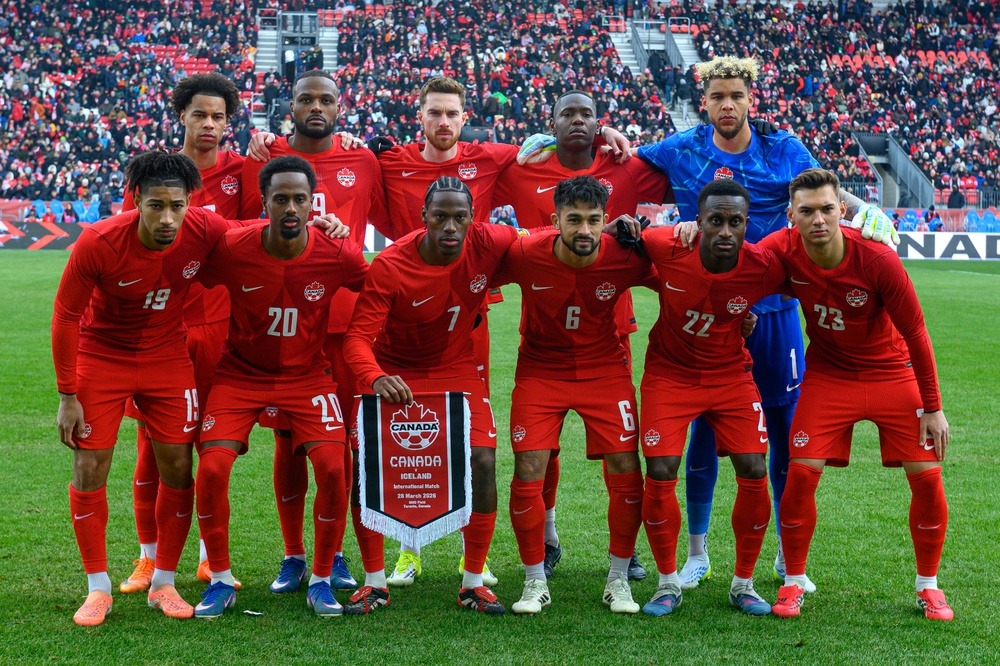
What is Canada’s approach?
Our team has a good blend of athleticism, intelligence, aggression and organisation and, to forge an identity, we’ve focused on developing principles and behaviours.
Our first match was a friendly against the Netherlands, ranked seventh in the world, in Rotterdam. In the first couple of days of training, we introduced key ideas and terminology, but the priority in sessions was clear: intensity and behaviours over tactical detail.
In one early session, rather than starting the session with our typical rondos and small-sided competitive exercises, we decided to do something a bit different. We split the group in two and fellow coach Mauro Biello and I worked with the wide players on pressing behaviours – sprinting, going in, taking the last step and joining in to create two-v-ones. It was a more controlled exercise, slightly manufactured to isolate and refine those actions.
But the intensity wasn’t where it needed to be. I could feel Jesse was frustrated but he let it run, watched closely, then addressed the group at the next break.
The players had spoken about “making history” at a home World Cup but Jesse turned that back on them. “You said you want to make history. You said you want to train with intensity. Then it has to show – in every moment, every exercise,” he said.
That moment set the standard. We haven’t had to revisit it since.
What we saw was the foundation - the behaviours, the intent, the willingness to play our way.
Ewan Sharp
Going into the Netherlands game, we made a deliberate decision. Rather than overload the players with tactical triggers, we wanted clarity and conviction.
We approached the game almost like one of our training rondos:
- Sprint
- Go together
- Close the space
- Swarm the ball
- Play forward
- Transition fast
- Counter-press immediately
We made some personnel changes after an even and goalless first half, where we made it very difficult for a top-level opponent. The second half opened up, we became stretched and lost 4–0. But the result wasn’t the main takeaway.
What we saw was the foundation – the behaviours, the intent, the willingness to play our way.
A few days later, we faced France, ranked second in the world. Now that we had built the foundations, we were able to be more sophisticated in our pressing. We showed the players where the behaviours had worked and refined when and where to apply them. The focus shifted from just how to press to recognising the right moments.
The response was outstanding. We were more compact, more connected, more controlled in our aggression and we drew 0–0, controlling large parts of the game.
Within 10 days, against two of the best teams in the world, we had established something important. First, the behaviours and then the shared understanding of when to apply them.
That shared understanding is crucial in international football. With limited training time, we’ve found it more effective to align intentions than overload players with tactical detail. The objective is not for every player to memorise every scenario, but to understand what we are collectively trying to achieve in each moment of the game.
For example, defensively our objective is to press to win the ball and transition quickly. So the intention is clear: stay compact and connected, close the middle, recognise the trigger and go together to swarm the ball.
The behaviours support that – sprinting, hunting, taking the last step, squeezing as a unit.
In attack we don’t want to simply “retain” possession or find free players for the sake of control. Our intention is to overplay the opponent – to play through, around, or beyond them in a way that forces defensive reactions.
Once those are aligned, the next step is helping players read the game. In training we start with small exercises like rondos to develop the behaviours, then progress into larger, more realistic spaces where they have to recognise the right moment to apply them.

Developing behaviours
When I talk about habits and behaviours, I mean the actions players take under pressure – the things they do instinctively because they’ve been trained and reinforced over time. We build those through repetition and constant feedback.
We demand more from the players: sprint more, be aggressive, win the ball – not just delay and deny.
In possession we want to play forward, not safe. That bravery is structured around manipulation. If the opponent presses high, we use that pressure to find players between the lines. If they drop off, we don’t settle for circulation – we step in, attract pressure and create separation to overplay them. Even passing becomes a tool to manipulate distance, timing and defensive behaviour.
To take risks the players have to feel supported. Our counter-press is key to that. It allows us to attack with conviction because possession is not treated as something to protect – it is something to use aggressively. It allows players to be brave in possession because losing the ball isn’t the end of the action – it’s the start of the next one. That continuity removes hesitation and it allows players to take risks knowing we are structurally prepared to immediately attack the second ball.
The constraints of international football haven’t forced us to simplify – they have forced us to prioritise what actually matters. We’ve been more selective and deliberate with every training session to make sure we maximise our time together. We keep match plans simple and decide what we prioritise from a tactical and game model perspective.
We try to remove hesitation from the players’ decision-making. In unclear moments, we would rather the team make an aggressive action with conviction than hesitate between two ideas. If there is doubt, we generally encourage the proactive choice – sprint, press, play forward, engage. Even when the decision isn’t perfect, collective conviction is often more powerful than cautious hesitation.
Developing behaviours is a major focus of our video meetings and training sessions. But that is only one part of building a successful team. The players also need to recognise when to apply them.
The Coaching Process
Effective coaching follows a logical progression:
-
- Provide intention
- Create supporting conditions
- Coach implementation within context
- Manipulate the context
- Execute through trained behaviours
Performance in a home World Cup for Canada will ultimately define the success of our coaching staff. Since taking over in May 2024 we have climbed more places in the FIFA Rankings than any other men’s national team, rising from 49th to 30th and peaking at 26th last November. It is a reflection of progress, but more importantly of clarity in what we are trying to build.
Simplicity and clarity are key in high-pressure environments. Structure is important but it’s the behaviours and principles which are sustained in dynamic and unpredictable matches. Rather than providing instructions or rehearsed patterns, we focus on creating shared intentions that give players a clear understanding of the objectives in each phase of the game. Players make decisions and adapt to a changing environment.
Football is often unpredictable and chaotic, especially at international level. Rather than trying to control every moment, we want the players to feel comfortable in chaos, to feel empowered by playing faster than the opponent. What can look chaotic from the outside feels connected and purposeful to the players on the pitch.
If the game does not naturally present the opportunities we want, then we must create them through movement, positioning, timing and collective actions. This includes deliberately manipulating the opponent’s structure – through positioning, timing, and collective actions – to create predictable reactions that we can exploit.
When time is limited, when pressure is high, when it’s win or go home, you discover what really matters. Clarity, conviction, and the ability to act together when it counts.
Follow Us
For latest updates, follow us on X at @ground_guru