Written by
Simon Austin
June 1, 2026
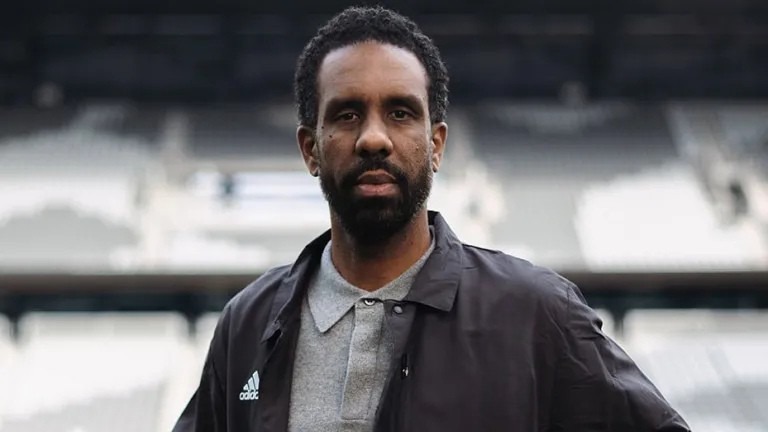
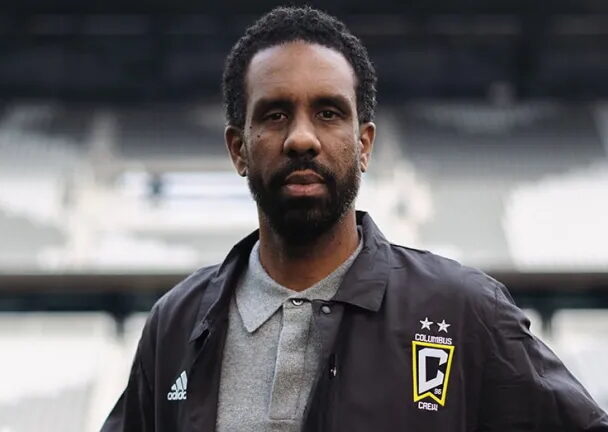
By any key measure, Wilfried Nancy’s 33-day tenure at Celtic was a failure.
Two wins from eight, 18 goals conceded, six defeats and a win percentage of 25%. Yet despite the battering his reputation took in Glasgow, the Frenchman remains one of the most original and curious coaches in the game.
The question is not whether his ideas have merit, because his record in North America answers that: 2024 MLS Coach of the Year, Leagues Cup winner and finalist in the CONCACAF Champions Cup.
Victor Wanyama, who played under him at CF Montréal, described him as a coach who “really, really taught me a lot.” Giorgio Chiellini, one of the most decorated defenders in football, said of Nancy’s Columbus Crew side: “They have a fantastic teacher, or maestro, if you prefer to call it.”
Even at Celtic, amidst the wreckage of results, there were indications of what he was trying to achieve.
The Bhoys generated 4.73 xG and registered 31 shots in the win against Aberdeen on December 21st. They held 65% possession and created 1.52 xG against Rangers on January 3rd, missing four big chances in a match that ultimately ended his tenure.
So the question should actually be: what are Nancy’s ideas and how does he try to put them into practice? This is what he address on Episode #78 of the Training Ground Podcast.
The outsider
To understand Nancy’s philosophy, it first of all helps to understand where it came from. He grew up moving between French overseas territories – Martinique, Guadeloupe, La Réunion, Djibouti — because his father served in the French Navy.
Each move meant a new school, a new community, a new set of people to read.
“The fact I travelled a lot helped me to understand people and different cultures and to have more empathy with people,” Nancy told TGG. “This is difficult to teach; you have to feel it, you have to live it.”
Asked whether all that moving made him feel like an outsider, his answer was immediate. “Yes, yes, totally.”
However, this gave him the ability to walk into an unfamiliar group and understand who people are, what they need and how they want to be treated.
“I am confident enough that I don’t mind about the hierarchy. I mind about what kind of environment I’m going to put with the people that I work with. You have to understand that people will think in a different way than you.
“You have to understand that people will act in different ways, but you cannot be offended by that.”
He was clear about the link to his coaching.
“I believe we all have uniqueness, we all have expertise and we should be able to show our expertise. And I’m going back to football — this is a link with my style of play.”
Minestrone soup
Nancy’s starting point is not formations or pressing triggers, but connection.
“The way I see football is about connection,” he said. “I remember when I was playing with my friends outside, I didn’t know a few players.
“So after two or three minutes, I was able to see, ‘This guy likes to do that, so maybe I’m going to give him the ball in this way,’ or, ‘Maybe he’s not so good, this is not his strength to defend, so maybe I’m going to help him a little bit more.’
“That’s why connection, for me, is more important than everything.” He is equally clear about what follows from that. “I cannot dissociate the player and the human being. That’s why the style of play that I have is about being audacious, being brave, with a lot of nuances, but also to express yourself.”
Nancy’s tactical framework is a hybrid of positionalism and relationism. Jamie Hamilton described positionalism on Episode 74 of the TGG Pod: players occupy certain sectors of the field and the players don’t move, the ball moves to the players.
With relationism, attacks are organised by movement rather than space.
Nancy said his style is “the minestrone soup.” He added: “I do both. In the past I was a positional play coach, but within that I had relation between players.”
The evolution of his thinking mirrors a broader shift in the game. “When we watch the game of Guardiola now, he evolved. In the past, he wanted to have all the time players high and wide. Now they can come inside and there is more rotation.
“Now, when I watch a game in Brazil or in Argentina, there is less structure in terms of position. It’s more about play with more individual players and how they’re going to connect together.”
Nancy has synthesised both traditions deliberately.
The diamond
The fundamental unit of Nancy’s system is a four.
“The most important is the connection between four players. I am a big believer of that. Not three players, it’s four players.
“Why four players? Because four players, for me, is a kind of diamond. And why I like the diamond is because the diamond gave me the possibility to look forward as soon as possible.”
The geometry matters to him.
“If the four players know how to run together, they’re going to be able to move and rotate at any moment and be able to defend with a good structure at the same time.”
Crucially, structure serves a purpose beyond organisation.
“Creativity, for me, you need a structure for them to understand what they have to do and when they have to do it and how they have to do it.
“After that, once they understand that, I want you to move together, because our reference is the ball, and after that is going to be your team-mate and the space and the time that you are going to get.”
Time over space
Most tactical frameworks are built around space. Nancy’s is built around something different.
“I like to talk about time and not space. How you can create time for yourself or how you can create time for your team-mate to be able to have a good execution.”
He illustrated the principle in practical terms.
“If I have the ball and I try to attack you, maybe you will come towards me. That means that I’m going to create time for my team-mate. So I’m going to give the ball to my team-mate and now he’s going to have the time to see and to play and to execute well.”
When you pause, you freeze the opposition
Wilfried Nancy
What to do when time is not available is equally important.
“Now if I don’t have the time with the ball, I’m going to give the ball away. That’s why, for me, it’s all about time and how you can create this time or not. Do I give the ball right away because I have the pressure?
“Or do I keep the ball and go forward, because I can attack the first line of pressure or the second line of pressure?”
Touch counts are irrelevant.
“When my players are able to understand this, I don’t have to tell them to play with one or two and 10 touches. It’s going to depend on the opposition. So combinations can be in. The give and go can be in. Drive can be in. Stop the ball can be in. There is a purpose behind that.”
One tool he particularly advocates is to pause with the ball.
“In Brazil, in South America, they do it a lot — to pause, to stop the ball. But why do you stop the ball? It’s a really, really good tool, because when you pause, you freeze the opposition. And when you freeze the opposition, you give time to your team-mate to move.”
Structure for freedom
The prevalence of man-to-man marking and mid to low blocks is what has necessitated this move away from purely positional play.
“Football changed – now this is man to man is everywhere, so positional play could be difficult,” Nancy said. “If you play positional and you face a team with man to man, good luck. You have to do extra things.”
Teams sitting deep in organised shape have made positional play easier to defend against, because side-to-side passing does not break lines. Nancy’s answer is to build teams that can disrupt rather than just probe.
His model asks a great deal of players accustomed to the safety of fixed roles.
“Positional play gives us safety: ‘I am in my position. I know that I’m gonna wait for the ball and if they don’t give me the ball, it’s going to be the other player’s fault.’ I am exaggerating a bit. But sometimes people take this for granted.”
He described conversations at Celtic in which players sought reassurance through positional certainty.
“They wanted to know, ‘Let’s say my number six has the ball. I want to know if we play with the 4-3-3 with three guys in the middle. I want to know that my number eight on the right side should be there. I want to see that the eight on the left side should be here. And I want to see my number 10 in this position.’”
His response reframed the question.
“I said, ‘Yeah, okay, this gives you safety. But I don’t mind about the name. I mind about how you’re going to connect with the players around you.’”
Centre backs, in his system, must be willing to do things they have often been told not to do.
“I believe it is easier for the opposition to defend side to side. The most difficult thing is to disrupt lines.
“And how you can disrupt lines is to engage the first line. And to engage the first line, you have to attack the first line. And sometimes, as a centre back, you have to go in the middle, because you have to make a diagonal run. You have to get out of your position.”
The reaction has often been scepticism, followed by conversion.
“I’ve been with players that have told me, ‘No, I don’t do that.’ But after two weeks, three weeks, they understood why we do what we do. And, sorry for my language, but they fucking enjoy it. Because it’s not about playing safe, it’s playing football.”
Fear and environment
Nancy is unusual in that he does not try to eliminate fear, he tries to reframe it.
“I don’t ask players to play without fear. Fear is here. We cannot change that. It’s a part of emotion. To be fearful of something is totally normal, because our ancestors were hunting to survive and they were hiding to survive.
“So this is part of us as a human being — when you do something that really counts for you, you have a bit of a fear.”
His credibility comes partly from personal experience.
“When I was a player, I had fear also regarding certain things. I can share with you that sometimes I was afraid. I had a lot of pressure from my coaches and so on. So I was simulating injury to not play. So I know what I’m talking about.”
The environment he builds around his players is therefore as important as any tactical instruction. At Celtic, he pushed for a change that might seem minor but which he saw as significant.
“When you come in the facility, you have the TV open and you have Sky News on. And, unconsciously, you get information, you get pressure. When the results are bad and you come in, it should be a safe environment.
“And you have News talking about these players were not good, these coaches were not good.” He wanted it switched off.
“That’s why this job is fucking difficult. Not as a coach. I’m talking about the player. That’s why, for me, the safe environment is really important. And when I talk about safe environment, it’s about joy of competing.
“This is not saying, ‘Yes, man.’ No, I’m gonna practise kind honesty with you. I’m gonna support you, but I’m gonna challenge you.”
Moving forward
Nancy is at peace with how his time at Celtic ended.
“Football sometimes is irrational, I would say so. So obviously it’s a no brainer that I didn’t have enough time. We know that. But again now the idea is to learn from that, to move forward and to embrace my new journey.”
He had always been clear about the scale of the task he was taking on.
“My job, my idea, was not to change everything. No, it’s impossible. I’m not stupid to come and to change everything. No, not at all. The idea was to step by step bring something new or something different.”
Thirty-three days was not enough time for that. He measures his own work not through results alone but through what he calls KPIs — data that captures the trend and coherence of a team’s performance, independent of the score.
“This kind of KPI helps me to understand what we need to improve, what we did well, but also helps me to discuss with ownership, to discuss with the staff, to discuss with the players, to be factual regarding certain things.”
The data told a different story to the table.
“The KPI for me gives me the answer regarding where we are, where we want to go and what did we do. And I like to see the trend and the coherence.”
He insisted his brutal experience at Celtic had not damaged his self-belief.
“I am more confident than anything. But I am also humble knowing that in our job you have to be confident, because as a leader if you are not confident, don’t do this job.”
The next club that hires Wilfried Nancy will get one of the most thoughtful coaches in the world. They will also need to give him time.
Follow Us
For latest updates, follow us on X at @ground_guru