Paul Ford MBE: What football can learn from Olympic sport about delivering when it matters
Written by
Paul Ford MBE – Director of Sport, Team GB
December 3, 2025
Every sport talks about pressure. But not every sport experiences pressure in the same way.
In football, pressure is rhythmic. Matches arrive once a week, sometimes twice, and momentum builds, dips and rebuilds. Even after a setback, there is the consolation of the next fixture – another opportunity to reset and go again.
The Olympic Games operate on an entirely different clock. There is no rhythm, no easing in and no second leg. Once every four years, performance is judged on a single moment. A single run, race, lift, routine or final will decide everything.
For Team GB, looking ahead to LA 2028, that moment will involve more than 400 athletes across 40 sport disciplines, working as a performance delegation of more than 1,000 people at the Games.
When the moment comes, you only succeed if you have built something far bigger than individual excellence. That is at the heart of One Team GB – and it is something football can learn from the Olympic environment.
From my experience of leading multiple Olympic delegations, three truths stand out:
- Success begins by uniting a high-performing team of teams.
- It is sustained by creating a holistic performance environment that holds under pressure.
- It depends on managing diverse needs across a complex, multi-asset ecosystem.
Underpinning all of this is something more fundamental: a culture of performance excellence that is shared, lived and delivered consistently by athletes and staff. When the environment is right, results take care of themselves.
1. Building and uniting a high-performing team of teams
When you lead an Olympic delegation, you aren’t leading just one team. You are harmonising many, each with its own identity, strategy, and definition of success.
Team GB brings together dozens of sports, from boxing to archery to artistic gymnastics, connected by a common purpose, shared standards and a collective belief in something bigger than any individual.
This is One Team GB. And crucially, it isn’t a slogan, it’s lived. First brought into London 2012 for Team GB as a potential home Games advantage, it is actually a banker to ensure we excel as a team at every opportunity.
A few hours after finishing (and strongly celebrating) their own competition at the 2016 Rio Olympics, several of our rowers appeared at the women’s hockey final – still wearing dressing gowns and cheering as loudly as any fan.
They weren’t asked to be there. They wanted to be there. Because their team-mates, even from another sport, were competing for Team GB. The Women’s team went on to win Gold and still cite that moment of seeing the Team GB cheerleading team in dressing gowns being a performance enhancer.
If you walk through the Olympic Village during a tough moment, you’ll always see athletes checking in on each other in the Team GB area.
In the Olympic environment, alignment is a competitive advantage. Staff performance is athlete performance and one cannot function without the other. The standards we set – consistency, calmness, clarity, trust – apply to every member of the delegation, not just to those on the field of play.
We have agreed and championed positive behaviour discussions and everyone takes ownership and responsibility of them. Looking ahead to the Milano Cortina 2026 Olympic Winter Games, we brought all the likely travelling staff group together in Edinburgh last summer to instil and activate the importance of this mindset.
Today’s football clubs are multi-team ecosystems: first team, Academy, women’s team, recruitment, medical, performance science, psychology and operations.
If one part falters, the whole feels it. Unity across functions isn’t nice to have – it is the foundation of delivering when it matters most.
2. Creating a holistic performance environment: Delivering on the night every four years
Olympic leadership confronts you with a brutal truth: you cannot control everything.
But you must control the things that matter. That is why our preparation is driven by rigorous planning, scenario mapping, standardised protocols and robust contingency routes.
We don’t try to predict the future, we prepare for it. And occasionally the unexpected becomes the performance advantage.
Take Tokyo 2020. Many said the heat, humidity and long-haul travel would be a challenge for European nations. We saw it differently. Our mindset was that this was a performance opportunity.
Could we travel better, acclimate smarter and cope more effectively than our nearest competitors? Could we turn this into a genuine performance gain?
We enlisted the best of the best from the British sporting system to help land this as best as possible in every sport. Before getting on the flight, we worked on everyday best practice before boarding, nailed it while travelling and executed final preparation on the ground.
And we did it during a global pandemic!
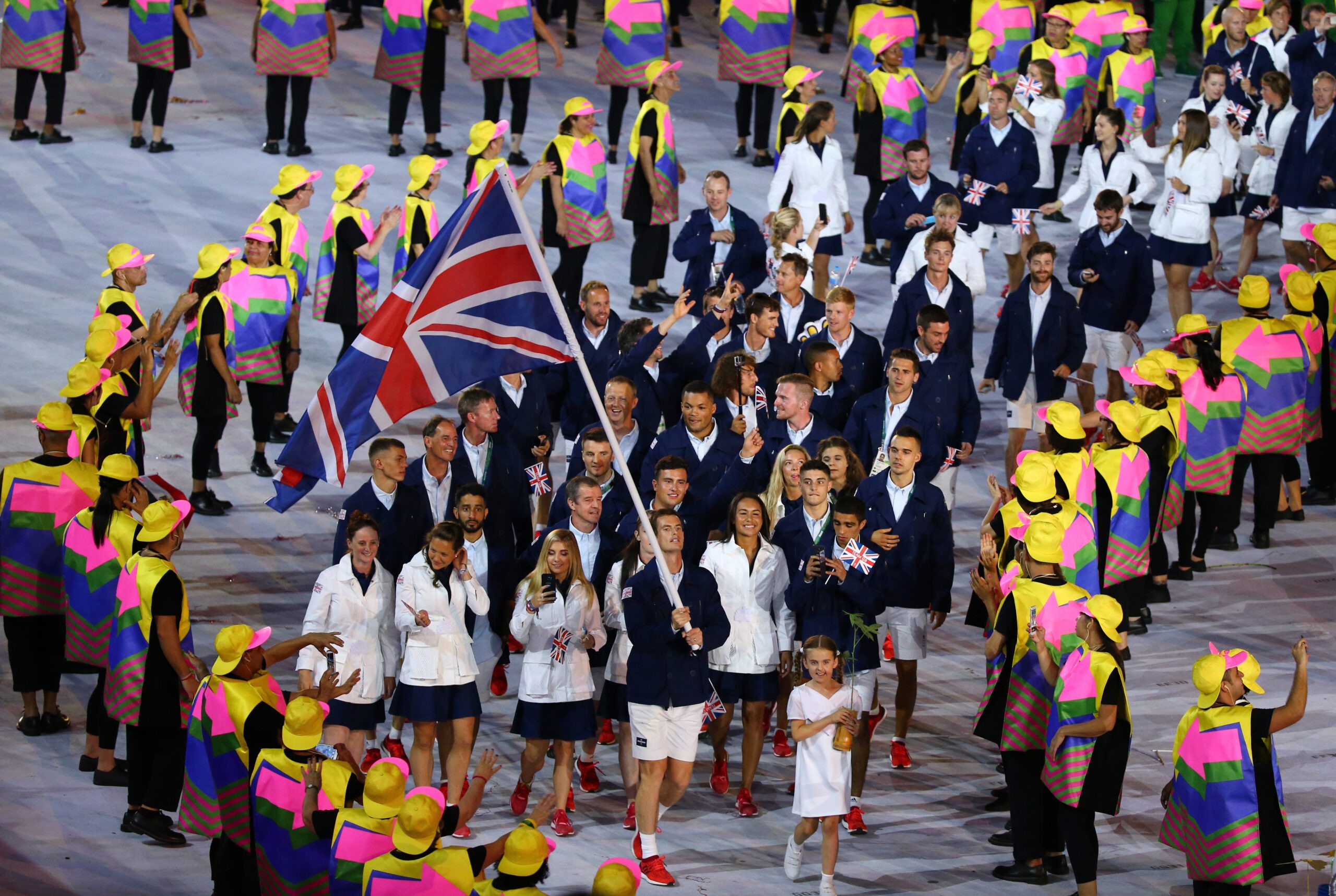
Andy Murray led out Team GB in the opening ceremony for the Rio Olympics in 2016
You can look back to Rio as well. The journey to the Deodoro cluster – 60 minutes from the Olympic Village – was long, congested and unpredictable on a mountain road that had only just opened.
This could easily have been a daily frustration for the likes of Canoe Slalom and Rugby 7s, but we redesigned it into an opportunity, using the bus time for analysis feedback, mental preparation, nutrition strategies and proactive recovery.
While other teams lost time, we gained it.
The essence of Olympic preparation is that Plan B must be as well-rehearsed as Plan A; sometimes more so.
For London 2012, we took the ambitious decision to house our Rowing and Canoe Sprint teams, each of which had multiple medal opportunities, in a five-star hotel close to the competition venue rather than in the official satellite Games village at Royal Holloway University.
The only problem was that the Thames was between us and the venue. The solution? We implemented a river transportation shuttle service from the hotel into Windsor Racecourse, with our own private self-built jetty, meaning the rowers and paddlers could walk into the venue (as incognito as possible) with the general public accessing via the ticket holder bridge entrance into Eton Dorney to maintain that advantage.
As the Games drew closer, we were nervous the access might be pulled, with other nations complaining it was an unfair advantage for Team GB. We mitigated this by allowing another nation to use our jetty as well, but also had a fleet of minibuses ready to go at any given moment as the Plan B back-up.
Our aim is simple: athletes (and staff) should feel like they are at home, safe, supported and grounded. Carried towards performance, not fighting against the environment.
Paul Ford
We had five routes into the venue set through the Berkshire lanes, pre-loaded on the Sat Navs. Fortunately, we didn’t need Plan B in the end and the project supported 11 medals in London, with five golds.
Then there is the importance of standardised protocols, expectation management and coherent ways of working. In high-pressure environments, athletes and staff need certainty, not noise.
Consistency doesn’t limit freedom – it creates it. It frees up bandwidth for decision-making, emotional control and execution. We attempt to onboard the entire team from a year to go with these as part of a ‘Games Ready’ programme.
Linked to this Games induction, there is ‘Kitting Out’, where the team are all given their kit. This is so much more than it sounds. It is where these extraordinary individuals are embraced as champions and go on an immersive experience with us, leaving knowing they belong to a special group, part of a greater purpose: part of Team GB.
This continues when they are received and welcomed – with arms wide open – into the Olympic Village by us. You’re with us and we’re with you.
Our aim is simple: athletes (and staff) should feel like they are at home, safe, supported and grounded. Carried towards performance, not fighting against the environment.
Football knows these moments too – Cup finals, play-off runs, European nights. High pressure collapses the gap between preparation and outcome. The best environments make performance feel inevitable rather than heroic.
Achieving and operating in this way consistency on a day-to-day basis, on a mapped pathway, is a potential super-strength that makes the outcome more likely to be a formality at the end of the campaign.
The biggest gains often come from doing the basics extraordinarily well, consistently, and under pressure.
3. Managing the demands of everyone — Lessons for multi-club ownership and multi-asset groups
The Olympic model is one of the world’s original multi-asset systems, with dozens of sports, hundreds of athletes and thousands of staff, stakeholders and partners.
Because there are finite resources, you quickly learn the importance of:
- Consistency of philosophy
- Flexibility of delivery
- Strategic allocation of support
- Transparency about who gets what and why
- High-quality communication across complexity
One area that football multi-club organisations often underestimate is cultural adaptation: arriving as guests, not invaders.
We prioritise this early in Olympics sports. Before every Games, the delegation goes through cultural readiness sessions. We invest in understanding etiquette, norms, communication styles and expectations.
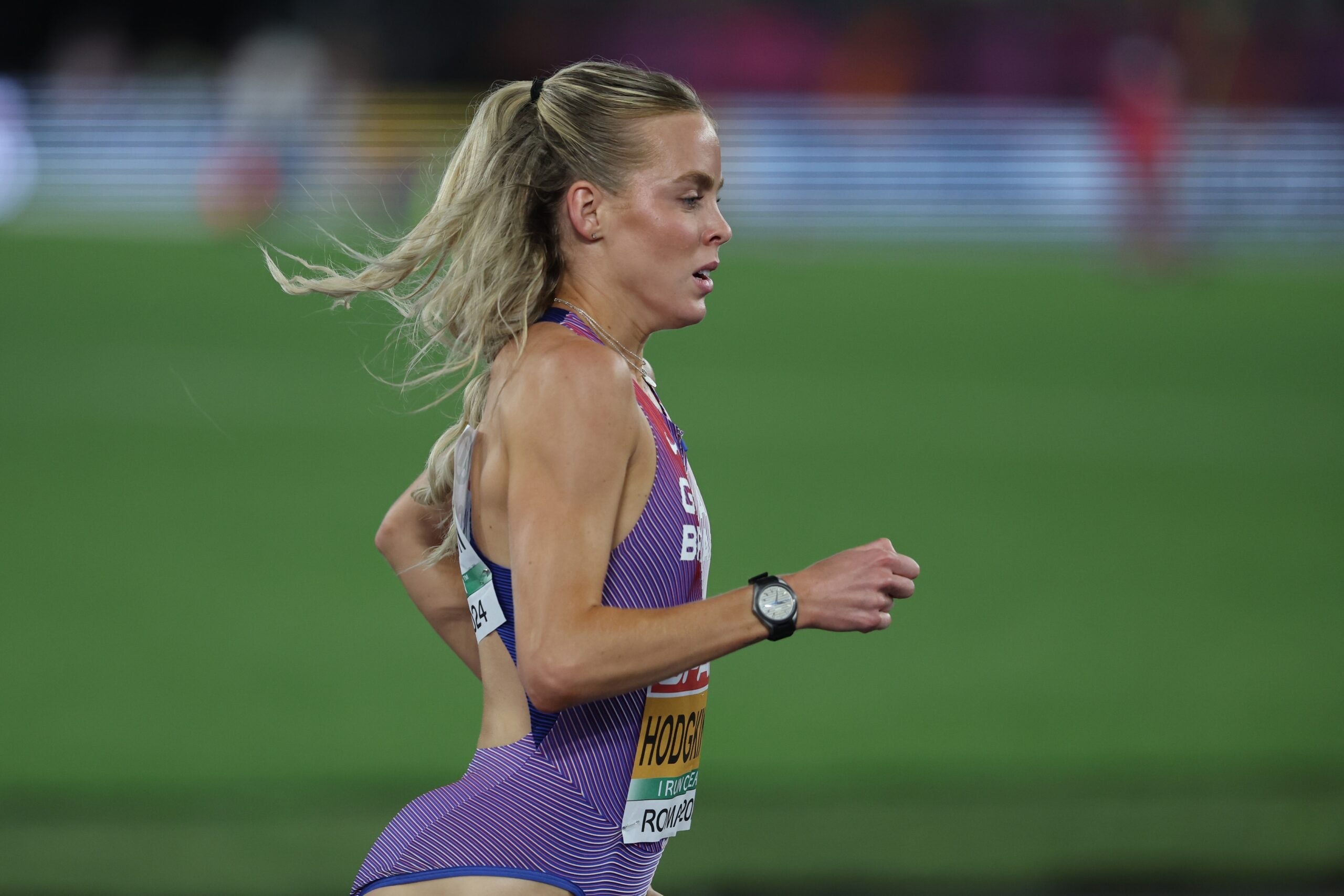
Keely Hodgkinson is a gold medal hope for Team GB in the Los Angeles Olympics in 2028
Our sport and team recces aren’t just about venues, they’re about people.
This mattered in Japan, where precision and respect shape every interaction. It mattered in Rio, where relationships and adaptability were essential. It mattered in Beijing, where logistical discipline and protocol adherence were critical.
And it will matter in LA 2028, where we are guests in a world-class performance ecosystem at Stanford University, mixing with the ‘noise’ of Hollywood as a backdrop within the competition environment.
Our goal is amplifying this to take the positives and using it as a performance enhancer without it becoming a distraction. Nor do we want to lose the hearts and minds of our local supporters and stakeholders who offer us so much when it matters most.
Football’s global structures face the same challenge: sharing standards with local adaptation. Instilling best practice on different terrains requires people to be culturally astute and sensitive, with excellent emotional intelligence.
Conclusion: Master the fundamentals and performance will follow
Whether leading Team GB into a Games or guiding a football club through a defining season, the principles of high performance remain constant:
- Unite your teams around a shared purpose, lived standards and deep trust.
- Build an environment where athletes and staff can deliver under pressure.
- Plan rigorously — but accept that not everything can be controlled.
- Standardise the essentials and execute them consistently well.
- Create a brave, safe, trusted environment that brings out the best in people.
And the crucial question: Who owns this?
At the Olympics, the Performance Director is the strategic planner, environment architect and culture custodian. Football is now seeing a similar evolution of this role.
It comes in a different guise to a Sporting Director (or the variations on that title), with long-term performance process and environment centred – not distracted – by player roster management.
Likewise, the Head of Medical and Head of Performance roles are hands-on, supporting the Head Coach without capacity to function at this helicopter level. This is essential to get to the destination optimally.
True high performance exists only when ownership is shared, from Board to backroom, from senior pros to Academy scholars.
When everyone believes in performance excellence, everyone contributes to it. And when the environment is right, performance becomes a natural outcome.
Consistently delivering when it matters most – that is the real competitive advantage.
Follow Us
For latest updates, follow us on X at @ground_guru