Co-Sporting Director Stewart to leave Chelsea by mutual consent
Written by
Simon Austin
October 7, 2026
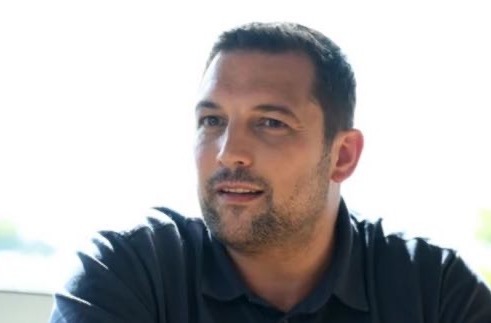
Laurence Stewart is to leave his role as Chelsea’s co-Sporting Director by mutual consent, four years after arriving from Monaco as one of the first senior football appointments of the BlueCo era.
No date has been set for Stewart’s departure from Stamford Bridge and TGG understands there is no fixed timeline. The 40-year-old is not leaving for another job and his exit is amicable.
Both parties feel the role has evolved over time and that now is the right moment for a parting of the ways.
Chelsea’s recruitment strategy has shifted since Manager Xabi Alonso arrived in the summer, with Jordan Henderson, Danny Welbeck and Emiliano Martinez, all over 30, signed by a club that had previously focused almost exclusively on players under 23.
In April, co-owner Behdad Eghbali said: “You tweak a model, you improve, you learn from mistakes.”
Stewart was our guest on Episode #25 of the TGG Podcast in March 2021, while he was Head of Recruitment and Development at Monaco, in his most in-depth interview to date.
Many of Stewart’s existing responsibilities will now be absorbed by Joe Shields (Co-Director of Recruitment and Talent) and Sam Jewell (Director of Global Recruitment). The duo work alongside Paul Winstanley, Stewart’s fellow co-Sporting Director, on player identification, negotiations and squad planning.
Winstanley also oversees medical, player support and other internal operations, while Dave Fallows works with the sporting leadership in an advisory capacity rather than a fixed day-to-day remit.

Stewart was appointed as Chelsea’s Technical Director in October 2022, in the first months of the Boehly and Clearlake ownership. By January 2023, the club had restructured its sporting department with Stewart and Winstanley as co-Sporting Directors overseeing “talent, scouting, recruitment and data”.
Chelsea have had five permanent managers since then: Graham Potter, Mauricio Pochettino, Enzo Maresca, Liam Rosenior and Alonso. They won the Conference League and Club World Cup under Maresca, with the youngest squad in the Premier League.
Stewart began his career in performance analysis before moving into recruitment at Everton and the FA, and spent two years with the Red Bull group, latterly as Head of Global Scouting.
He joined Monaco in June 2020 alongside Sporting Director Paul Mitchell, with the club citing a desire to follow the Red Bull model, and helped take them from ninth and 17th-place finishes to the Champions League qualifying places within a season.
TGG Podcast
In the TGG Podcast interview, recorded nine months into his Monaco role, Stewart set out the principles he would later take to Chelsea.
On early identification: “If we want to be a club that recruits that type of profile, we have to know about young players as soon as possible and data is key in that early identification stage. Who are the young players getting playing minutes?
“Who are the young players making debuts? Do we know about them? If we don’t, then we need to start doing some work on them. If you want to recruit young players, you need to know those guys.”
He described a three-stage process of identification, monitoring and detailed analysis, with data layered in throughout. “Every decision we make is based on a large amount of data and analysis before we arrive at our final decisions,” he said, while acknowledging its limits: “Perhaps it doesn’t shine so much light on the decision-making process of a player; it doesn’t always inform you about the options of that player, it’s more outcome based.”
On character, which he called “still one of our biggest areas for development”, he said: “Unlike other sports, we don’t get the opportunity to sit down and interview players and do face-to-face. In football, that’s not the way it operates, so you’ve always got that element of how will the individual adapt to our environment.
“If we can try and get information to reduce the risk of that not being successful, then it’s what we have to do.”
Asked about the messages pinned to his office wall, he read two. The first: “The most dangerous phrase in the language is ‘we’ve always done it that way’.” The second: “We must ground our work in a rich understanding of the context of use, or else we run the risk of creating well-meaning rubbish.”
The full interview is available to listen to HERE.
Follow Us
For latest updates, follow us on X at @ground_guru