75
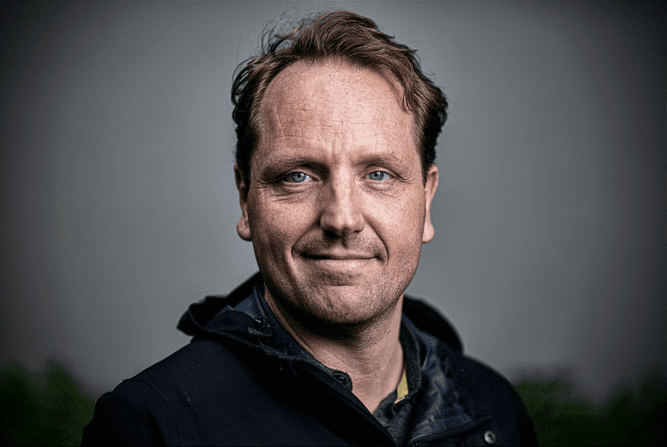
Merijn Zeeman
Outsmarting the opposition with AZ Alkmaar
November 17, 2025
AZ Alkmaar have consistently punched above their weight in Holland’s Eredivisie, regularly qualifying for Europe despite having a budget that’s dwarfed by bigger rivals.
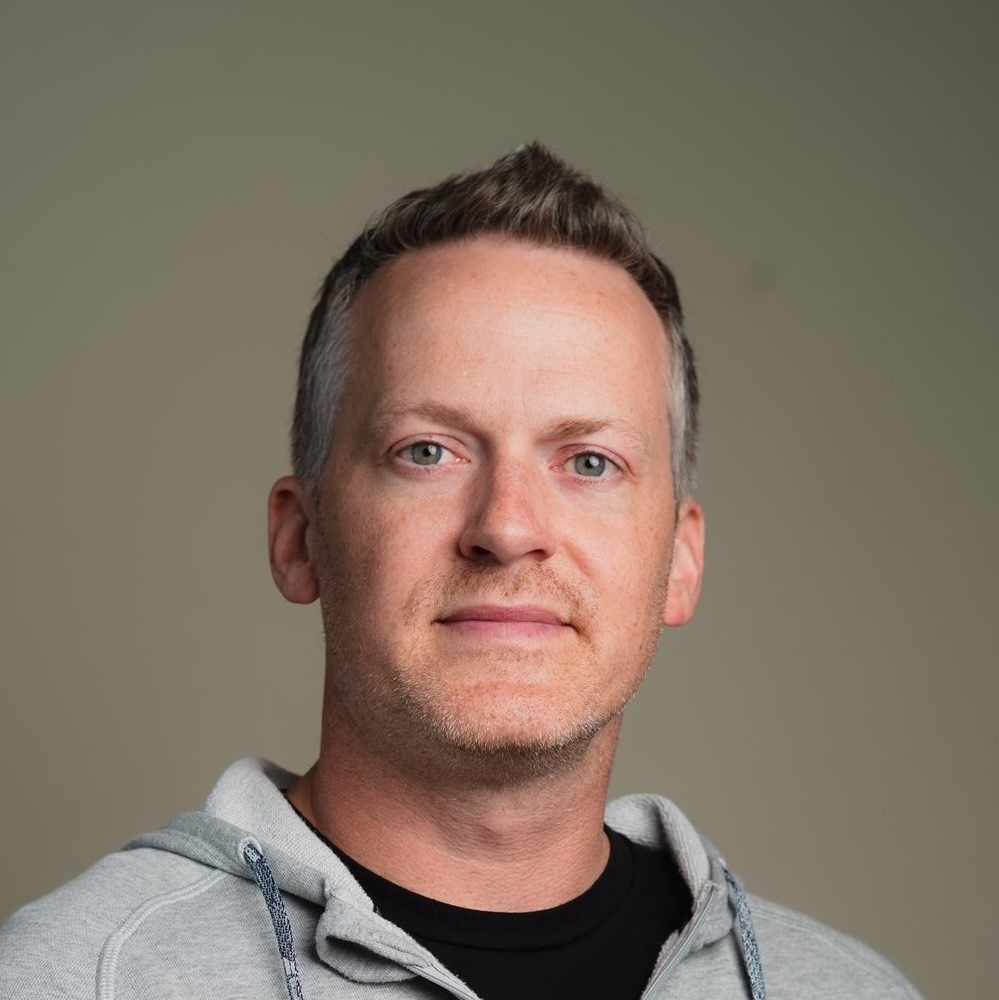
Their new General Manager is Merijn Zeeman, who himself has a remarkable story. Speaking on Episode #75 of the TGG Podcast, in association with Teamworks, Merijn gave us the lowdown on his career and the strategy at AZ.
In the Episode, which you can listen to via the Player below or read an edited transcript of after that, he told us about:
- His career in cycling and how he helped turn Team Visma from also-rans to the best team in the world.
- How his move to AZ Alkmaar came about.
- How important culture is at the club – and in all walks of life.
- AZ’s analytics strategy and how Luke Bornn and Billy Beane have influenced it.
- Role of Teamworks Intelligence at the club.
- Ambitions for the future.
Joining AZ Alkmaar
Merijn Zeeman: I started with this club on December 1st 2024, so almost one year ago, after 16 years in professional cycling.
I got the opportunity to start a new chapter and join a professional football club. For the last 10 years, I had been working for a team now called Team Visma-Lease a Bike, which originally started as Rabobank.
I started originally as a coach and then, from 2016, I got asked to be the Sporting Director of the team. Together with my colleague, Richard Plugge, I led the team for the last eight years.
It was a great journey, which started with us ending up in the last position in the 2016 World Tour. In 2022, we won the Tour de France for the first time. In 2023, we won all the Grand Tours, so the Giro d’Italia, Tour de France and Vuelta a Espana in one season.
That had never happened before and was obviously a great experience for us. We all felt very proud – and still feel very proud – about that. So that was quite a journey.
After all those years, especially when we won everything that we could win, it was time for a new challenge. I wanted to experience a new organisation, new people, new behaviour, new culture – and to see if I could start another journey with a new group of people.
It was never my plan (to join AZ) but the supervisory board of AZ Alkmaar and the Technical Director Max Huiberts approached me and asked me to become the General Manager of AZ.
It took a lot of talks to convince me to start with, but in the end it looked very attractive to start a new experience and do something new. In the end it was the right time to start this new chapter.
Team Visma transformation
In 2016, 2017, we were a very small budget team experiencing very hard times.
Performances were really bad and we were not doing a good job. Especially culture wise, we were in a very bad place.
At that time, around 100 people working for the team left. The atmosphere was getting worse and worse.
If the culture is not good, then the performances will not be good as well. There was a real sense of urgency and we started discussing with all those people how do we want to be? What kind of behaviour do we expect? What kind of things do we want to change? What kind of things do we want to strengthen?
There were a lot of talks, a lot of discussions. Step by step, we started to change our culture, to change our behaviour. And a lot of people who were performing really bad started to perform really good. There were not so many changes in riders, there were not so many changes in staff.
But our way of working started to improve. And step by step we became more innovative, we started working better to together. We used a lot of outside influence.
Some changes were made and step by step we started to grow and to improve. The first two years, with the same budget, with the same people, the performances were much better.
We were still the smallest budget team of the World Tour, but we started to win quite a lot. Since 2019, we won our first Grand Tour. And then it rapidly improved, with the absolute highlight in 2022 and 2023.
By changing that culture, by changing the way of working, by getting more of an open view and open mindset, it turned out we had quite a lot of good riders!
Primož Roglič won our first Grand Tour. We had the Dutch sprinter Dylan Groenewegen and Dutch rider Steven Kruijswijk. Later on, 2018, Jonas Vingegaard joined our team. Wout van Aert was an incredible leader.
Later on we had Matteo Jorgenson and Sepp Kuss, who won the Vuelta in 2023.
Actually I forget a lot of riders now because we had so many talents who developed within the team and become superstars in cycling.
Culture
I agree that culture is suddenly a word you hear it a lot. For me, it’s how people work together. So over the years I’m more and more convinced that it’s absolutely not logical and not to be expected that a group of people will work good together.
I don’t have a lot of confidence in just bringing in a group of people and expecting they will work together. My experience in that you have to work hard to make them work together, to make behaviour very visible.
What kind of things do we expect? Do we confront people who show behaviour that actually is the opposite of working well together? What kind of things do we expect from each other?
It’s very simple things, like we don’t talk about each other but only with each other. Or that it’s very clear that that if we give feedback, that you’re open to that, that you listen to that, instead of always using excuses or feeling it as a personal attack.
It needs to be clear for people, ‘When you wear our logo, this is the way that we work together.’
It doesn’t matter what kind of position you are in in the company – the leadership, people from the working floor – everyone has the same rules about behaviour. And that’s the fundamental of high performance, if you ask me.
The most important part was that it was bottom up. So I think the leader is more or less a facilitator, in organising talks, discussions, organisation; that people sit together, that they are honest about their situation, about their opinion, about how they feel about all these kind of things.
And that it’s very clear that everyone needs to speak up and be honest about that. If it’s bottom up, if people really start to discuss these kind of things together and be honest about how they feel in the organisation and what their experience is and how we can improve as an organisation or as a team, then it’s a very, very strong method that people really commit to.
If it’s top down – ‘Now this is our culture, these are our values and you just do it’ – my experience is that it doesn’t work very well.
Before it was people feeling unsafe, people feeling disappointed. Rabobank was a very wealthy team, a very big sponsor. And suddenly when the sponsor pulled out, a lot of security disappeared, the salaries didn’t raise anymore.
Financially, we had a lot of problems, disappointments about sporting performances. There was no culture of speaking up. There was no culture of, ‘Okay, let’s sit down and discuss all the things even when it’s not nice to hear.’
Even for the leadership to hear that there were a lot of comments about their style of leadership. That was one of the reasons why people start to gossip, people start to be negative about their own team, about their environment. And it only increased over the years.
Also being aware that the atmosphere is really bad or that it’s toxic or that we don’t make each other better. Actually the opposite is happening.
I would say leadership should signal it and facilitate people to realise it themselves and then bring people to the table, make people speak up, make them feel responsible for the organisation, instead of, ‘it’s only the leadership and I will follow what they say, I will do what they tell me to do.’
I really believe in that kind of process, from bottom up, to make people feel responsible for the improvement or creating a better atmosphere.
Outside voices
That was the strategy part of improvement.
In English, they say, ‘If you do what you did, you get what you got.’ And our results were not that good. So, asking all the sporting people of the team, ‘How do we improve? What kind of things do we need to do to get better? What’s your opinion about that?’
And then I noticed that that improvement was not coming from inside. We had a lot of good people, very highly professional people, but they didn’t show the vulnerability.
It was excuses – ‘The bigger budget teams have more money, they have better riders, so it’s obvious that they are performing better than we do.’
Instead of analysing what can we improve without money? What kind of things can I learn? Even when I’m a leader or when I’m the Head Coach, there’s nothing wrong with asking for help.
There’s nothing wrong with using opinions from others to improve your way of working. And I noticed that it was very hard for the people inside to improve their way of working or to come to other ideas or better ideas.
Then we used a coach from another sport to analyse our programme, analyse our data, analyse our tests, and he gave new insights. Those insights we hadn’t seen until that moment. And from then on, we started to change.
In this case, the training and our way of working with our riders made them better. Without that insight or that outside view, we wouldn’t have ended up winning all those Grand Tours years later.
But it was not only the new way of training, but especially the culture of ‘if we want to improve, we should be open for new insights. We should be open for reflecting on our way of working.’
Even if the conclusion is we’re going to change everything, that doesn’t mean that you’re not a good professional or not a good coach. Unil that moment, there was always, ‘if I lose the discussion, then it means that I’m not a good professional.’
Reflecting on that time, I would say that was our behaviour; that was also my behaviour. I was also part of it. So that was also something that I needed to learn.
So we had a a speed skating team at that time and it was the coach of the speed skating team, a very successful coach who won a lot of gold medals in the Olympics. Especially on the physical part, he was a real specialist. So he gave us a lot of new insights – on training, on the scientific approach of training, on all those kinds of physical details.
From the bottom of cycling, a lot of disappointments, a lot of frustrations, a lot of bad publicity, turning it around with all those people of the team. We had a fantastic journey. It was very intense.
What does a General Manager do?
Most of the Dutch football clubs have a Board (consisting) of a General Manager or a CEO, a Technical Director, sometimes also a Financial Director. So my background was obviously in cycling, on the sporting part.
Now I’m more on the general part. But also my way of working together with Max is that he is really responsible for managing the team, scouting, the agents, the players. And that’s really a super important role.
That’s really his specialty and he’s a fantastic Technical Director. AZ has enormous track record on that part. I focus more on improving the programme, how to outsmart the competition, how can we be competitive with a smaller budget.
So what kind of things did we improve in our way of working? With low costs I would say, but still has an impact on improving as a club and improving on the sporting aspect as well.
And I combine that with the broader future of the club and that’s to increase the income. So how can we get more income from different sources, so that we can grow as a club?
Robert (Eenhorn) was here for more than 10 years as the CEO of AZ. He did a fantastic job. One of the key things he did was bring in Billy Beane, especially at that time. That was very, very innovative. And it brought AZ a lot, it was a big boost on the recruitment side.
Also, the Academy improved enormously over the years. So Robert really brought AZ to a new level, together with Max. They did a fantastic job. Now it’s up to me.
He was a baseball professional, but also a coach, Technical Director, in baseball, and learned a lot in another sport and brought it to football.
What kind of club did you walk into?
I worked in cycling with the best team in the world and AZ is obviously not the best football club in the world.
So there is a difference in level, but still taking into account where we are in the Dutch league, also performing well in Europe, I think it’s an enormous performance.
I’m actually very impressed that AZ is not a club with the biggest stadium, not the biggest fan base or the biggest commercial income, and still we are averaging 3.8 position in the Dutch league over the last 10 years.
That’s not a logical performance, that’s really above our weight. So a lot of good things are happening with AZ. Now it’s up to us to really take it to another level, see where we can improve and can I use my experience in another sport with one of the best teams.
So what can we improve? And I would say the innovative approach is always there, but working together, finding new ways, really starting with that culture side and that mindset of how can we outsmart the competition?
What kind of things can we still do better? How can we bring in all kinds of things that are not there yet? That doesn’t mean that we don’t work good, but really lwe can still improve and let’s be honest about things that are not going that well.
And that’s actually the process where we are now so really bringing the cycle of evaluating what we are doing, be honest to each other, planning new things and then again go into the cycle of being honest by evaluating also the things that are not going so well.
We are in that process now, but we need also at certain times a different mindset than before. For example, in the coaching stuff, I really see now that we have quite young coaches that are open for this approach.
Being open for data, for example; bringing data into the strategy and the tactics or bringing data by evaluating players or player development, using more objective information to increase our growth and our improvement.
So I see still a lot of opportunities to do things better. That’s also necessary because we are not the biggest budget club, but we have big ambitions. In football, there is still room for clubs who don’t have the tradition or an enormous fanbase.
That’s also a chance for AZ to work continuously, quietly, on improvement and show that there are a lot of things possible in football.
Has the transition to football been hard?
Well, to be honest, no. I’m originally from Alkmaar. I was born and raised here, so that obviously helps.
I know the region. I know the mindset of the fans, how people think and how people expect respect. But I would say emotion is heavily involved in football and the biggest club have much more emotion than a club like AZ.
That means we can be reasonable, that we can make good decisions and use the right information to make decisions, without getting carried away by all these emotions.
Coming from another sport, AZ is the best club for me to start to learn. My mindset is that I want to learn and I am also open for feedback. People can give me feedback and be honest with me and confront me with things they like and also don’t like.
This club really has the potential to do things differently.
Dave Brailsford
When we were in cycling we always had a lot of contact with each other, a lot of respect for each other, because we were really competitors. They always said about us chasing Team Sky, because when we were starting our rise to the top, Team Sky was by far the best team.
We were after them and actually we really tried to learn from them how they were doing things, what their approach was, how they were training, how they were going, with nutrition, equipment.
So they were really an example for us. We have a lot of respect for them, but yeah, we were actually the first team who were after them and tried to be better than they were.
So their former coach, Erik ten Hag, I always had a lot of contact with him. Once he invited me to join the training camp and also to see what they were doing or give them some advice, but also for us to learn.
Dave was not there but we always had indirect contact and that was always really positive.
Using data to overcome the best rider in the world
We had to really find a way to beat Tadej Pogačar, the big star in cycling, the best rider in the world. By understanding the sport through data, we could really create a strategy to beat him and outsmart him.
One of the things is always to start with the end in mind. And that’s what we did. We were a very good team, but there was one guy who was better than we were. We had a lot of smart, bright people in the team and we asked them, ‘Can you try to make a model to analyse his physical capabilities? So we really determine how he is as an athlete, what kind of physical specific he has?
How can we bring him to a point that he will collapse? He has a strength, but he must have a weakness as well. By just bringing our leader on the final climb and battling with him on the final climb, we cannot beat him.
We need to dominate the whole race and bring him to a certain point that he will collapse. And we modelled his physical capabilities and then our strategy was based on bringing him to that moment that his weakness was very clear and we could beat him.
A lot of people didn’t understand our strategy, because we were not following the traditional strategy any more. We were going in breakaways, we had guys in the breakaway, then we even chased our own breakaway.
It was not understandable any more for people and in the beginning we got a lot of critics, because the traditional people didn’t understand what we were doing.
But in the end it really worked out and we brought them to that point that he collapsed and we could beat him. So that was really a performance of the performance team, of the scientific people in the team. And it really worked out.
That made it very, very special, because beating a stronger opponent by outsmarting him, that’s something that makes me very enthusiastic and very passionate about working in sports.
That’s our only way, because we need to grow as a club. We need to increase our commercial income. We want to have a bigger community, we want better partnerships.
How do AZ Alkmaar use data?
Data is obviously very important in cycling – in training but also in pacing time trials, for example. First, it was really used on the physical preparation of the riders, but later on what we really started to do was to understand the sport better and also bring data into strategy.
Also by analysing our opponents and then finding the right strategy to beat that opponent. That was a very important step into our growth. Data was absolutely crucial in that approach.
That’s also something I now really try to bring into AZ: understanding football through data. So actually what is happening and how can we generate objective information to understand the game and also make a clear analysis and an objective analysis about our way of playing and also rating our players.
It is an enormous help that we can ask Luke Bornn and Billy Beane, ‘can you help us with that? How can we really analyse the game? How can we really improve our style of play? What kind of play could be very effective for us to be successful?’
Because earlier on we don’t have the best budget, probably we don’t have the best players, but we are very ambitious. Can data guide us in that process?
Billy Beane was already around, but then also with talks with a lot of people – Vosse de Boode, I had very interesting talks with her, she’s actually working in cycling now but she was working at Ajax before – and she gave me a lot of insights on how we can improve and what kind of things we need to investigate.
And she advised me to try to get in contact with Luke Bornn, because he’s one of the best in that area. Actually I listened to also your podcast with him. It was very insightful and I’m very happy that he wants to work with us.
Our Head of Data, Daan Uitermark, has a lot of contact now with Luke, and he is really helping us in this process and finding out how can we improve and what kind of things we can learn.
And the most important thing is to bring data to the pitch by helping the coaches understand the data. The execution side is incredibly important, so that the coaches more and more understand what they can learn and what they can they use from data.
Not only the recruitment side, but also on the strategy and the tactics side. And another very important partner in this process is obviously Teamworks. Before it was Zelus, now it’s Teamworks.
They have very, very good people there. Actually a lot of people are helping us and assisting all our data people working together on creating new platforms, new parts of data. So it’s a very interesting journey.
We are not there yet that we can decide games through data like what we did in cycling, but one of the ambitions is maybe in five years that we can really win games because we understand the game better through data than any other team.
So there is a huge area to win. Actually that makes it also very interesting for me because if it’s fully controlled by data, like Formula One or Baseball or NFL, then it’s also very hard to outsmart the competition, because everyone has the same information, everyone has the same specialist.
So there’s not much to win any more there. In football, there’s a lot to win there. Maybe also because it’s quite traditional still. And actually that is the chance for a club like AZ, because if also the big budget clubs are not traditional any more, then everyone ends up the place where it’s decided by budget and not by outsmarting the competition.
We started the process that it (data) is more accessible for coaches. They are more involved in the process and we are putting more energy into making people understand what football data actually is.
That’s not only on the first team but also on the Academy side. So Daan, our Head of Data, is now more and more involved with the youth coaches to help them, to guide them and also to develop them.
So in the coming years, when more coaches from the Academy will also join the first team, that they are already educated in data. By guiding the team and guiding the players and also helping them to develop and developing our style of play and being more effective. I would say we are in the middle of that process.
Furthermore we have interesting partnerships by trying to understand better tracking data, Also by analysing the opponents, analysing our own team, maybe even using it live.
We are not there yet, but it is an ambition.
Teamworks
Teamworks is a very, very important partner in all these topics.
It’s the combination of event data and tracking data. There are more and more companies who are helping clubs to understand that and we have a very strong partnership now with.
AZ really tried to develop their own model. That’s a very impressive performance, to do it, or to try it. But it’s such a strong company.
Teamwork has so many bright people. We can really use that intelligence to work together and improve together.
So understanding the differences in players, understanding the effect of certain decisions on the pitch tactically, and to see where we can track that in data, in event data, in tracking data.
That’s the most important role that they have with us. Using a software company or a tech partner who has so much knowledge within their company and then we bring in more practical approach and we can try things together.
Then you have a very, very good combination.
Is data mainly used in recruitment?
That’s the big area, but at AZ it’s touching all parts of the operation. Luke Bornn and Billy Beane are making me very aware about confirmation bias. And I would say a lot of coaches, not only in football, in all sports, it’s about opinions or visions, not about objective information.
And It’s very hard to progress if you don’t have objective Information. And also when you plan things and evaluate things.
In sports, you can talk for hours and hours and hours about opinions of different visions or beliefs. That’s always part of it, but there should also be a big part of objective information because if you want to run a process and progress, it should be measured.
Then I also have an opinion, but it’s about objective information. We have the theory of Daniel Kahneman. I think he is very clear on that and It’s a bit of a waste of time if we continuously start about personal opinions and then it’s very hard to run a process.
If you read and listen to Daniel Kahneman, it’s very hard to believe yourself or your eyes. I hear a lot of people say, ‘But it’s very clear and my eyes are actually working very well.’
In a high-performance organisation, it makes me a little bit insecure if we only follow personal beliefs and opinions.
From the moment that you have a a positive opinion about that player, it’s very hard to change that opinion.
That’s a very clear example of a confirmation bias. And I also really believe that scouts are crucial and essential in the process of recruitment. But if that’s combined with data, then it’s a very logic process actually.
Ambitions for the future
The last 10 years we played nine times in Europe, so Conference League and Europa League. People are used to it.
We have a lot of things to do, but still we will never have the budget like the biggest clubs. Not by far, not even close. I would say they have four to five times our budget.
I think that’s a good thing in sports, that budget, money, is very important to realise your ambitions and to grow.
But a big part is finding out how you can be competitive and doing the right things even with lesser budget. Let’s say the principle of outsmarting the competition. Luckily it’s not always about money then.
Then, if you have a very strong ambition, you don’t have any other possibility than to bring in smart people and find a way without spending too much money.
We had a culture, a process, about 10 months to create the fundamentals, to make it very clear about our beliefs, how we work together, what kind of behaviour you recognise when you see someone from AZ.
And then the next step was also to ask all the people what are we dreaming of? And that can be very far away. Our Head of Academy, Paul Brandenburg, said, ‘Well it’s not a dream, it’s an ambition.’ So I will use his words: it’s our ambition to win the title.
That’s not logical if you are in the position AZ is, but that is our ambition. And it can take some years – probably it will take some years.
But that’s what we are working on. That’s really like rising the bar and improve our way of working and realising that ambition.
This content is for TGG Members
Join up today and get access to:
- All articles: news, interviews, analysis
- Masterclasses & Online Conferences
- Full Academy Productivity Rankings
- Club Directory: 1,000+ staff profiles
- Personal Profile Builder
- TGG Live 2024 & 2025 presentations