76
Matt Crocker
Shaping US Soccer's long-term vision
March 26, 2026
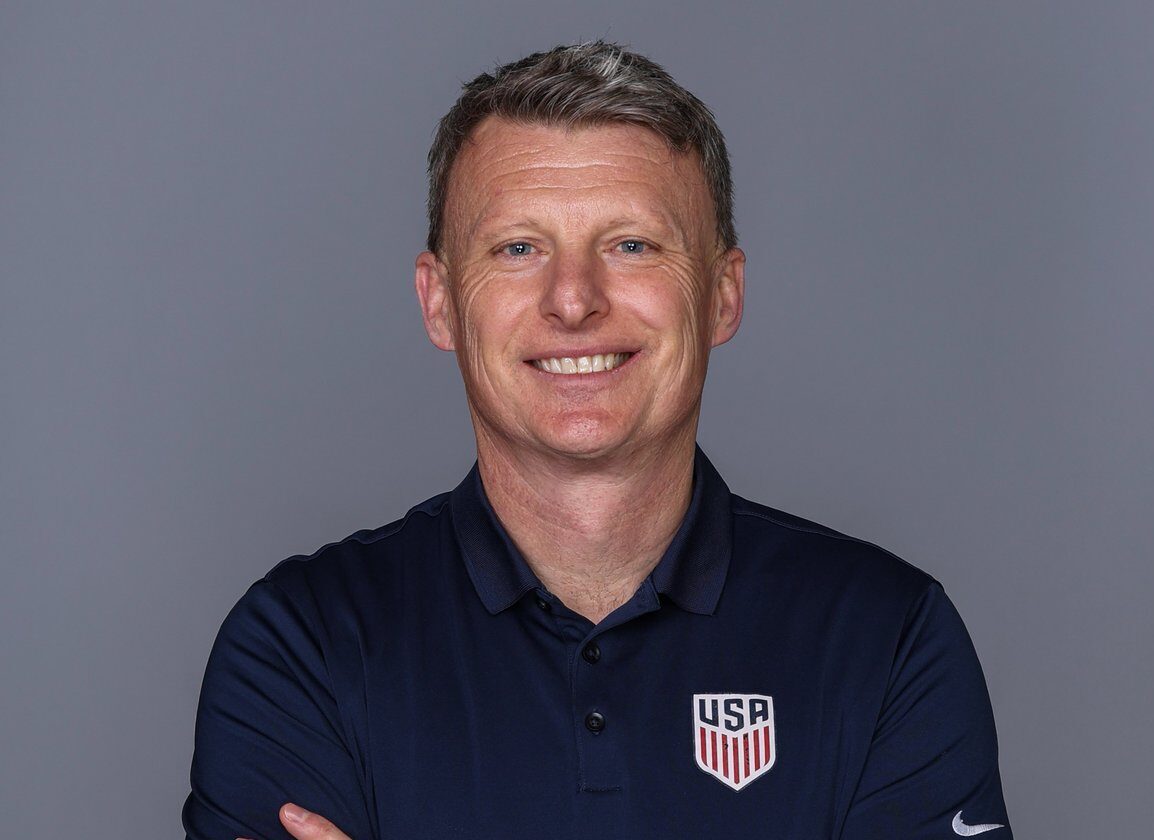
Matt Crocker has been US Soccer’s Sporting Director in April 2023, with responsibility for setting the Federation’s sporting vision and performance strategy across all 27 national teams.
This is going to be a huge year for both Crocker and US Soccer, with the opening of a new National Training Centre in Georgia and hosting a home World Cup.
Before joining US Soccer, the proud Welshman was Head of Coaching and Development for the English Football Association and Director of Football for Southampton.
In the Episode (which you can listen to via the Player below or read in an edited transcript after that), he told us about:
- New National Training Centre, which will be the envy of the rest of the world.
- What it’s like to work with Mauricio Pochettino and Emma Hayes.
- Expectations for the upcoming home World Cup.
- Why his confidence was at ‘rock bottom’ after Southampton and why he has lasting regrets.
- Why Dan Ashworth is the best Sporting Director and leader he’s worked with.
Opening of the new National Training Centre
Matt Crocker: I’m speaking to you from Atlanta, Georgia, which is our home. We’re moving into the National Training Center in about six weeks’ time, so the temporary offices we’ve got, the Wi-Fi is a bit spotty. So I’m talking to you from home today.
It’s an incredible training facility. They don’t do anything by halves over here. It’s going to be an incredible facility and the envy of most associations and most clubs to be honest with you.
It’s 100 acres, with another 100 acres for a potential Phase Two. Within the footprint of the 100 acres, there are eight youth national team pitches of a high quality, two outdoor AstroTurf or turf 5G, fields for coach education and for community use that are outdoor.
There are two beach courts for our beach men’s and beach women’s team, three super pitches for our senior men’s and senior women’s teams. There are two show pitches, like mini stadium pitches for our youth national team games.
And then there’s a huge building with a High Performance Centre, everything you ever need regarding recovery. There’s a huge amount of coach education and meeting spaces, and on the ground floor 16 huge changing rooms, three different levels of quality of locker rooms and then upstairs there’s the offices for our national team staff.
I think there’s space for around 600 employees. All the fields are floodlit, all the fields have got every piece of kit and technology you could ever possibly imagine and there’s also a huge amount of support from companies like Nike around research and innovation within our high-performance centre. So, yeah, we’re in good shape and excited to move in.
Where do you train at the moment?
I mean to say this respectfully – we’re a traveling circus. We have been historically reliant on clubs to allow us to use their training facilities whenever we play in America.
We did have a small facility for coach education in Kansas City and we have had a few fields at the LA Galaxy facility, but this is light years different to what we’re moving into now, that’s for sure.
How does the new National Training Centre compare to St George's Park?
I’m biased, because I’m here and I’ve been involved in the build.
We’ve got everything that St George’s Park has, but I feel it’s a different quality of facility, much more compact in terms of not having huge spaces between things. I really like the way we’ve designed it with the players’ views in mind.
We have 27 national teams that I, as Sporting Director, oversee. So our youth national teams, both in the boys’ and young men’s pathway, and the girls’ and young women’s pathway, from 15s all the way through to 23s and then seniors.
And then we have nine extended national teams, including Power, Beach, Futsal, CP (Cerebral Palsy) and our deaf teams as well. I forgot to mention we’ve also got a full-size indoor power court for our Power (Powerchair) team and also a Futsal Arena within the facility – and a St George’s Park full-size 11 v 11 indoor field as well.
Ged Roddy, who works for FIFA now and used to work for the Premier League as Head of Youth, was blown away by the facility. It’s going to be pretty incredible, that’s for sure.
We’ve visited St George’s Park recently and also a number of other training facilities – the new German one, the French.
John Rudkin was kind enough to take us to Leicester City, which obviously is an incredible facility [and] I think we’ve done a better job at designing the facility with the player’s journey in mind in this one.
2026 will be a huge year for you?
Everyone keeps saying, ‘You must be ridiculously busy.’ I don’t feel any busier than I have over the last couple of years. When you’re talking about a World Cup, the key role is to make sure that way out from time you get the right staff on the right seats of the bus and that they’ve got the resources to create a really robust plan to support the team and the things they want to do.
I feel really confident that we’re in a really, really strong position with that. You can’t control and dictate results, but you can control whether you’re the best prepared team going into the competition and I really feel like we’re in a good place with that.
The majority of the tournament being held in the United States is a significant advantage for us. It’s meant that we’ve been able to do our planning around things like hotel, training facilities, way out in advance, which gives you a competitive advantage, that’s for sure.
But I also think it’s a key five years for US Soccer. This is the beginning of a real springboard to accelerate the game over here, with the Men’s World Cup this year and the Women’s World Cup in Brazil in 2027. Fingers crossed around qualification for that.
We then have the Olympics in LA in ’28, and the Women’s World Cup coming to America in 2031. So there’s a real sort of opportunity with the next five years if we want to grasp the opportunity and the challenge.
Coming up to three years in post - reflections?
It’ll be coming up three years at the end of May. It’s gone really, really fast. Very, very different from working in a club, but I’ve really enjoyed the experience and continue to take every opportunity we can, both professionally and personally as a family.
When you take on a project of this size, it’s not until you get into the role that you truly begin to understand the context of what the history of the game looks like over here.
You can’t just lift and shift from another country [but] there’s so much difference. Just the size of the country alone, you know, I think,
I described the challenge as like trying to get every country in UEFA on the same page around player development or a philosophy. It’s that big. Somebody showed me on a map that the distance between the northen-most part of England and the southern-most part of England was about the same as in California.
The size and the scope of the challenge is massive and we’ve also got to recognise where the game is. Clearly there’s been a lot of success in the women’s game, but the women’s game is evolving and there are so many superpower countries injecting the female game with talent and developing their own talent now and that game’s changing.
Historically, you would say the US has been right up there with the top nations, and we continue to be, but the challenge is how do we sustain being either at the top or close to the top in the women’s game?
And then the difference in the men’s game is in some ways night and day. We’ve got a great group of players for the World Cup and we’re really excited about what this talented group of players can achieve, but historically, in the last 10 years, when you look at the data, we’ve never had a player in the top 50 in the world on the men’s side.
When you think about a country with the ecosystem, the infrastructure, the resources of America – and the diversity and quality of the players – it’s a real surprise we’ve never been able to do that.
And then you also go look at the top 250 players in the world. We’ve only ever really had two – Christian Pulisic and Tim Howard – so our challenge is what needs to change in youth development to start to develop a better quality of young player that can start to get in those top 50 and the top 250?
If our challenge is how do we consistently become a top-performing nation at major tournaments, both in the men’s and the women’s game, something fundamentally has to change within the system to allow that to happen.
It’s a mammoth challenge that is going to take years to shift. There are no quick fixes here, no silver bullet. A thousand things need to be done differently and better than they’ve been done before.
Pay to play and making football accessible for all
You can look at that as also a huge opportunity. Initiatives we’ve got are Soccer Forward and Soccer for All. How do we get the game in every community in America so that soccer becomes a part of communities and school sports, not just the kids that can afford to pay to go to certain clubs.
How do we make sure that’s soccer for all, so that every kid has the opportunity to play if they choose to? This isn’t always the case, as we are where we are today.
[Pay to play] is a huge, huge challenge – the cost to a child and family to play at a high level of the game in America. That’s no secret. There’s a lot of huge, powerful clubs that provide elite soccer in this country.
But it comes at a significant cost to parents and to kids. My son is over here now, he’s just turned 18. He’s played for a great grassroots club in England pretty much all his life, and I think the fees for that are £120 a year.
There are children out here that have to pay thousands of dollars to be able to be on a travel team, to play a quality game or get a quality level of coaching.
So we have a number of initiatives to begin to address that. The Pathways Project is a key one. How do we create a really simple, clear pathway where every club recognises where they are in the ecosystem>
At the moment, there are a lot of teams that can’t play other teams. They might be close together, but compete in different leagues and don’t like each other.
It just raises the cost, because then kids have to fly and travel and stay overnight. So what we want to try and do, where we can, is alleviate the costs of that.
Travel costs are one key thing. The second key thing we have to address is the standard. I think there’s a lack of education right here, right now – and I say this respectfully – around parents’ soccer experience.
I think a lot of parents make decisions of where they send their son or daughter because of a league table from the previous year. As opposed to a club that provides an individual development plan for their child, that takes a player-centred approach, provides equal player minutes, that has X qualifications of coaches, that has a certain type of facilities, that plays a certain way, that has a real philosophy across the culture of the club.
They’re the things we would like parents to start to focus on more and I think that ultimately would raise the levels. We, as US Soccer, have a huge job around simplifying the structure to bring down the costs of pay-to-play.
The MLS is doing some great work now on providing free opportunities for talented kids to go into that programme from mostly from 14, but there is a huge amount of development work that goes on before 14.
We have to make sure that is available at a very, very low cost to every child, irrespective of their level of experience, or where they currently are technically or tactically.
When you think about the Academy system, the Charter for Quality before that, and then obviously EPPP, that’s been embedded in the system in England.
There’s a huge amount of investment going across the whole of the MLS landscape around Academies, but obviously it’s in its infancy. The joy is that I get to work with some great people at the around partnerships.
We’ve got some really great projects going on that we’re partnering with them around.
How do we provide some annual annual checks and balances over what clubs are getting for their investment in the youth development, whether that’s through player development, or investment in coaching?
And how does that then translate into future value of players going and playing for your first team, or playing internationally, or obviously being sold on?
Composition of the senior squads: Europe or home-based?
When I first joined, it was mostly from Europe, in particular on the men’s side. On the women’s side, it was predominantly through the NWSL, the National League over here. When Mauricio joined, what we definitely realised is that we needed to grow the pool of players.
Generally, there was very little turnover between squads. What Mauricio has been able to do is expand that pool. We’re now in a position where we’re tracking and monitoring probably about 75 players that all feel like as if they’ve got a chance to come in and join this March camp and be selected for a World Cup.
That’s a very, very different position than we were in a couple of years ago. We’re in what I would call healthy competition in the men’s side.
And then, led by Emma (Hayes) on the female side, we’ve done exactly the same. We’ve got a small number of the squad that are playing in Europe. The majority of our players are from the NWSL.
But again, that pool of players has grown. Emma’s introduced a ‘futures group’, or an Under-23 group, that work in lockstep with the senior women’s team. Again, what you’ve seen is a huge transition of players.
There are some stats that we’ve doubled the number of cap opportunities for female players to come and play for the women’s national team under Emma. It’s phenomenal, the young players that we’ve got coming through in the women’s game.
Is the Men’s World Cup key to growing the game in US?
If we’re talking about springboards, it’s one of many we’ve got over the next five years and will give us a number of opportunities.
(We are aiming for) a successful World Cup in the US where the men’s team perform well and play great soccer and the fanbase gets behind it, the nation gets behind it.
You’ve felt it; you’ve been in England when there’s just this feelgood factor. It makes such a difference in terms of grassroots football, where all of a sudden the kids that weren’t playing want to go and join. But we have to make that available and free.
We can then invest more commercial revenue into the game. Us, being a not-for-profit organisation, every penny we have goes back into the game. So we can do that at grassroots; we can offer better opportunities for coaching, refereeing, the opportunities are endless.
Get more mums and dads who go, ‘Oh, actually, I wouldn’t mind being a coach of my son’s or daughter’s team,’ getting a great environment for young kids to just go and enjoy soccer.
We have the opportunity to influence that in a much bigger and better way. So, yeah, it’s going to be pretty significant five years and the World Cup in 2o26 is our first opportunity to take that chance.
What would constitute success at the World Cup?
You ask Mauricio and we say they’re going all the way, for sure. But obviously a lot of things would have to go in our way for that.
I think there’s a number of measures (of a successful World Cup), around the culture of the group, but clearly we want to get out of the group and get as far as we possibly can by playing really attractive soccer that unites the fans behind the team and we finish the World Cup in a really positive place. That’s where we want to be, for sure.
We’ve already got our base camp in terms of hotel set-up, logistics and our training facility. We’re out in LA.
You think about the environment you want to provide for the players, because, ultimately, we want this tournament to be a really extended period of time. If, when, we finish top of our group, we can stay on that West Coast longer, which means we can maintain our base.
We’ve got things like a friends and family programme that is 20 minutes from the team hotel, where they’re all going to be staying, also making sure we look after the families of the players in that period as well.
If you perform well in the group stages [that] give you some competitive advantages also in terms of the number of rest days between games as well. We want to win our group and we want to stay on that West Coast as long as we can, because the climate there is also more beneficial for us.
Genuinely think you can progress in the knock-out stages?
Yeah, 100%. The group of players is in a really good place. We’re on a a great, great run. We’ve played some really tough competition in the last five games and come away with some great results, whilst also growing the pool of players.
There’s a real healthy competition right now. So, yeah, we’re excited, and we’ve got two great games coming up now against Portugal and Belgium in Atlanta that’ll both be sell-outs, 70,000, 80,000 people watching those games.
We can feel the energy building behind the team and we’re excited to take those opportunities.
We’ll come together at the end of the season and be at the National Training Center for around 10 days. We’ve got two games – in Chicago, against Germany, and in Charlotte against Senegal – and then we’ll head over to the Base Camp, to the West Coast, to be based there in preparation for our first game.
How impressed have you been with Mauricio Pochettino?
I was lucky enough to work with him at Southampton, so I knew what we were getting, and I was excited to bring him into our environment, for sure.
He has so many great qualities – not just as a coach, but also as a human. The culture he has created is very high challenge but high support for the players and the group. The expectations around high standards are second to none – as good as I’ve seen or been lucky enough to work with.
He brings with him a small group of staff who have fitted in unbelievably well with our existing MNT staff. He’s a phenomenal cultural leader and a great coach, so we’re delighted to have him and excited for the World Cup.
He’s the perfect coach for any young player. You saw it with players that were developed at Spurs, like Delle Ali, how you get the best out of those unbelievable, maverick, talented players.
He was able to do that. His level of emotional intelligence is very, very high. But he’s also really challenging, you know? He’s a really strong father figure when he needs to be. It’s not like it’s all softly, softly.
When he needs to be firm and tough, 100%, you know it. But also it comes from a real strong position of care, which is also really important.
I’m very fortunate to have two of the best leaders in the game supporting our teams.
Matt Crocker
And he’s seen us through that, because we’ve had a difficult period where we were evolving the squad and trying some new players, some younger players, and we had one or two really challenging results that I think if it hadn’t been Mauricio in charge, steady hand, saying the right things…
Sometimes your results will dip before you come out the other end, and we definitely had that period.
And we are much, much better for that experience now. But it takes a real strong manager to put the needs of the Federation and the programme above their own individual needs of winning and Mauricio, massive respect for what he’s done – in the game, but also for us as a Federation.
And very similar with Emma – I don’t want to miss my opportunity to talk about Emma Hayes as well.
Everyone talks about the coaching side, because that’s what you see on the field, but the way these people work behind the scenes, and the culture and style of leadership – I’ve learned so much from both of them.
I’m very fortunate as a Sporting Director to have what I believe to be two of the best leaders in the game supporting our teams.
Was it hard to get Pochettino & Hayes?
When you talk about these types of processes, it’s never a one-way thing. We’d failed at the Copa America on the men’s side, and we’d failed at the World Cup on the women’s side, which obviously forces the changes.
You’ve got to have a real sense of honesty about the challenges of the role and where you see the squads. So we did a lot of data that we presented first and foremost to all the top candidates around SWOT (strengths, weaknesses, opportunities, threats) analysis.
‘This is what we think the challenges might be in this period. This is what we feel the squad might need, both on and off the field.’ It was just as much a selling job for us.
They (Pochettino and Hayes) were definitely the right, both culturally and as coaches for the environments we want to create for our senior teams.
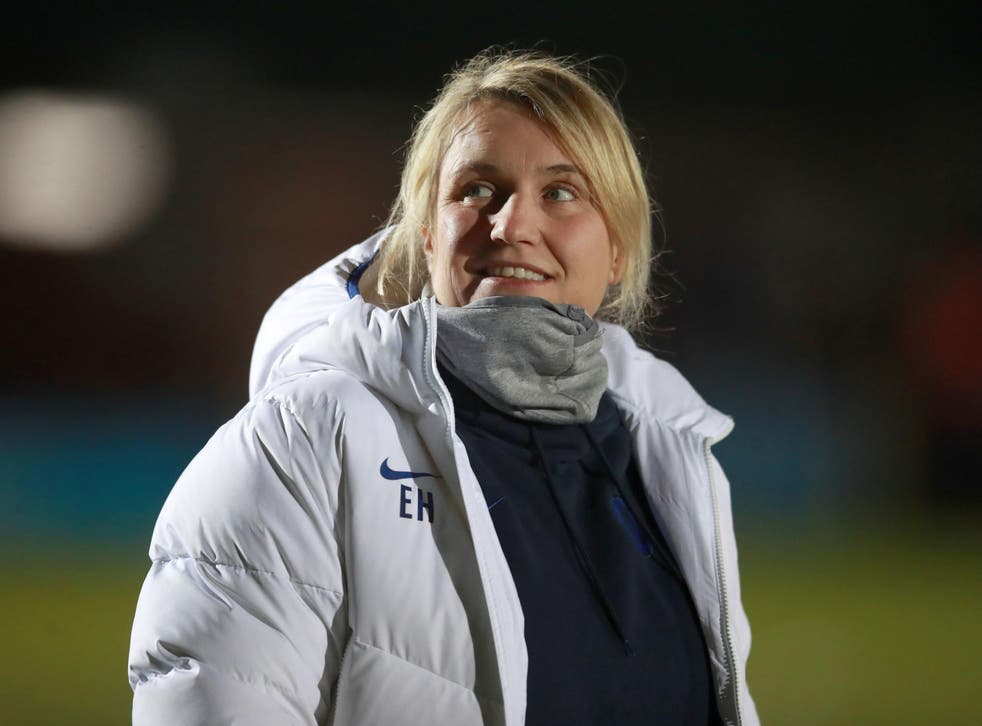
US Women won Olympics just 10 weeks after Emma Hayes became Head Coach...
To get Emma, we knew we weren’t going to be able to get her until the end of the (English domestic) season. That was a huge challenge, a huge risk.
That puts us in a difficult position of very little preparation time before the Olympics. So, you know, Twyla Kilgore was our Interim Coach whilst we made the decision to appoint Emma.
Emma was obviously working to win the league at Chelsea, which she achieved in her final year, whilst also supporting Twyla in an interim role to start to drip feed in some of the things that were going to be super important for the team to be ready for the Olympics.
She joined in May, probably flew out the day after the last game of the season and it was all systems go – and obviously we were really successful in the Olympics.
But that was a huge gamble. One that paid off, but one that even if it didn’t, I knew she was the right coach for the long term of the programme. Sometimes you’re making decisions between short-term gains and long-term ‘what’s right’?
It was a challenge that Emma was able to overcome, but the long-term success and stability of the programme and the change that we want to make [was] more important than this one-off moment.
She was the quality as a person and coach to be able to do both, so that’s been hugely successful.
She certainly keeps, keeps you on your toes, that’s for sure. But in the right way – she’s always thinking about how she can win today, but also the big thing for Emma is around the legacy of the programme, making sure we start to look at the game through a female lens. It’s something that we’ve never done, all the research is on the men’s game.
So not just about how do we qualify and then win the World Cup next year in Brazil, but way beyond that, to some of the sort of strategic pieces she’s been part of pulling together.
Is there internal challenge for you within US Soccer?
Oh, 100%. I have been fortunate enough to be hugely supported by a great CEO in JT Batson and Cindy Parlow, the hugely successful women’s player and leader as our President.
I’ve been hugely supported to be able to piece together an exceptional sporting leadership team that, supports me: talent ID, operations, integrated performance support.
Both Emma and Mauricio sit on that team. Also, Barry Pauwels, who’s been with the Federation for 10 years, is our Head of Youth National Teams from 15s through to 23s.
Tracey Kevins from England does the same role on the female side. I have this unbelievably supportive and challenging leadership team that I learn more than I give to, if I’m honest.
They’re unbelievable and the best leadership team I’ve ever been part of.
Starting to work in football at Cardiff City
I was at Cardiff City as a schoolboy, as a young apprentice. Never made it, never believed enough in myself if I’m honest.
But I had one individual, a guy called Gavin Tait, who ran the youth programme at Cardiff City, who has always been influential in my career and has always helped me along the way.
When I got released, went to college and then University, he brought me back as a part-time coach. I did the U14s at Cardiff City, when the Centres of Excellence first started many, many years ago. Then he moved to Sunderland to become the Academy Director and presented the opportunity for me to come in (to replace him).
It was originally for a six-week period throughout the summer, just until they found someone long-term. I went in for six weeks, never signed a contract, and stayed for six years.
Sam Hammam, who was previously at Wimbledon, took over the club and we went from a small Centre of Excellence to then having the ambition to become an Academy. I always think you have to work hard, but also I was lucky with some of the opportunities that came my way early on in my career.
To be so young and to have the opportunity to run a small Centre of Excellence in an Academy, at a great club like Cardiff City, which was my hometown club as well, I was hugely lucky.
When I joined, Robert Earnshaw and James Collins were just coming out of the system, but we had Aaron Ramsey in the system as a nine-year-old, who went on, obviously, to have an amazing career. Also Chris Gunter, who had, again, a great career for Wales.
James Collins was probably about 13 at that time, in the system. There was some great players that were in the system and I can’t take any credit. We had a small staff that supported that and the foundations were set by Gavin Tait, so the club was in a really good position in that period.
We always think about the ones that got away, the Gareth Bales, but Cardiff City was a tiny Centre of Excellence programme at the time and Southampton (who he signed for at the age of 16) were already investing.
I always feel it’s better for players to stay local if they can, but clearly it didn’t do Gareth any harm going to Southampton and having the career that he had. It was never easy to keep the players at the club long-term, because there were always predator clubs that would come in (for them).
Remember the old Victory Shield? It was like a live trial for every kid that played for Wales live on Sky Sports on a Friday night. I’d never seen more scouts go to a game in my life.
But I felt we did a good job and had a good programme with good values and were fortunate to produce some players who have gone on to have really great careers and represented Wales, which is always nice.
Joining Southampton in 2007
What an experience that was. I had six years at Southampton as the Academy Director.
Malcolm Elias, God rest his soul, and Hugh Jennings had done a fantastic job for many, many years before me. Again, I was fortunate to come in at a good time, with an established programme, a good level of investment and inherited a lot of great staff, but also some phenomenal young players.
You know, we had the likes of James Ward-Prowse, Luke Shaw, Callum Chambers, Alex Oxlade-Chamberlain, (who were) all U9s, 10s and 11s at that time, who have gone on to unbelievable things.
I think Gareth (Bale) was 16 or 17 when I (came in) and he’d made strides already with the first team. Theo (Walcott) was a year older.
So yeah, it was a phenomenal period. Everyone says to me, ‘What was the difference at Southampton during that period?’
The club were unbelievable, even in administration. When they got relegated, they always made sure there was money available for the youth teams. It’s often the first thing to go at clubs, but Southampton kept backing the programme and deserved that reward.
Sometimes, when you drop back a league, it gives a player an opportunity whoever perhaps wouldn’t have got one otherwise.
Alex (Oxlade-Chamberlain) is an example. He was in the first team at 17, playing in the Championship, and grabbed his opportunity. You wonder if it was the Premier League, whether those opportunities would have come as quick and through that same path.
We went from League One back to the Premier League under the guidance of Nicola Cortese, and it happened really, really quickly. A lot of players, like Luke (Shaw) got great minutes in the Championship.
They would have had 40-odd games in the Championship before they took that step to the Premier League, which is a huge benefit, building your experience and your physical and mental robustness to play at the highest level.
I remember a game, it was in COVID, which was one of my most proudest times. I had come back as Sporting Director and we played Liverpool at home, won 1-0 with a brilliant goal from Shay Adams, and 50% of the team were homegrown.
And Alex and Adam Lallana, both from Southampton, were playing for Liverpool at the time.
Joining Football Association in 2013
I always think you do cycles. So I did six or seven years at Cardiff City, six or seven years at Southampton, and it just felt like the right time.
There was an opportunity to work with Dan Ashworth and it was a new project. I’m a project type of guy. I’d never worked in international football and just saw this huge opportunity to go into the FA at a time when St George’s Park was opening.
Dan Ashworth had taken over as Technical Director six months previously and you had Gareth Southgate there as the U21s coach.
Dan was putting his leadership team in place and it just felt like a great opportunity for me, professionally and personally, and it proved absolutely to be that, staying for six years and playing a small part in the success of the youth programme there, the World Cup successes and the Euro successes over that period.
The support of EPPP and the clubs in that process was massive, so there’s never one silver bullet, but I was proud to do that role and learned so, so much from so many great people.
I was Head of Coaching and Player Development for the youth national teams and then the title changed to Head of Teams, so I was head of all of the youth national teams on the boys’ side, but then working closely with Brent and (Hills) subsequently Kay (Cossington) to try and support them on the female side.
Not that they needed as much support, as they were hugely experienced people, but just trying to get alignment with the programmes of where we could both share best practice.
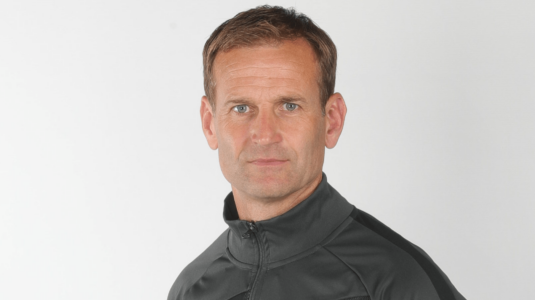
Three mentors: Dan Ashworth, Dave Reddin and Kirk Vallis
For me, Dan is the best Sporting Director and leader I’ve ever worked under, in terms of his balance of understanding the need for short-term success, but building a really strategic and long-term plan.
His brain… he was able to go into a grassroots meeting, or a pro-development meeting, or an EPPP meeting, and automatically switch and understand all the content and be able to get his point across and listen. He’s just such an articulate professional.
So I’ve learned hugely by him and (he’s) still somebody that I value as a mentor.
Dave was my yin and yang, you’re opposites. Most people in football, when it comes to opposites, you make a decision to work with people who are like you. It was probably the first time I’ve ever had to try and work with someone who was so different in terms of his ideas, his leadership.
And I learned, ultimately, so much from Dave, around thinking outside the box, looking into other sports, to be more challenging, to look through someone else’s lenses at things. And, I know he’s got a real challenging job right now in Wales Rugby – it’s funny how that’s gone full circle – but yeah, he’s somebody that I admire and somebody that I have got a lot of respect for.
Dan enabled me to go on the Technical Director’s course from the FA and I was fortunate enough to get a mentor, Kirk Valis. He works for Google and was a very great business brain, great leadership ideas around culture. To be able to have that to tap into as a resource, as well as other mentors, was… huge.
He was somebody who made me think beyond the here and now, about the future, and challenged my thinking in many, many ways, which is what you need.
When you talk about a one-to-one meeting – we’d have a meeting playing golf, and I’d come away with about 10 things in my brain to process and think about.
And he would do it in such a subtle way. Looking back now, it was all strategic how he did it. He was beyond his years at that, taking you into an environment where you felt comfortable and then challenging and asking the right questions.
People would say, ‘That’s a jolly, having a game of golf.’ It wasn’t like that. You came away feeling like your brain had been used more in that three hours of golf than it had in three months. He really challenged your thinking.
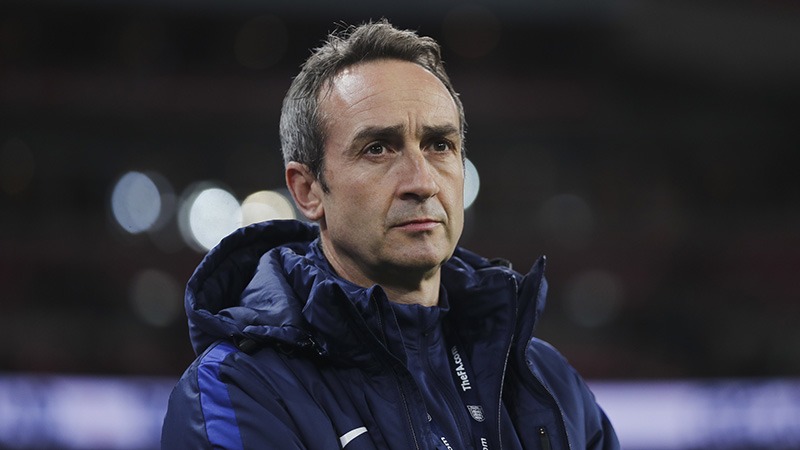
Hiring people from outside football
I remember a presentation that Neil Bath did, when he talked about his staff needing to be one third ex-Chelsea or having come through the system, one-third from outside the club, from another high-level football organisation, and one-third people from other sports or business.
Dan was the first one, I believe, to really take that seriously in that period, with the recruitment of his sporting leadership team and the likes of Dave Reddin, Pippa (Grange), Rhys (Long) coming in from other sports.
If I’m honest, before I went into that, I came from a typical football environment, where if that would happen, I’d be like, ‘What are we doing over there? Why are we appointing that person? Nothing about football?’
But actually, being able to sit on working groups that Dan and Dave created – we had a working group with England Rugby, England Cricket and used to come together once every quarter – to talk about challenges, problems and stuff was gold dust.
It was gold dust to see how others were thinking about similar problems. To have the opportunity at the FA to work alongside some really talented people from other sports and business opened my eyes and made me much more open to that type of thinking. I’ve taken that through my career as well.
Returning to Southampton in 2020
When I reflect back on my time at Southampton, I’m hugely proud to have had the opportunity to be the Sporting Director of the club. I’ve lived in Southampton for 19 years. My two children are still in Southampton, they’re still mad Southampton fans.
I had spent so many years at the Academy, so to be the Sporting Director that sees James Ward-Prowse become the captain of the club, when he was a U9, a U10, is something I’m really proud of.
But it was a really challenging period for the club. I took over in the January and by March we were into COVID.
When you’re a club like Southampton, it’s difficult to compete financially in the Premier League anyway, and then you have the challenges of COVID financially. That had a huge impact on the club. It had a huge impact on change of ownership etc.
We had relegation and you never want to have that, especially when you’re a Southampton lad in some ways. There are some regrets there, for sure, about how it all ended, both with the club being relegated from the Premier League and also I never truly felt I had the opportunity to make the changes and decisions as a Sporting Director because of the difficult time the club was going through.
There were things I’d been fortunate enough to see and experience in an international environment that I thought potentially could give us a competitive edge, around player development, which Southampton is renowned for.
We were going through a cycle where we weren’t getting many players into the team, so what needs to change internally for that to start to kick on?
There are a lot of things that I’m proud of in my 10 years at the club and I was just a bit sad and a bit disappointed that it ended the way it did, with relegation and me never really truly feeling like I had the opportunity to lead in the way I wanted to.
But, you know, still proud of some of the things we did and some of the people I got the opportunity to go back and work with. There’s some great staff there and it’s a great club, that’s for sure.
There were a lot of challenges behind the scenes. I left that role with a heavy heart in many ways, because it’s a club that I hold dear to my heart, a club that I would call one of my clubs.
When you’ve worked somewhere for 10 years and know the people and understand the impact that relegation has on the staff – people lose their jobs – that’s always really sad, because Southampton have some unbelievable lifers, people who’ve done a phenomenal job, way way beyond what they get paid.
It’s a great, great club in many, many ways.
The club had a takeover and when these things happen, there’s a new direction, a new vision and all of that takes time to put into place.
It was a really, really challenging period, but also one where I learned a lot about myself. I left Southampton, my confidence was rock bottom. Rock, rock bottom.
There was a leadership change at the top of the club, we were in a relegation position.
We had changed managers a few times in that period and you get a sense of where you fit within an organisation and sometimes where you don’t fit. That can be difficult to accept when you’ve been at a place for a long time and you care so deeply about it, and it can have an impact on your confidence.
You never want to leave a place in a worse place than you found it. One of the sayings from the All Blacks is about leaving the shirt in a better place than you found it and I was disappointed from a league table perspective.
But I do believe that behind the scenes there were positive things put in place that I was a part of. But if I’m truly honest, I never felt like as if I had the true opportunity to do the Sporting Director’s role in the way I wanted it to be done.
Joining US Soccer in 2023
I’d made the decision to resign (from Southampton) in the December, Conversations with the club and my intention was to work through to the May, to allow them to get a good handover to the person that the new owners wanted to bring in, which proved to be Jason Wilcox.
I received a call in the March, to see if I would be interested in having some discussions over the US job, the Sporting Director’s job. Originally I went home and told my wife, and she said, ‘Well, how would that work? It’s 3,000 miles away!’
But I convinced her to let me go to the interview process, because I felt it would be good for me personally to go through a process I hadn’t gone through for a long time. It was a really detailed, thorough process.
Got through the first part and then they invited us over to Denver, Colorado. Remember it was the 1st of April, 8am interview. I thought it was April Fool’s Day. I thought it was going to turn up and someone was going to prank me!
But that was the final interview, where there was a number of tasks that I had to prepare for. Again, never thinking that I was going to get the job, because it was a huge job and there were so many people out there that have done great things in this position.
But after that interview I felt the chemistry, the dynamic was good, as if I could be a good cultural fit, and was fortunate enough for them to offer me the job.
And then you take the job and realise what the challenges ahead are in a very, very short space of time, which is finding your next coaches in the men’s and the women’s game.
It takes you a while to start to believe in yourself and believe in your leadership again. I’m thankful to US Soccer to give me that opportunity and also that support. I believe I’ve improved as a leader exponentially over the last three years.
I feel as if I’ve had the opportunity to really put my stamp on a programme here and I’m proud to say that I’m Sporting Director of US Soccer and my family’s happy and settled here and it’s been a really good period.
Re-appointing Gregg Berhalter as Men's Head Coach
First thing I did, yeah.
You don’t have much context on what’s gone on before. I didn’t know Gregg. Obviously, I was able to get some data from the last World Cup and we were the second youngest in the World Cup. We had very little experience.
I think for most players it was their first World Cup or major tournament like that. We had a September window and we needed to get the wheels turning.
The way I ran that process, it was slightly different than we did for Mauricio, slightly different for Emma, and we’re always evolving this. But what I want to be able to do, for any decisions that we make, is to present a really solid case for the why.
Data and information supports your decision-making, so if you do come to a situation where you hit a bump in the road, you can refer back to the manual to say, ‘Hey, let’s remember why we appointed this person, let’s remember the strategy, let’s remember the direction.’
We always knew we were going to have bumps in the road. If you’ve not got that to fall back on, I would find that difficult.
Easier to stick to a long-term plan at country than club level?
Yeah, it’s hard (at club level), because you might have had a great week, whether it be to do with the Academy or running your key project.
You’ve worked with the team, you’re excited, and then you have a bad result on the Saturday, which ultimately means Saturday night you’re on the phone, you’re in Sunday morning, you look at the fixtures and realise you’ve got Man United away on the Tuesday night. There’s just no end to it.
I truly believe that the role in a Federation suits me better than a club role. I found the dealings with the emotions of the wins – or more so the losses – at Southampton very difficult. It’s very difficult to win games in the Premier League at the best of times, but when you’re a club that’s got some of the slimmest resources it’s even more challenging.
Federation, you work on World Cup cycles of four years. So to be able to sit with Emma and talk about a four-year cycle and all the amazing things that happen in that cycle, and building a strategy towards that, is how I believe I work best.
That’s not to say you can’t take your eyes off the next camp, but if you can build a strategy, there’s more trust in the process when you hit a bump in the road. We saw that pre-last summer. Before Gold Cup with the men’s team, we were able to trust the process with a great coach and we came out the other end in a much, much better place.
I’m not sure whether you get that time sometimes at the highest level in club football.
Ambitions for the future
I’ve got three boys and an unbelievable, supportive wife. We’ve never planned for anything. My dad’s got a saying, ‘Your name’s on a door somewhere.’ I want to be the best version of myself, I want to continue to learn and develop.
But at some stage, I would love to be able to take a back seat and to go back and do my coaching, and to be able to volunteer back at Southampton, to be their U12s coach, or whatever.
I’d love to go back. I did my Pro License in my young 20s, I was a coach to start with. And then, in the evolution of Academies, and when your programme gets bigger, I had to make the decision, ‘Do you become a coach or an Academy Director?’ Because it was a time that you couldn’t really do both.
And I made the decision to go down the Academy Director route, which takes you off the grass.
Selfishly, I have some unfinished business to give back to the game. I’m not saying I have ambitions of being a Head Coach, nothing like that, but I want to give back to the game, even if it’s just back to where all my children grew up and played, grassroots in Hythe & Dibden Football Club, to give something back.
To go back to learn to be a coach again would be something I would very much like to do. Not right now, because I don’t have the time, but I would love to be able to be in a position to do that at some point.
I know I’d have a heck of a lot to learn now, because the game continues to evolve, with player development and age-specific coaching, but it’s something I’m really passionate about and can talk about with an experience, because I see it first-hand.
But actually to be on the ground and understand the challenges of coaching on a cold and wet Tuesday night with parents, with half your balls flat…I’d like to experience that and see if I could offer something, that’s for sure.
Key takeaways
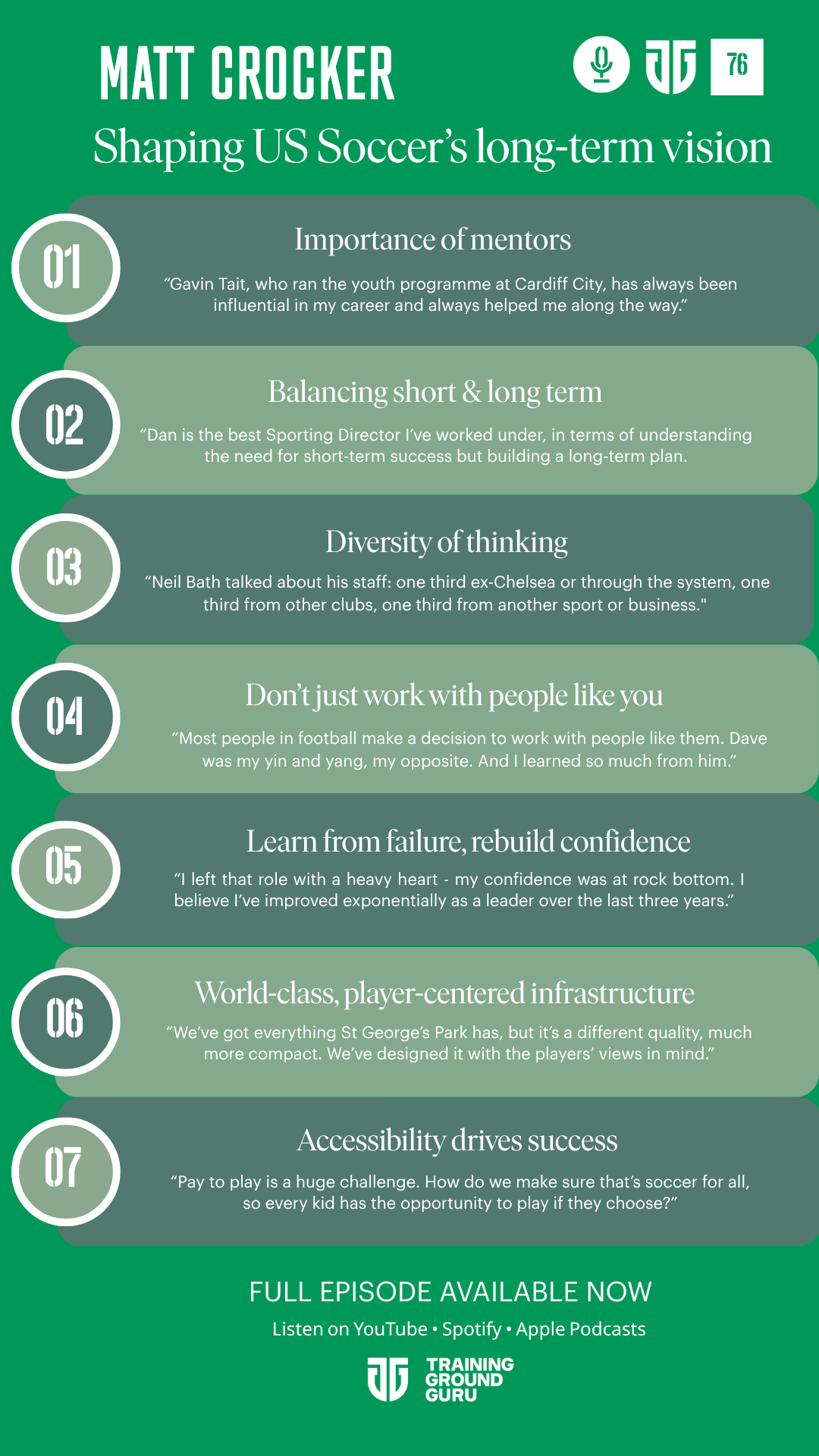
This content is for TGG Members
Join up today and get access to:
- All articles: news, interviews, analysis
- Masterclasses & Online Conferences
- Full Academy Productivity Rankings
- Club Directory: 1,000+ staff profiles
- Personal Profile Builder
- TGG Live 2024 & 2025 presentations