Matt Crocker: Why 2026 is a transformational year for US Soccer
Written by
Training Ground Guru
April 5, 2026
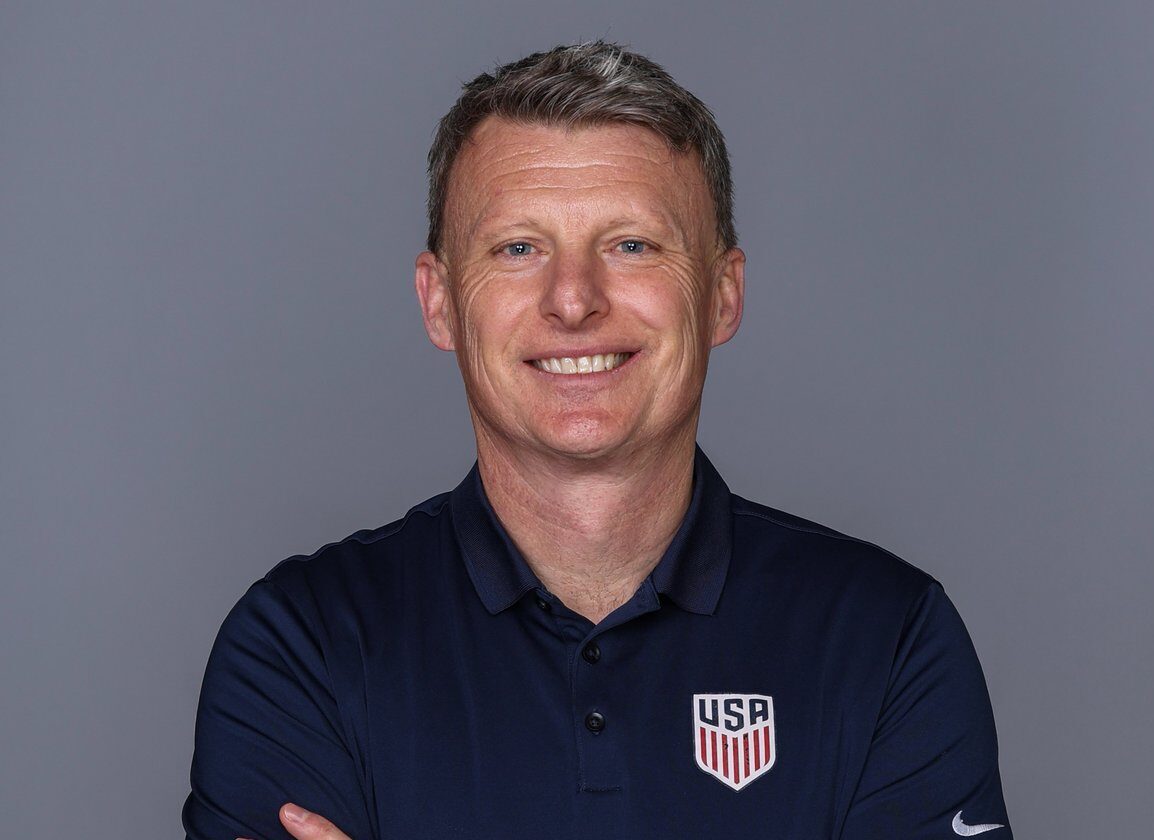
As the United States prepares to host the 2026 Men’s World Cup and open a game-changing National Training Center in Georgia, US Soccer Sporting Director Matt Crocker has outlined how the Federation stands on the cusp of its most significant period in decades.
Speaking from his home in Atlanta just weeks before the opening of the landmark facility, Crocker told the TGG Podcast about a vision that blends world-class infrastructure, elite coaching leadership and a push to democratise the game at grassroots.
In an in-depth interview, the Welshman reflected on three years in post, the impact of senior Head Coaches Mauricio Pochettino and Emma Hayes and the systemic changes required to turn the United States into a consistent performer on the global stage.
1. The Arthur M. Blank U.S. Soccer National Training Center: A $228m gamechanger
At the heart of US Soccer’s transformation is the imminent opening of the Arthur M. Blank National Training Center in Fayette County, Georgia, near the town of Trilith, just south of Atlanta.
The project, which broke ground in the spring of 2024, has been delivered in less than two years and represents the Federation’s first-ever permanent home for its national teams.
Crocker told TGG: “It’s an incredible training facility and is going to be the envy of most Associations and most clubs to be honest with you. They don’t do anything by halves over here.”
2. Men’s World Cup: Home advantage and a springboard for the game
With the 2026 Men’s World Cup being held predominantly on home soil across 11 US cities, Crocker said this was the first domino in a five-year sequence that included the 2027 Women’s World Cup in Brazil, the 2028 Los Angeles Olympics and the 2031 Women’s World Cup in the US.
“If we’re talking about springboards, it’s one of many we’ve got over the next five years and will give us a number of opportunities,” he said.
“A successful World Cup in the US, where the men’s team perform well and play great soccer and the fanbase gets behind it, the nation gets behind it… you’ve felt it. You’ve been in England when there’s just this feelgood factor.
“It makes such a difference in terms of grassroots football, where all of a sudden the kids that weren’t playing want to go and join.”
He stressed that this surge must be met with greater grassroots accessibility.
“We have to make that [access] available and free. We can then invest more commercial revenue into the game. Us, being a not-for-profit organisation, every penny we have goes back into the game.
“So we can do that at grassroots; we can offer better opportunities for coaching, refereeing, the opportunities are endless. Get more mums and dads who go, ‘Oh, actually, I wouldn’t mind being a coach of my son’s or daughter’s team,’ getting a great environment for young kids to just go and enjoy soccer.
“We have the opportunity to influence that in a much bigger and better way. So, yeah, it’s going to be pretty significant five years and the World Cup in 2026 is our first opportunity to take that chance.”
When asked what success looks like, Crocker was quietly ambitious, despite Pochettino’s team being beaten 5-2 by Belgium and 2-0 by Portugal in their two recent friendlies in Atlanta.
“You ask Mauricio and we say they’re going all the way, for sure,” said Crocker, whose interview on the TGG Pod was recorded before those two friendly defeats. “But obviously a lot of things would have to go in our way for that.
“I think there’s a number of measures (of a successful World Cup), around the culture of the group, but clearly we want to get out of the group and get as far as we possibly can by playing really attractive soccer that unites the fans behind the team and we finish the World Cup in a really positive place.”
3. Mauricio Pochettino: High challenge, high support and squad transformation
Crocker’s relationship with Pochettino stretches back more than a decade, to their time together at Southampton. In January 2013, Pochettino was appointed Manager of the Premier League club, where Crocker was Academy Manager.
The duo worked together for roughly 18 months, until Pochettino left for Tottenham. When the USMNT coaching position became vacant after Gregg Berhalter’s departure following a disappointing group-stage exit at the 2024 Copa América, Crocker led a thorough global search.
This process involved detailed SWOT analyses, data-driven presentations on squad needs and honest discussions about the challenges and opportunities of the role. Pochettino was officially announced as USMNT head coach on September 10th 2024 on a deal initially running through the 2026 World Cup, with potential for an extension.

Crocker worked with Mauricio Pochettino at Southampton before they were reunited with US Soccer
4. Emma Hayes: Olympic Success, Futures Group and a female lens on development
“I’m very fortunate to have two of the best leaders in the game supporting our teams,” Crocker said, referencing Pochettino and Hayes. “I’ve learned so much from both of them.”
On the women’s side, Hayes was one of the most high-profile and significant appointments in recent US Soccer history. She was officially named Head Coach of the USWNT on November 14th 2023 on a contract running through to 2027, making her the highest-paid women’s coach in the world in the process.
She remained at Chelsea until the end of 2023/24, which created an enormous challenge. With the Paris 2024 Olympics just weeks away, Hayes had only around 10 weeks (and far less hands-on time) to prepare her team.
Twyla Kilgore served as Head Coach in the interim, with Hayes providing remote input.
“To get Emma, we knew we weren’t going to be able to get her until the end of the (English domestic) season,” Crocker remembered. “That was a huge challenge, a huge risk. That puts us in a difficult position of very little preparation time before the Olympics.
“It was a huge gamble – one that paid off. But even if it didn’t, I knew she was the right coach for the long term of the programme. Sometimes you’re making decisions between short-term gains and long-term ‘what’s right’?”
Indeed, the risk paid off spectacularly. Hayes led the USWNT to Olympic gold in Paris in just her 10th match in charge — the fastest any coach had won a major tournament (World Cup or Olympics) in women’s football history.
The team won all six matches in France, never trailed at any time in the tournament and secured three knockout-stage victories by 1-0 scorelines (two of them after extra-time). The final against Brazil ended 1-0, delivering a record fifth Olympic gold for the US.
Beyond the immediate Olympic success, Hayes has overseen a clear squad evolution, including the introduction of a ‘futures’ or U23 group that trains and works in lockstep with the senior team.

Emma Hayes: Took her team to Olympic gold 10 weeks after joining US Soccer
5. Combatting Pay-to-Play: Soccer for all and the Pathways Project
Crocker is frank about one of the most entrenched and damaging structural barriers in American football: the pay-to-play model that has dominated youth development for decades.
In its simplest form, pay-to-play requires families to pay substantial fees – often thousands of dollars per season – for their child to join competitive club teams, access quality coaching, participate in leagues and tournaments, and gain visibility to scouts and national team selectors.
These costs typically cover registration, coaching, facility hire, travel, uniforms and tournament entry. Unlike most European and South American countries, where professional clubs fund Academies and often pay selected youth players, the US system has historically placed the financial burden almost entirely on parents.
A 2024 Aspen Institute report showed average annual family spending on youth football had risen to around $910–$1,188 per child, with elite pathways often far higher.
Crocker contrasted his son’s experience in England – where he played for a grassroots club for roughly £120 a year – with the reality many American families face.
“[Pay to play] is a huge, huge challenge,” he admitted. “The cost to a child and family to play at a high level of the game in America, that’s no secret. There are children out here that have to pay thousands of dollars to be able to be on a travel team, to play a quality game or get a quality level of coaching.
“At the moment, there are a lot of teams that can’t play other teams. They might be close together, but compete in different leagues and don’t like each other. It just raises the cost, because then kids have to fly and travel and stay overnight. So what we want to try and do, where we can, is alleviate the costs of that.”
Crocker also criticised the lack of education around what truly matters in player development in the US.
“I think there’s a lack of education right here, right now – and I say this respectfully – around parents’ soccer experience. I think a lot of parents make decisions of where they send their son or daughter because of a league table from the previous year,” he said.
“As opposed to a club that provides an individual development plan for their child, that takes a player-centred approach, provides equal player minutes, that has X qualifications of coaches, that has a certain type of facilities, that plays a certain way, that has a real philosophy across the culture of the club.”
US Soccer has launched several initiatives aimed at addressing these shortcomings. The Pathways Strategy is positioned as a cornerstone reform.
“The Pathways Project is a key one,” Crocker explained, “how do we create a really simple, clear pathway where every club recognises where they are in the ecosystem?”
The goal is to simplify the cluttered landscape of leagues and competitions, reduce unnecessary travel and associated costs, and create transparent, merit-based progression routes from grassroots to elite. This includes better alignment between local clubs, regional programmes, and professional academies.
Complementing this are broader efforts under the banners of Soccer Forward and Soccer for All. Launched as part of US Soccer’s 2026 World Cup legacy platform, Soccer Forward (via the Soccer Forward Foundation) focuses on expanding access, embedding the game in schools and underserved communities, and using soccer as a tool for health, inclusion, and social impact.
Recent initiatives include the Soccer at Schools programme (partnered with Bank of America) aim to bring the sport to every school by 2030, while the Places to Play initiative aims to create more safe, accessible pitches and community-focused resources.
Soccer for All emphasises making the sport truly inclusive and low or no-cost at the entry level, moving away from an elite, fee-driven model toward community-based and school-integrated opportunities.
Crocker stressed the need for universal low-cost access in the critical early years.
“We have to make sure that is available at a very, very low cost to every child, irrespective of their level of experience, or where they currently are technically or tactically,” he said. “This isn’t always the case, as we are where we are today.”
6. MLS Academies: Investment, accountability and development
Crocker also pointed to positive developments in the professional game, noting that MLS Academies now offer free pathways from around age 14 for selected talents, with significant investment from clubs.
He highlighted the MLS’s growing commitment to Academies, which he said was “in its infancy” but nevertheless accelerating. The critical pre-14 years remain a focus for Federation intervention.
“We’ve got some really great projects going on that we’re partnering with them around,” Crocker said. “How do we provide some annual checks and balances over what clubs are getting for their investment in the youth development… whether that’s through player development, or investment in coaching?
“And how does that then translate into future value of players? There is a huge amount of development work that goes on before 14. We have to make sure that is available at a very, very low cost.”
Crocker saw these reforms as part of a much larger cultural and systemic shift – one that will take years but is essential if the US is to maximise its potential.
“You can look at that as also a huge opportunity,” he said. “How do we get the game in every community in America so that soccer becomes a part of communities and school sports, not just the kids that can afford to pay to go to certain clubs.”
This content is for TGG Members
Join up today and get access to:
- All articles: news, interviews, analysis
- Masterclasses & Online Conferences
- Full Academy Productivity Rankings
- Club Directory: 1,000+ staff profiles
- Personal Profile Builder
- TGG Live 2024 & 2025 presentations