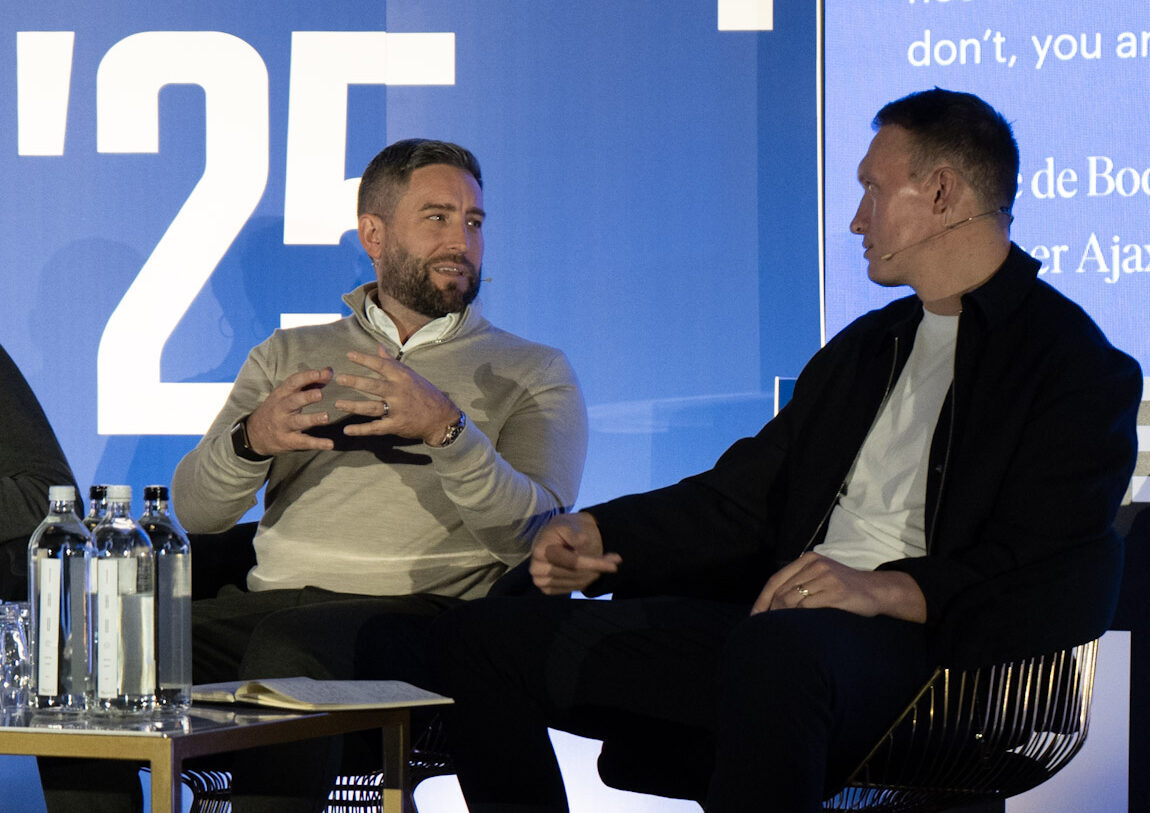
Louis Langdown: The evolution of analysis
Written by
Louis Langdown
March 31, 2026
Two decades ago, performance analysis was a niche role, often filled by a single staff member filming matches.
Today, elite clubs employ entire departments of analysts who influence tactics, recruitment and strategy. As the profession expands, it is not only reshaping how football is analysed, but redefining who gets to build a career in the game.
Louis Langdown is a Senior Lecturer in Sports Performance Analysis at the University of Chichester. Starting as a Performance Analyst at Crystal Palace in 2004, he became Head of Sport Science. Louis has also worked with Southampton, AFC Bournemouth, Portsmouth and more. He is an Executive Officer for The Association of Sports Performance Analysts.
2000s: A support function
At the start of the 2000s, performance analysis was a support function. Most clubs employed one analyst, typically responsible for filming matches and preparing post-game clips.
The role was technical, often peripheral. That began to change with the introduction of tracking systems from Prozone, which provided the first objective datasets on player movement.
Soon after, video platforms such as Hudl Sportscode transformed workflows, allowing analysts to tag matches and deliver insights more efficiently.
What followed was a shift not just in tools, but in influence.
2010s: Data revolution
By the 2010s, performance analysis had moved to the centre of football operations. Event data from Opta Sports and StatsBomb allowed analysts to quantify performance in new ways, while tracking providers such as Second Spectrum and SkillCorner enabled the study of team shape and off-ball movement.
Analysis was no longer just descriptive, it became interpretive, a way of understanding the game’s underlying structure.
2020s: Analysts shaping the game
The result has been a rapid proliferation of roles. Where clubs once employed a single analyst, many now operate departments of six to 12 or more, spanning performance, recruitment and football intelligence.
Southampton’s Head of Performance Analysis, Nathan Hurst, has described how quickly this shift happened.
“Ten years ago, you might have two or three analysts covering everything from youth to first team,” he said. “Now you’re looking at teams of specialists (opposition, age and position specific, recruitment, insights, data) all feeding into the same process.
“The challenge isn’t access to information any more- it’s alignment and clarity.”

Some clubs now refer to these groups as football intelligence departments, reflecting their growing influence across decision-making. This expansion has created something football has rarely offered: a scalable entry point into the professional game.
The most significant impact of this growth is not just the number of analysts but where they end up.
Michael Edwards remains the stand-out example, moving from analysis into the Sporting Director role at Liverpool and now CEO of Football at the Fenway Group. Alongside him, David Fallows and Barry Hunter helped build a recruitment structure rooted in analytical insight.
That model is now widespread. At Chelsea, Paul Winstanley and Laurence Stewart operate as co-Sporting Directors, while Ben Knapper has progressed from analysis roles at Arsenal into leadership at Norwich City. as Director of Football.
Elsewhere, Simon Wilson has risen from one of the UK’s first full-time analysts at Southampton into executive leadership and now CEO of Stockport County, while James Smith’s appointment to the Leadership Team at Everton reflects the continued integration of analytics into recruitment structures.
Across the industry, this shift is increasingly recognised.
You don’t need to have played 300 games in the Premier League to become a key decision-maker at a club – you need the ability to understand the game and influence it.
This is the analyst generation, a cohort defined not by playing careers, but by expertise. Not to say that a former player cannot also have the required skillsets and expertise. Wilson and Edwards were both young professionals at Peterborough United before deselection and transitioning out of playing and deciding not to pursue football down the pyramid.
Perhaps more analysts have emerged from Academy structures having been exposed to the theory and practice whilst trying to become a professional footballer.
If you can’t translate insight into something a coach can use in 30 seconds, it doesn’t matter how good the analysis is.
Craig Nosworthy, Manchester City
Analysis has also become a pathway into coaching. Danny Röhl progressed from analysis into coaching roles at RB Leipzig and Bayern Munich, before becoming manager of Sheffield Wednesday and Glasgow Rangers.
Mark Leyland followed a similar route into senior coaching environments, joining Eddie Howe’s Newcastle United as First-Team Coach Analyst after eight years at Liverpool.
Piet Cremers moved from analysis at Manchester City into first-team coaching at Burnley, while Tim Jenkins transitioned from analysis into coaching roles at Wolves and Strasbourg. Similarly, Norwich City’s Nick Stanley has moved from performance analysis into first-team coaching, specialising in set pieces.
These pathways reflect a common theme: tactical literacy developed through analysis.
If analysis has created coaches, it has also created decision-makers. Analysts are now embedded in recruitment, squad planning and long-term strategy. Their ability to interpret data and identify patterns positions them at the heart of modern football operations. They are no longer describing the game. They are shaping it.
Insight not overload
Despite its growth, some within the game argue that increasing data volumes risk overwhelming coaching staff.
Craig Nosworthy, First Team Football Analysis Lead at Manchester City, explained: “The job has changed. It’s no longer about coding games and generating data reports — that’s increasingly automated.
“The value now is in interpretation and communication. If you can’t translate insight into something a coach can use in 30 seconds, it doesn’t matter how good the analysis is.”
Football remains a fast, intuitive game, where decisions are made in moments. The challenge for the modern performance analyst is not simply to generate information, but to ensure it is clear, relevant and immediately actionable.
As the discipline matures, structure is beginning to follow. The International Journal of Performance Analysis in Sport (IJPAS) laid the academic foundations, while organisations such as the Association of Sports Performance Analysts (ASPA) are now working to formalise the profession through the development of professional standards and accreditation pathways.
Central to this is ASPA’s International Analyst Competency Framework (IACF), which you can see below. This aims to define the skills, behaviours and competencies required across different levels of practice.
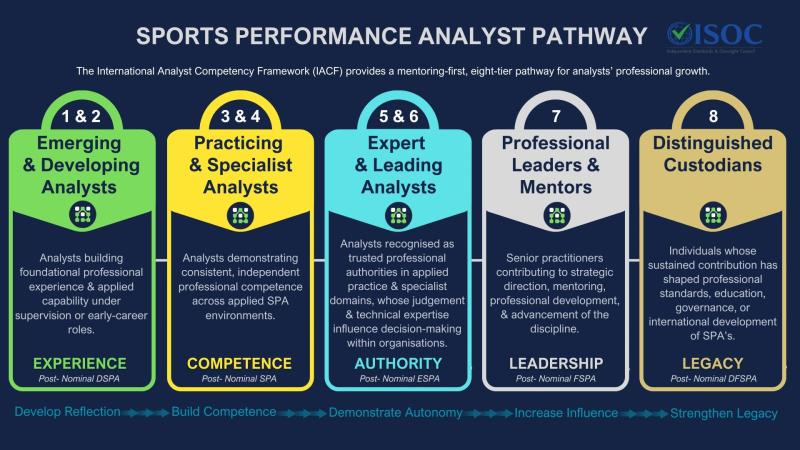
ASPA Competency Framework
By providing structured progression pathways and recognised standards, it offers something the field has historically lacked, a shared professional identity.
For a discipline that has expanded rapidly, formal recognition is now beginning to catch up with practice.
And as that structure takes shape, so too does the identity of a new cohort within the game — the analyst generation, reshaping not just how football is understood, but who gets to lead it.
For a profession that has grown rapidly, formalisation is now catching up.
Ultimately, the rise of the analyst is about more than data. It represents a shift in how football values knowledge. Where experience was once defined by playing, it is now increasingly defined by understanding.
And in that shift, the analyst has become one of the most important figures in the modern game.
Follow Us
For latest updates, follow us on X at @ground_guru