Liverpool Head of Psychology leaving after seven years

Liverpool Head of Psychology leaving after seven years

Written by

Simon Austin

August 26, 2026

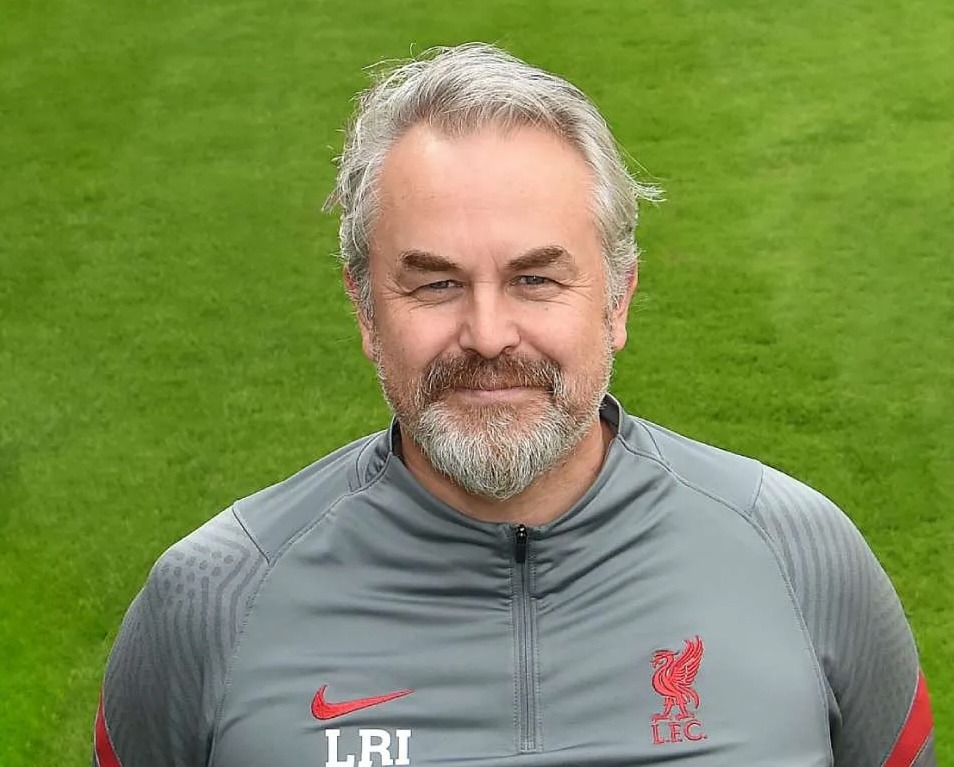
Liverpool Head of Performance Psychology Lee Richardson has left the club after seven years.

After arriving at Anfield under Jürgen Klopp in June 2019, Richardson served the club during their most successful period in three decades, with seven trophies.

The 57-year-old is a former Blackburn, Aberdeen and Oldham midfielder who also managed Chesterfield before becoming a psychologist.

Speaking in 2019, Klopp explained: “With Lee Richardson especially, the good thing is he was a player himself, a manager himself, and then he decided to become a sports psychologist. He is a really, really interesting person and so the boys enjoy, for sure, that he is around.”

Announcing his exit on LinkedIn, Richardson said he was leaving elite football to concentrate on his own psychology business.

“After an incredible seven years, the time has come to begin a new chapter,” he wrote. “Working with Liverpool Football Club has been one of the greatest privileges of my career.

“To have had the opportunity to support outstanding players, coaches and staff within one of the world’s most respected football clubs has been both professionally rewarding and personally humbling.

“I’m immensely grateful to everyone who has been part of that journey and for the trust, friendships and experiences we’ve shared along the way. As exciting as that chapter has been, I’ve reached a point where I feel compelled to focus fully on a vision that has been growing over many years.

“To everyone at Liverpool FC, thank you for the opportunity, the support and the memories. I will always be grateful for my time at such a special club.”

He also said psychology remained largely ‘ignored’ in football, which was why he had set up his own business. Richardson runs The 4Pillars Track and The SafetyNet through Aim-For, a company he set up in 2010 with his brother Nick, also a former professional player.

The 4Pillars Track, launched in 2014, is a mindset platform built on his model of psychological competencies. The Safety Net, which followed in 2016, is a white-label mental health resource that clubs and governing bodies fill with their own material.

The PFA has used The Safety Net for more than a decade and taught the 4Pillars model to young professionals since 2018.

“Throughout my career as a player, coach and psychologist, I have seen high levels of investment in technical, tactical and physical development continue at pace,” Richardson said.

“However, the psychological aspects of performance, leadership and wellbeing often remain ignored, not measured or monitored effectively and consistently underdeveloped.

“That belief led to the creation of The 4Pillars Track and The SafetyNet, and now it’s time for me to focus my full attention on growing their success even further. To everyone who has supported Aim-For so far, thank you. This is only the beginning.”

The Chartered Sport and Exercise Psychologist and Pro Licence coach will continue as Course Director of the PFA Business School’s postgraduate diploma in Football Psychology, Emotional Intelligence and Leadership.

Its first cohort graduated at the Emirates last year and included Richard Keogh, Danny Simpson and Lucy Staniforth.

How he got to Liverpool

Richardson’s route to psychologist at one of Europe’s leading clubs was an unusual one. He left school with no qualifications and went on to play for Halifax Town, Watford, Blackburn, Aberdeen, Oldham, Huddersfield and Chesterfield.

He managed Chesterfield from 2007 to 2009 and retrained as a psychologist through the Open University. By 2010, Richardson was consulting in two sports at once – with Sam Allardyce at West Ham and Peter Moores at Lancashire County Cricket. He later worked with England’s Under-19s.

Liverpool had actually scouted Richardson as a player, when he was a teenager at Halifax, and manager Kenny Dalglish was among those who went to watch him before Watford signed him instead.

His appointment as Head of Performance Psychology consultant at Liverpool was finalised 30 years later, in February 2019. The process began with meetings with Sporting Director Michael Edwards, continued with Medical Rehabilitation and Performance Manager Phil Jacobsen and ended with Klopp and his Assistant Pep Lijnders.

Richardson formally started at Melwood on 1st June 2019 – the day Liverpool won the Champions League in Madrid.

How he operated

Klopp likened the appointment of Richardson to the arrival of goalkeeper coaching a generation earlier.

“I think around about 20, 25 years ago there were no goalie coaches in football and the Head Coach did the goalie training by himself,” the German said in November 2019.

Speaking to the Sunday Times in 2020, Richardson explained: “Jürgen was keen to, in his words, find the right person, not just any person. I feel comfortable in the game, and in the environment of elite sport.

“That feeling of belonging is something people in backroom staffs don’t always get, which means there’s a lot of striving to prove themselves and my potential strength is I don’t feel the need to try and impress anybody.”

Klopp kept a deliberate distance from Richardson’s work. “What he is doing with the players, I am not involved,” he said. “I have my part to do with the boys and do that like I did it before.”

Richardson explained: “Jürgen felt players could do with a resource they could tap into whenever they wanted, a confidant, and the work I’ve done is mainly one-to-one with specific players, working in specific ways.”

One part of the job was dealing with the fall-out from team selection.

“Jürgen said when I first arrived, he said he makes decisions, positive decisions, that impact players in negative ways and he can’t always then deal with those negative consequences,” Richardson explained.

“Possibly where I come in is sometimes helping players look at those negative consequences and turn them into a positive. I’m there for him as kind of a buffer, if you like, if it’s needed. As are the other coaches, it’s not just me.

“Everybody in the environment is involved in the psychological performance and wellbeing of each other and the players.”

The bigger obstacle, he said, was reaching players who did not want to be reached.

“This is the thing as a psychologist, this is the biggest challenge: you’re often dealing with people who don’t want to be helped, either because they don’t think they need it or they feel potential stigma that is often attached to anybody talking about mental health,” he said.

“I have to say, the lads at Liverpool have been the best in terms of being open to chatting and discussing anything. That’s a sign of people who have what I call a mastery approach; they just want to get better.”

Richardson’s influence extended beyond the players too. John Hill, Liverpool’s First Team Fitness Coach from 2021 to 2023 and now Head of Performance at Al-Ettifaq, went to him for help working out how to tell players their blood results had changed.

Speaking at TGG’s joint webinar with Orreco earlier this year, Hill said: “I’ve got to give a lot of credit to Lee, the Psychologist at Liverpool. I sat with him and said, ‘You know, I don’t want to be coming around like the little grim reaper here, saying, Problem with your bloods today, mate? I need to spend five minutes with you.’

“Because that then puts a negative connotation on the whole thing. I’m a firm believer that you shouldn’t be the smartest person in a room. When it comes to interactions and people receiving information, the psychologist is better than me at that and can certainly help me with it in certain scenarios.

“I’ll have great relationships with players, but am probably another level of the technical staff that they want to convey that image of, ‘I’m strong, everything’s fine and I want to go out and play.’

“With Lee, they can be a bit more open to their feelings. For me, he was just the best person in the room to talk to about how players are going to be receptive to something that could otherwise have a negative connotation.”

The wording they settled on was deliberately positive. “We really try to frame it around positivity and say, ‘We’ve identified a change in your blood profile and these are the steps we need to take in order to optimise what we want to do with you,'” Hill said.

A summer of change

Richardson went on to work with Klopp’s successor, Arne Slot, and last season turned out to be Liverpool’s most difficult in more than a decade. Diogo Jota, who had appeared alongside Richardson in a club video on mental health awareness in May 2025, died in a car crash that July.

Liverpool finished fifth after 19 defeats and Slot was sacked on 30th May, four days before Andoni Iraola arrived from Bournemouth. Richardson stayed on into the new season under Iraola, the third manager he worked with at Anfield.

Many senior staff went with Slot: Assistants Sipke Hulshoff and Giovanni van Bronckhorst, Lead Physical Performance Coach Ruben Peeters and Tactical Analyst Roderick van der Ham. Sporting Director Richard Hughes is expected to go once the transfer window shuts on 1st September, with a move to Al-Hilal anticipated.

This content is for TGG Members

Join up today and get access to:

  • All articles: news, interviews, analysis
  • Masterclasses & Online Conferences
  • Full Academy Productivity Rankings 
  • Club Directory: 1,000+ staff profiles
  • Personal Profile Builder
  • TGG Live 2024 & 2025 presentations


Already a member? login.

Restricted Access