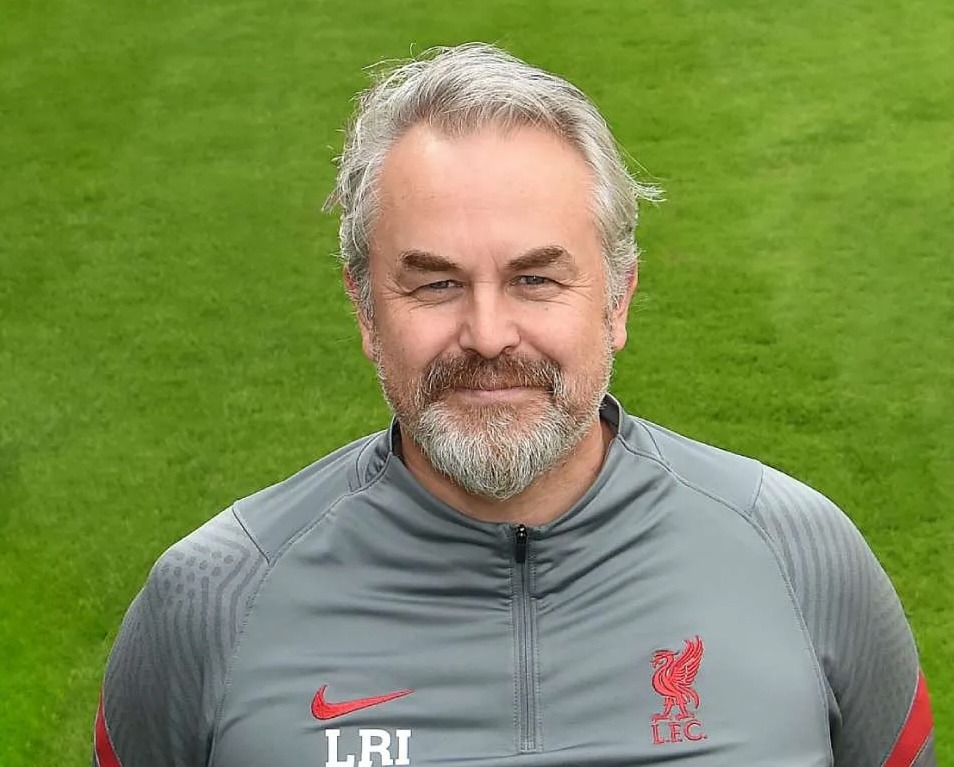
How Liverpool Psychologist shaped positive communication about biomarkers
Written by
Simon Austin
January 25, 2026
Former Liverpool Fitness Coach John Hill has explained how Psychologist Lee Richardson helped him to frame conversations with players and get buy-in about blood testing and analysis.
Hill, who is now Head of Performance at Al-Ettifaq in the Saudi Pro League, outlined the importance of effective communication between practitioner and player when he presented at TGG’s joint webinar with Orreco – How top clubs are leveraging blood data.

Hill explained how Richardson had helped with communication techniques when he was First Team Fitness Coach at Liverpool from 2021 to 2023.
“I’ve got to give a lot of credit to Lee, the Psychologist at Liverpool,” Hill said. “I sat with him and said, ‘You know, I don’t want to be coming around like the little grim reaper here, saying, ‘Problem with your bloods today, mate? I need to spend five minutes with you.’
“Because that then puts a negative connotation on the whole thing.”
We’ve written before about the importance of effective communication between practitioner and player – and how this can sometimes be neglected.
In a 2018 interview, Darcy Norman, the former Head of Performance for Roma and the German national team, told TGG: “Communication is key. Simple things, like the way you phrase things – everyone loves an upgrade, nobody wants to change – and the words you choose.

“You can say things in so many different ways to convey a message, which in turn controls the way we interact.”
Performance Consultant Wayne Goldsmith, who has worked with New Zealand Rugby, USA Swimming, the Australian Institute of Sport and more, added: “I cannot believe that high-performance sporting organisations do not include training and education on the art of communication and building honest, trusting relationships in their sports scientist induction programmes.
“Doesn’t matter how great the science is, or how highly qualified the Sports Scientist might be – it all comes down to relationships. And if the coach and the athlete don’t know you, don’t like you, don’t trust you, you’re wasting your time talking to them.”
During his time at Liverpool, Hill realised that biomarkers could provide crucial information about player fatigue and how to tailor a response to it, but also understood that athlete buy-in would be critical. This is why he consulted Richardson, who has been Liverpool’s Psychologist since 2019.
“You need to work with language in a way that’s not going to be provocative or give negative connotations,” Hill said.
“I’m a firm believer that you shouldn’t be the smartest person in a room. When it comes to interactions and people receiving information… the Psychologist is better than me at that and can certainly help me with it in certain scenarios.
“I’ll have great relationships with players, but am probably another level of the technical staff that they want to convey that image of, ‘I’m strong, everything’s fine and I want to go out and play.’
“With Lee, they can be a bit more open to their feelings. For me, he was just the best person in the room to talk to about how players are going to be receptive to something that could otherwise have a negative connotation.

“We really try to frame it around positivity and say, ‘We’ve identified a change in your blood profile and these are the steps we need to take in order to optimise what we want to do with you.’
“The communication to the players was not around, ‘This is going to stop you playing,’ because players don’t want to give you a blood sample if it’s going to stop them playing games. They don’t care what the blood sample says.
“If they feel good, they want to play. They’re competitive and really, if you’re in a high-performance organisation, you want your players to play as much as possible.
“So you shouldn’t be using blood data to stop them playing, you should be using it to inform best practice around how we can optimise their performance. So the communication to the players was, ‘We can do things that can optimise and improve your ability to perform.’
“They don’t need, on matchday plus two, when they’ve given absolutely everything and it’s their third game in a week, for you to take a blood sample and then go, ‘You look tired today.’
“They know that already – and they’ve had to give you their time and blood in order to give them that opinion.
“You have to go in with the information of, ‘There’s been a change, but we have these measures that can help us resolve this and help bring you back to an optimal level where you can perform.'”
Follow Us
For latest updates, follow us on X at @ground_guru