How Cardiff City topped 14 Category One Academies in TGG Rankings
Written by
Simon Austin & Ian Westbrook
September 9, 2026
Cardiff City finished 16th out of 89 clubs in TGG’s exclusive Academy Productivity Rankings for 2025/26, the highest Category Two club in the country and above 14 of the 29 Category Ones.
They did it in League One, after relegation and on a Category Two budget. Academy graduates played 34% of the Bluebirds’ first-team minutes as they won immediate promotion back to the Championship, compared with an average of 11% when the club began its productivity push four years ago.
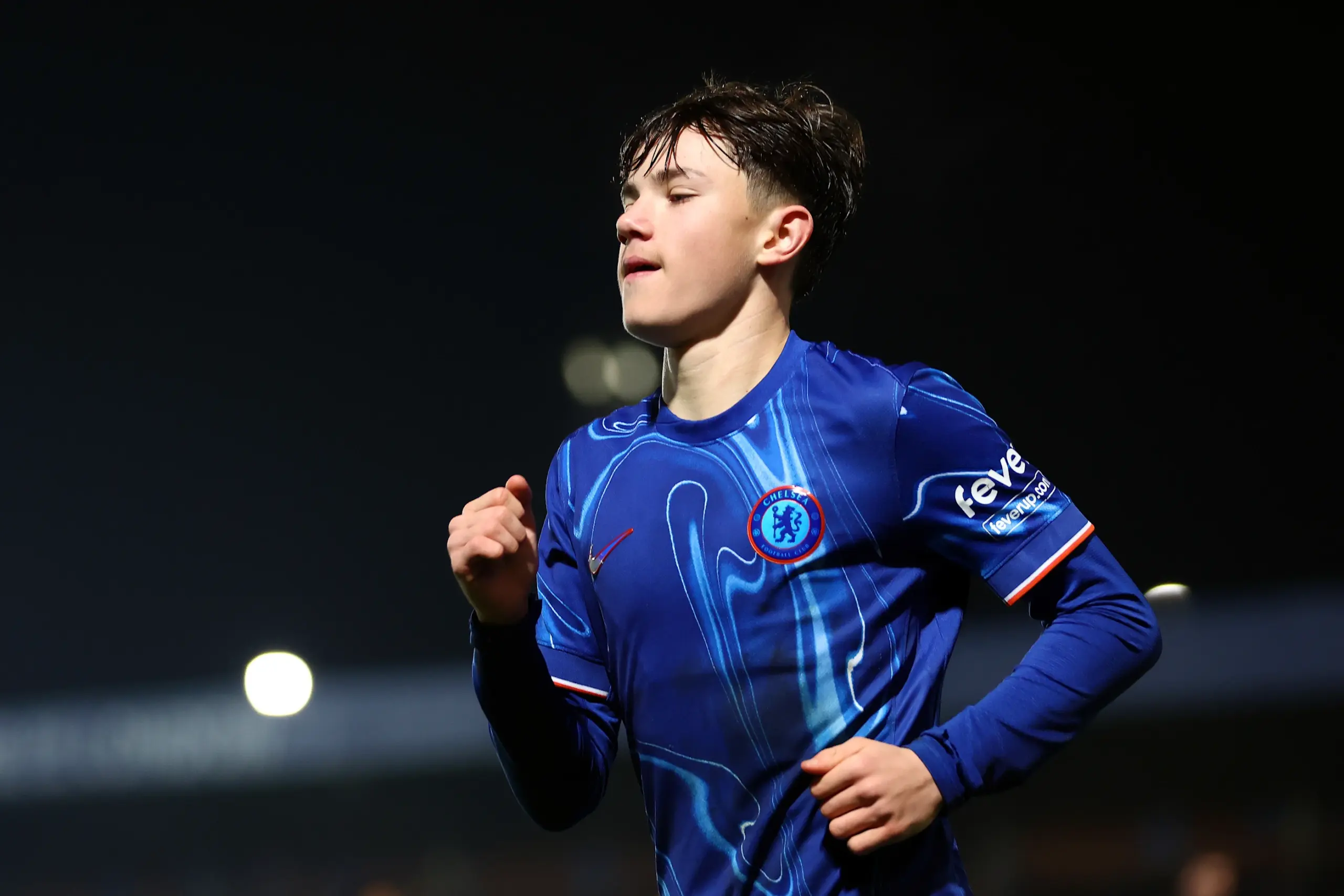
Dylan Lawlor is the embodiment of that. The centre-back made his debut in the FA Cup at Aston Villa in February 2025, became a first-team regular in League One, was named EFL Young Player of the Month for August 2025 and made his Wales debut against Kazakhstan a few weeks later, taking the man-of-the-match award.
So how did they do it? Academy Manager Gavin Chesterfield spoke exclusively to TGG and outlined three things: a decision to treat relegation as a reset and focus on youth, a deliberately separate Academy site where players have to earn their move to the first team, and a group of long-serving staff the club calls its “grandparents”.
“I’m really proud, really pleased for the staff more than anything,” Chesterfield said about his club’s 16th place in the Rankings. “The talent isn’t something, as you well know, that is developed overnight, but there’s been a lot of good work going on at the football club for many years now, and we found ourselves in a situation where the opportunity came at the right time and thankfully the preparation lived up to its billing.”
‘Press the reset button’
Relegation from the Championship at the end of 2024/25 could have been the moment that the Academy’s pathway narrowed. Instead the club went the other way.
“About four years ago we went on a bit of a journey to try and really improve upon our productivity, really making decisions based upon pathway and opportunity,” Chesterfield said. “I think relegation gave us the chance to press the reset button.
“In that moment we tried to learn from case studies of other clubs in terms of how people went about bouncing back, and we really decided to try and back our own inside the building. We hired an outstanding player developer in Brian Barry-Murphy and his staff, and off the back of that we’ve seen 15,280 minutes in the first team that were made up of Academy graduates.

“Some of them were already established players, people like your Rubin Colwills and your Joel Bagans. But then we’ve seen an influx, if you like, of a Ronan Kpakio, a young right-back; a Dylan Lawlor, a very gifted ball-playing centre-back; a Joel Colwill; and then the re-emergence, if you like, of Isaak Davies following some time at our sister club in Belgium [KV Kortrijk].
“All told last year we had 14 league debuts in League One and I think it was 21 including the EFL Trophy. I still think the EFL Trophy is such a gift for young players, such an opportunity. It was our first experience of that and some guys made their debuts in that competition that have now sadly left the club, but they’re set up to hopefully have a career in the game.”
Kpakio, like Lawlor, was capped by Wales last September, and Cardiff currently have five full internationals in Head Coach Craig Bellamy’s squad. Chesterfield was quick to share the credit with both Bellamy and Barry-Murphy.
“My admiration for those guys is giving young talent an opportunity and believing in them in the heat of, at the coalface of, needing to win games,” he said. “For me that’s often overlooked, but they do it because they believe in the abilities of the lads, and I think that’s testament to them as well.”
He is also careful not to overclaim on the Academy’s behalf.
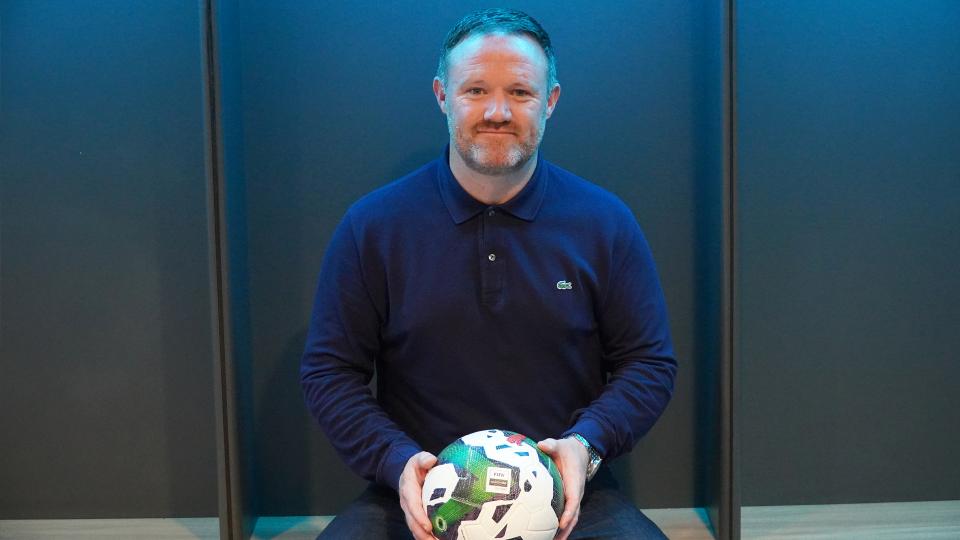
Gavin Chesterfield
“Does it mean the Academy is doing a lot better than what it was previously? Probably not. I’d like to think the Academy has been doing a lot of good work over many years, even before my time at the club. There’s some fantastic work has gone on here, but it just meant that some of the lads have been given an opportunity and they’ve taken it. And I often think that that’s sometimes the defining factor.
“The whole club feels energised by it. Is there anything better than a club having a load of players in the first team that know the club inside out? Most of them have been here since they’re sort of seven years of age, eight years of age, in the pre-Academy days, and it’s one that supporters can really connect with.
“Whilst there might not be a monetary value you can place upon that, it’s certainly something you can feel. It’s very palpable. You can’t be something you can’t see, and at the moment we’ve got the youngest kids in the Academy looking at boys in the first team that have absolutely walked in their shoes in the recent past.”

‘We’ve got a big thing about earning it’
Cardiff operate without a Director of Football or Sporting Director. Chesterfield reports directly to Chief Executive Ken Choo and says the push to play more graduates was a collective decision rather than one person’s.
“My management structure is quite linear,” he said. “I go straight into the CEO and that helps particularly in terms of ease of decision-making. But really it was more of a collective idea of how we want to pull together and how we can grow our own and how we can get that Cardiff feel about us again, because the club’s got a history of always producing its own.
“I couldn’t have asked for much more support from Ken. Really grateful in the fact we’ve got quite a linear decision-making process there but, if I’m being honest, really grateful for how close we are to the first team staff and how easy it is to work with people who are absolutely obsessed with young talent, just like we are.”
We've got what we call grandparents on site – people who are 10 years plus in the building that are real custodians of our culture
Gavin Chesterfield
Unusually, that closeness does not extend to sharing a training ground. The first team are based at the Vale Resort, outside Cardiff, while the Academy moved three years ago into its own purpose-built site at Llanrumney, in the east of the city.
“I actually think that helps,” Chesterfield said. “We’ve got a big thing about earning it. There’s a huge strength obviously to being on one site, but the club invested in a brand new Academy three years ago in a place called Llanrumney, where we’ve got our own site, autonomy over our own site and everything we could want on site.
“It’s not gold-plated, it’s not dripping with everything you could ever want, but we’ve got no excuse not to produce talent and talent hasn’t got any excuse not to thrive. But ultimately we believe that when you’re going up to the Vale training complex, for example, you’ve earned that opportunity. And at the moment there’s a lot of traffic between both sites, which is fantastic to see.”
Become a TGG Member today and get all the tools you need to progress your career.
‘Grandparents’
The third factor is the staff. Chesterfield has borrowed from the work of Professor Alex Hill of Kingston University, whose research looks at why some organisations sustain success over generations, and Cardiff now have a name for their longest-serving people.
“We’re really chasing individualisation as a concept within the Academy, and that’s often a very difficult thing to do due to the economies of scale really, but that’s the chasing and the success of that chase,” he said. “One of the key parts of our relative success is that we’ve got a relatively stable staff force.
“We borrowed a lot from the work of Professor Alex Hill, talking about successful organisations, and we’ve got what we call grandparents on site: people who are 10 years plus in the building that are real custodians of our culture.
“They’ve been and seen the boys come through from six all the way through into the first team. So they’re really in a good place now to mentor and support that next generation. And that’s the key thing for us at the moment: to every single day chase individualisation, every single day try to get better, but really follow the lead of a lot of our grandparents, because we’re very fortunate to have them.”
The Academy’s alumni are part of that culture too. Aaron Ramsey and Joe Ledley, the two best-known graduates of the modern era, both have children in the Academy.
“We see them quite a lot and it’s quite infectious for our young players to be walking around and seeing people of that ilk,” Chesterfield said. “In fact, Aaron, when he was doing his coaching awards over the last couple of years, was quite frequently in the Academy working with the under-18s and supporting their development.”
Cardiff are back in the Championship, and the youngsters have gone up with them. In August, 15-year-old Noah Anyadike became the youngest player in EFL Cup history in the defeat to Norwich, the third time the club’s youngest-player record had been broken in under a year.
“We all want a team full of Cardiff City players to come from the Academy. That’s the dream,” Chesterfield said. “But the truth is that we’re really proud of those boys who’ve gone out and are contributing positively to the game all over the world.
“Our job now, I suppose, is to continue with a steady pipeline of talent, but to try and produce that top-end player, if you like, that can take the club forward as well.”
Follow Us
For latest updates, follow us on X at @ground_guru