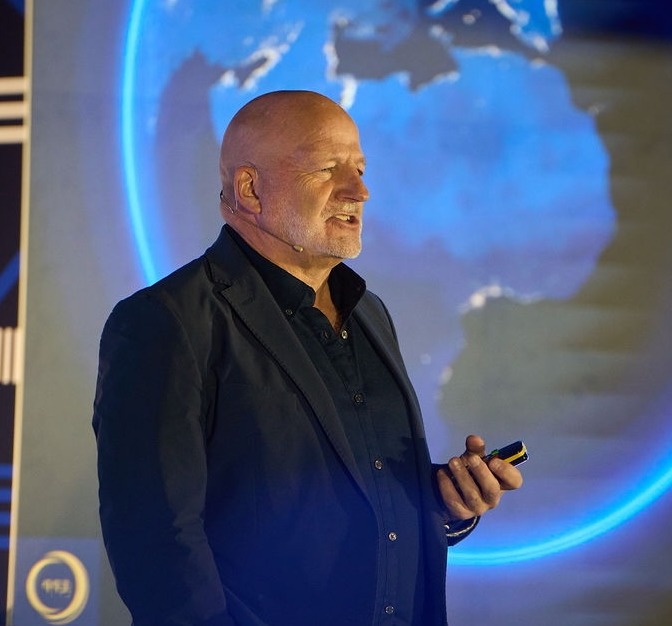
Ged Roddy: Why England needs its own version of Germany’s Stützpunkte
Written by
Simon Austin
November 19, 2026
England needs a bridge between its Academies and the grassroots game like Germany’s Stützpunkte, according to Ged Roddy MBE, the architect of the Elite Player Performance Plan (EPPP).
Roddy is the former Premier League Head of Youth and oversaw the creation of EPPP in 2012. Now he is a High Performance Expert for FIFA, meaning he sees the youth development programmes of countries around the world up close.

TGG Members can watch Ged Roddy’s full presentation from TGG Live ’25 – plus others – by clicking below
Whereas England’s Academies, especially at Category One level, are now the envy of the world, the grassroots game is lagging behind.
“Our Academies have taken off and our grassroots has to a certain extent got left behind,” Roddy told TGG Live 2025 in a talk now available to TGG Members.
“In Germany, they have 350 Stützpunkt training centres that sit between the Academies and grassroots game. If we have a finite talent pool, we need to think about how we bridge those gaps. So, mind the gap.”
The DFB has a network of just under 350 Stützpunkte, supporting around 14,000 players with just under 1,280 coaches. The best Under-12 to U15 players are nominated for an extra weekly session, which is free, while continuing to play for their grassroots clubs.
Stützpunkt coaches must hold at least a DFB B licence and each base holds “training dialogues” with players’ club coaches twice a season to discuss their development and runs information evenings for local coaches.
Roddy has since told TGG this is “one of the big differences between the English and German systems” and he wants England to build its own bridge through a network of FA County Development Centres.

“I have always seen the Category Three environment as untapped potential and the opportunity to join up and link up the grassroots via FA-led development centres is a missing link in the country’s ecosystem,” he said.
Roddy believes the Centres could be built on permanent training grounds for Category Three clubs.
“In the past, I found Category Three clubs spending up to 80% of their youth development funding on rented facilities because they didn’t own their own training grounds,” he said.
“I could see a world where maybe the Football Foundation or some other independent acted as a trust for the development of training grounds for these clubs. Building a permanent football infrastructure that could then also act as the regional hubs for FA Development Centres.”
Roddy said this would solve three problems at once: Category Three clubs’ lack of facilities, the need for venues for Regional Development Centres and the creation of a “breathing system” that would allow players to move in and out of the Academy system.
“This approach would protect the talent pool, create tangible opportunities for late developers,” he said.
Roddy suggested the cost could be met partly through the redistribution of money from the Premier League to the rest of the pyramid.
“It could, or should, be part of the settlement regarding the redistribution of wealth through the pyramid, given this would have direct player development benefits in communities right across the country.
“Of course this would all cost a few quid. I ran the numbers when I was still working in England and the saving on Academy rentals alone could be used to support the capital expenditure.”
The Premier League has offered the EFL a 10-year funding package, reported to be worth an additional £1.8bn, as part of talks over a new financial settlement.
Roddy said the Centres would need a new workforce of “talent coaches” and pointed to the FA Skills Programme, which Sir Trevor Brooking launched in 2007 as the FA’s Director of Football Development. It started with 66 specialist coaches working with five to 11-year-olds, and had nearly 160 by 2014.
“Sir Trevor created his Tesco Skills Coaches and they were a really well-trained group,” said Roddy. “Unfortunately they never had County Development Centres to work from. Many of them got jobs in the new Academy system once EPPP was launched. Could be time to dust off the template.”
The centres could serve both the boys’ and girls’ game.
“The County Development Centres would surely be venues for the development of boys and girls, creating a breathing Academy system for both pathways.”
Roddy stressed that his proposal was not a criticism of English youth development.
“You only have to look at how we played in Spain to see the quality we have,” he said. “On the other hand we can’t afford to stand still.”
England won 3-2 in Madrid on Sunday, ending Spain’s 43-match unbeaten run, and finished third at this summer’s World Cup.
Inside the Stützpunkte
At TGG Live, Roddy cited André Schürrle – the forward who crossed for Mario Götze’s winning goal in the 2014 World Cup final – as an example of the power of the Stützpunkte.
Schürrle played for his local club, Ludwigshafener SC, and was discovered and supported at the Stützpunkte in Bobenheim-Roxheim and Ludwigshafen before moving to Mainz’s Academy in 2006.

Andre Schurrle: Poster boy for the Stützpunkte
The DFB says nine players in Germany’s squad for this summer’s World Cup came through a Stützpunkt, including Joshua Kimmich, Antonio Rüdiger, Jonathan Tah and Deniz Undav, who played amateur football in Germany before moving to Belgium and then Brighton.
Bayern Munich apply a similar principle at club level. In 2020, they announced they would phase out their U9 and U10 teams, so that matches at the FC Bayern Campus start at U11.
Holger Seitz, then Deputy Sporting Director at the Campus, said: “With this step, it should be possible for the children to develop longer in the familiar setting of their home club without the pressure to perform and without additional time commitment.”
Bayern still work with younger players. Boys aged U7 to U9 train in a development squad at five locations, while the U10 group trains centrally at the Campus. The club says games and tournaments for players’ home clubs take priority when dates clash.
The English picture
In England, 34% of Academy players join at U9 and more than half are recruited after that age, according to the Premier League’s 2024 EPPP report. Research on Premier League Academies shows weekly training and match sessions rising from four at U9 to nine at U16.
Outside of the Academies, the FA’s mid-point review of its grassroots strategy, published in September, reports a record 1.6 million affiliated players across more than 124,500 teams, and more than 186,000 registered coaches. It does not say how many of those coaches are qualified, or to what level.
The Football Foundation has told Parliament that England has half as many 3G pitches as Germany, with 970 players for every artificial pitch compared with 421 in Germany.
A survey of 409 UK clubs by equipment firm FORZA this summer found that only 15% owned their facilities, and that 34% cited the cost of coaching qualifications as a challenge for their volunteers.
Building bridges
Manchester United’s Emerging Talent Centres, launched in February 2020 to link schools and grassroots clubs across the North West with its Academy at Carrington, are still running, albeit in a slightly different form from the original model.
The club’s original Emerging Talent Centre ran for 44 weeks of the year for players aged U9 to U14, in addition to their work with their schools and grassroots clubs,. The club aimed to put at least 500 grassroots coaches a year through CPD workshops.
Nick Cox, then Head of Academy, said at the launch: “We’re aware of our responsibility to enrich the local football community by sharing resources and knowledge.”
Jen Mildenhall, who set up and ran the programme until she left to become Player Care Lead at Chelsea in late 2024, added: “We finished last season with a milestone of 50 boys signing from grassroots football into the Academy, more than 350 boys signing to other professional Academies, 3,000 local grassroots coaches signed up to our Friends of the Academy initiative and hundreds of schools, grassroots clubs, players and parents hopefully having had a truly fantastic experience at this wonderful club.”
In the girls’ game, the Premier League-funded Emerging Talent Centres, which replaced the FA’s Advanced Coaching Centres, increased the number of girls in England’s talent pathway from 1,722 to almost 5,000 across 73 centres in under two years. At Tottenham’s centre, players must also play for a grassroots club or another sport.
Roddy ended his TGG Live keynote with a warning: “The world is not sleeping. We do great things in this country, but don’t forget that there is a big world out there that is keen to copy and also beat us.”
- Roddy’s full presentation, along with the other talks from TGG Live 2025, is available to TGG Members.
Follow Us
For latest updates, follow us on X at @ground_guru