
Dave Carolan: The five F’s that make (or break) a training camp
Written by
Dave Carolan
February 12, 2026
I’ve just returned from a three-and-a-half week warm-weather training camp in Alicante, Spain, where I was Team Liaison for Brian Horne’s Sporting Events company.
Pre-season is in full swing for a number of countries, including the USA, Norway, Sweden, South Korea and Ukraine, so their teams are among those winging their way to the mild temperatures of the Costas.
For Denmark and others, it is the mid-season break and an opportunity to get away and reset ahead of the second half of the season. The Women’s Super League in England is among those to have a Winter Break and in recent years Chelsea Women have travelled to Portugal, while Manchester City Women went to Abu Dhabi last year.
Some Premier League teams have headed off to sunnier climes in recent seasons as well. Nottingham Forest went to Dubai for a week last February for a warm-weather camp and their former Chief Football Officer, Ross Wilson, described it as “another fantastic opportunity to build on the strong togetherness within our group.”
However, a busy schedule makes it extremely difficult for a lot of Premier League and Football League clubs to go abroad for winter camps.
Following their draw against West Ham on Monday evening, Manchester United faced a 13-day wait to their next fixture, against Everton. Michael Carrick’s men had considered going away for a warm-weather training camp, but instead opted to remain at their Carrington base.
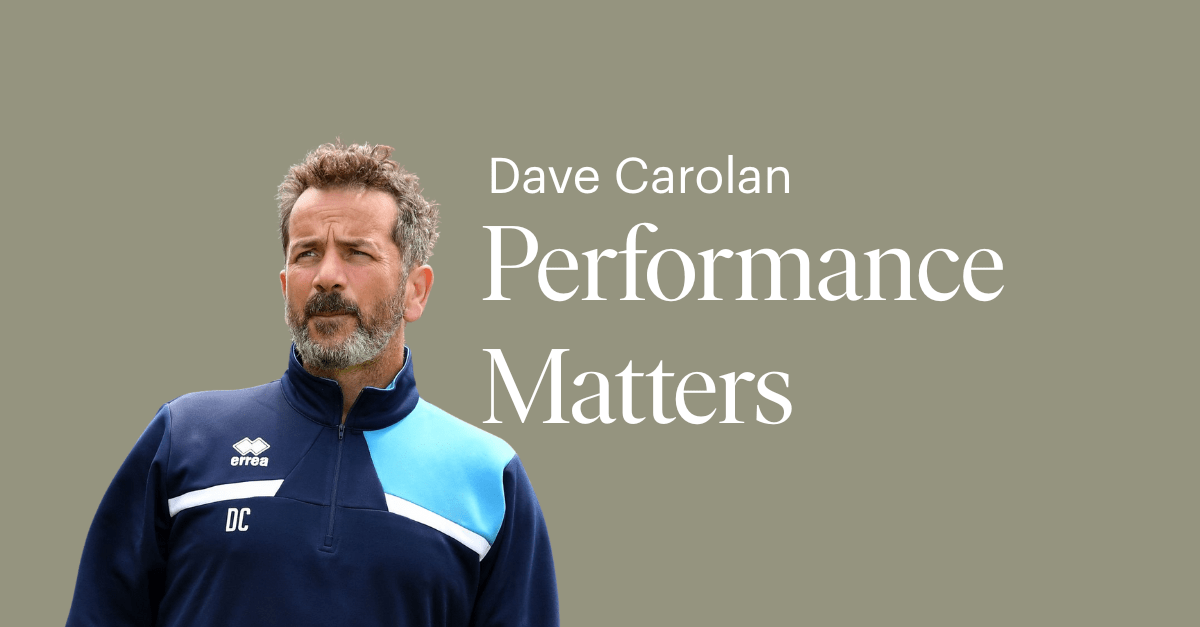
Dave Carolan is a senior professional working at the intersection of sport science, data, technology and decision-making. During more than 30 years in professional football, he has been Head of Performance at Derby County, Birmingham City, Milwall, Stoke City, Norwich City and more. In this monthly TGG column, Dave will be discussing key issues in the world of football performance.
What makes for a successful camp?
Over the course of my long career in football, I have helped organise many tours across Europe and beyond. The destinations have ranged from the Spanish heat to total-football in the Netherlands, from windy Portugal to Malaysia with Norwich City in 2004, when the seven courses of fish-inspired cuisine did for a few of the players!
Organising a camp is no mean feat and thankfully there are experienced administrators on hand to facilitate nowadays. In the late 90s, that wasn’t the case however. Although the travelling circus was smaller, you still had to co-ordinate everything yourself as a fitness coach.
Flights, hotels, transfers, pitches, food, media access, games, insurances, match permits, referees and even oxygen for the medics all have to be planned, sourced and eventually paid for!
Getting anywhere between 40 and 80 people and their baggage on site is a big operation. Getting them back again, even more so. The bigger clubs can charter planes. Smaller clubs scramble for cheap flights and sometimes leave and return to different airports on different days!
You can do it cheap – perhaps under £100k for a short (five-day) 3* hotel pre-season camp for 40 people in Britain or Ireland. Ryanair early-morning flights, 24 players, 16 staff and a simple enough menu.
Start adding stars to the hotel, distance to the flights, people on the manifest and a smorgasbord of food and watch that budget expand rapidly.
Throughout the camp there are comings and goings. Directors fly in and out, new signings join, injured players need scans and returns home all need co-ordination and actioning.
This is especially true in a transfer window, when the contingency of spare rooms and budget is a built-in necessity.
I can remember Birmingham City organising a sponsors’ golf trip alongside our Marbella Football Centre camp in the summer of 2015. The sponsors watched training, played golf and it boosted the budget for where we could go and what we could do.
Still, for those involved in the football, medical and performance departments, ensuring the trip is successful is built around what I have coined as the 5F’s:
1. Football:
This may sound obvious, but the whole reason we go away is to focus on the quality preparation of the team. With no distractions for the players and staff, the five to 10 days on location should be unadulterated football preparation.
The football elements must be of high quality. Pitches (two if possible) must be excellent, well-maintained and available for two sessions per day. You need good training equipment: mannequins, cones, markers, poles etc. And if there are games, the right calibre of opponent in a suitable venue is key.
2. Fitness:
A vital component of pre-season. Leaving your own training-ground surroundings can mean you have to pivot from your usual methods and techniques.
You may have four Hex Bars and a Keiser Functional Trainer at home, but are now scrambling around with two Olympic bars and a selection of kettle bells. Knowing what you will have available in advance can avoid starting a programme and then interrupting it for 12 days.
3. Food:
An army marches on its stomach and there is perhaps no easier way to drop morale than to have sub-standard food. With so much work taking place, and calories burned, ensuring there is good quality and variety in the ingredients and menu is paramount.
By day seven, everyone is in a daze and tired, so having a well thought-out programme – a BBQ here and a meal out there – can ensure everyone comes out of camp feeling positive about their food experience. And don’t forget the odd treat! Nobody wants food boredom, so adding some mood foods is always a winner.
4. Facilities:
Get the first three elements right and you are 80% of the way there. Players and staff will put up with most things – single beds that are too close together, foreign language TV, cycling to training and even too much sun – so long as they are enjoying training and food.
Facilities are an important element too though. You want comfortable bedrooms, especially if you are staying for a long time, as well as good aircon and blackout curtains. Some teams switch the room pairings across a longer trip to promote cohesion and to stop cliques forming, but normally players pair up themselves and settle down into their routines.
Wifi is also essential! It had better be fast and reliable – not only for the important work of the analysts and performance staff, but also for the players. I can remember one camp in rural Germany with Stoke City when we barely had 3G, never mind Wifi, and it certainly made things more stressful for staff and players!
Add in a spa and outdoor pool for relaxation in the afternoons (so long as it’s not too sunny and hot) and team cohesion and the integration of new players can be achieved naturally, without the need for ‘team building’.
The medical team will need access to excellent facilities should the worst happen. That includes pitch-side paramedics (you normally can’t carry your own oxygen on planes and into some countries), local hospitals with advanced diagnostics and intervention capacities, dentists, pharmacies and soft tissue therapy provision.
All of this needs be sourced and an Emergency Medical Plan prepared to ensure all bases are covered.
5. Fun:
All work and no play makes Jack a dull boy, as we all know. Nothing brings a team together more than shared fun.
Activities like escape rooms, golf, water parks, clay pigeon shooting, go-karting and off-roading can not only mix groups of players but also allow us to see how leaders present and operate. With these things, you tend to see who steps forward and who sits back.
There may be some team initiation too: singing a song, performing a routine, dancing a dance. Or something more personal and engaging.
Whisper it quietly, but there might even be a night out too. This could start with a team meal before everyone lets their hair down and take in the local sights, experiencing some of the local culture, food and beverages.

Act fast or be disappointed
Fans may be surprised to hear that a lot of clubs are booking their pre-season camps nine to 12 months in advance.
With a huge demand for quality facilities around Europe (eg La Manga, La Finca, Campus, Cascade, Marbella Football Centre) being beaten by a club that’s better organised is not really acceptable.
Over the last few months a steady stream of club officials (Player Liaison, Sporting Directors, Performance Directors) will have flown out to complete ‘reccies’ of facilities before bringing them back to the club to present and select.
Back in 2018, when I was at Derby County, we had booked out the pre-season camp almost eight months ahead. Today you might need to book a year in advance in order to secure your spot.
This might sound extreme, but a successful pre-season camp can make a bigger difference than signing a new player. Conversely, a poor camp can be extremely detrimental (see our start at Stoke City in 2018/19).
Stories from camps are recounted for weeks, months and even years. Bonds are formed on far-off pitches. While there is so much technical, tactical and physical work done, the psycho-social aspects are crucial as well.
In the tough times, as well as the good, a good camp can make all the difference and that’s why managers have always placed great store in them. It might not be quantifiable, but not everything that matters can be measured!

The case for a Winter Break
While well-run camps offer the opportunity for a valuable reset, there is a growing consensus that true mid-season regeneration could mean stepping away entirely.
Of the top five European leagues, the English Premier League and Serie A are the only two that don’t have enforced Winter Breaks. The Premier League did have a brief experiment with a partial one in 2019/20, 2021/22, and 2023/24, with the schedule staggered so each team could get roughly a two-week rest.
However, this was discontinued from 2024/25 because of expanded UEFA competitions and a busier calendar.
There are a lot of strong arguments in favour of a Winter Break, especially when it comes to player welfare. Over the course of the last year, I’ve had the privilege of being part of FIFPRO’s High Performance Advisory Network (HPAN), discussing and providing guidance on a number of elite performance issues.
Our 2024/25 report, which you can read HERE, outline
One of the 12 recommendations, with a 78.2% consensus, was for a mandatory mid-season one-week break, with no club or national team travel, no training and no media commitments. That would mean no warm-weather training camps either!
The main reasons for this recommendation were as follows:
- In-season recovery and regeneration: Continuous competition cycles without protected breaks lead to accumulated fatigue (physical and mental). A mid-season pause allows players to recover and regenerate outside of team environments, preventing chronic overload.
- Reduce injury risk: Studies reviewed in our supporting research showed that mid-season breaks lowered injury incidence.
- Improved performance and sustainability: Breaks help maintain peak condition, focus and output. Without them, players face diminished performance, mental burn-out, stress and reduced focus. Football lags other sports (e.g. NBA, MLB, AFL) in providing guaranteed in-season rest, making it a global outlier.
- Mitigating broader workload pressures: In-season demands include frequent matches (often back-to-back with less than 96 hours’ recovery), travel fatigue and overlapping club and international fixtures. A one-week break provides a reset.
- Long-term player health and career protection: Excessive in-season loads without breaks contribute to burn-out, overuse injuries and shortened careers.
Follow Us
For latest updates, follow us on X at @ground_guru